
Chef coat name personalization orders need a reliable connection between the approved name, the selected garment and the person who will receive it. A correctly embroidered name on the wrong size is still an order error. For restaurant groups, culinary schools and hospitality brands, the strongest process starts with an approved order matrix and ends with a reconciled delivery record.
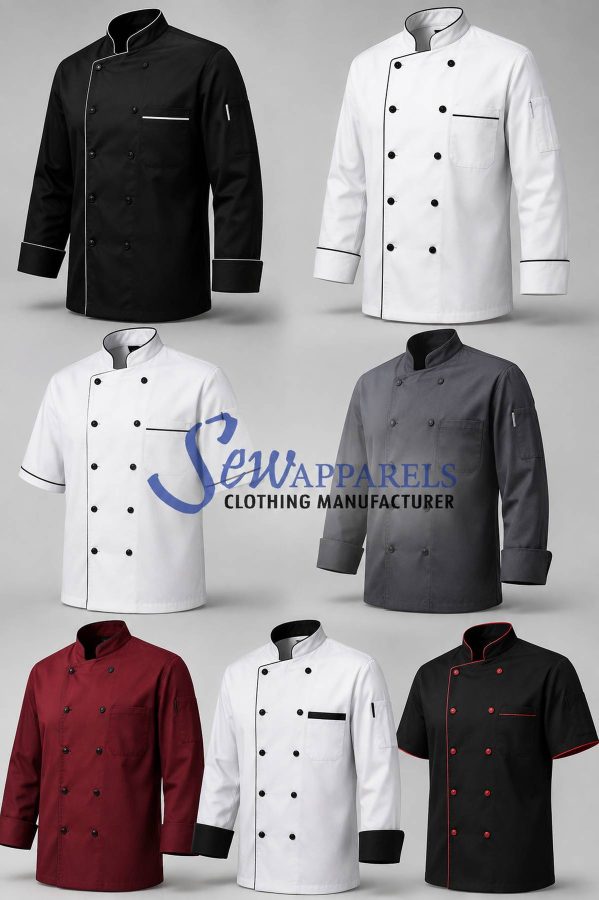
This guide explains how to organise spelling approval, size mapping, artwork proofs, change control and wearer-code packing. It also addresses the personal information that can appear in a staff order file. The recommendations are an operational framework, not a claim that Sew Apparels has already accepted a particular personalization method, quantity or data-handling arrangement. Confirm the proposed project scope directly before releasing production instructions.
1. Build chef coat name personalization orders from one controlled matrix
Use one row for each identifiable garment requirement rather than combining several wearers into a free-text instruction. The chef name badge order matrix should distinguish the wearer code, approved display text, garment style, colour, size and quantity. A row identifier helps teams discuss a correction without relying only on a name that several people might share.
Keep displayed names separate from internal identifiers. The name on the coat may be a preferred short form, while the employer uses a different reference for issuing uniforms. Do not assume these fields should match automatically. The buyer should establish which wording is authorised for the garment and who can confirm it.
Give the chef coat name embroidery order a version number and date. Identify the person responsible for releasing the file, and mark the previous version superseded when a replacement is approved. Sending several spreadsheets through different channels without a release decision can leave the production team using an outdated row.
Check the matrix before asking for a quotation
Look for missing sizes, duplicate row identifiers, ambiguous quantities and unsupported text characters. Confirm whether the order uses individual embroidery, a removable name badge or another method. Those are different production instructions; a title such as “personalized coat” does not tell the supplier which process to quote.
2. Verify spelling in chef coat name personalization orders
Chef jacket name spelling approval should cover the exact text that will appear, including punctuation, spaces, capitalisation, initials and any accents. Copying a name from a general staff list is not the same as authorising the displayed wording. Give the responsible buyer or wearer a clear proof with enough context to see what is being approved.
For chef coat name personalization orders, avoid silent abbreviations or automatic formatting changes. A long name may need a layout decision, but shortening it without approval changes the requested product. Where characters cannot be represented by the chosen font or production system, show a proposed alternative and obtain a recorded decision before proceeding.
The ICO’s guidance on accuracy describes checking personal information and addressing inaccuracies in the UK data-protection context. For an order workflow, a source record and an explicit correction process are useful controls. Determine the obligations relevant to the actual parties and location rather than assuming that one jurisdiction’s guidance establishes compliance everywhere.
Keep spelling approval separate from production acceptance
A person may approve the text while a technical reviewer still needs to approve its appearance. Record both decisions. A correct name in a spreadsheet does not establish that the embroidered lettering will be legible, positioned correctly or suitable for the chosen fabric.
3. Connect chef coat name personalization orders to verified sizes
Personalized chef coat size mapping must connect each approved row to the actual style’s size reference. A wearer may use different size labels across brands or garment cuts. Ask the buyer to confirm the selected size against the agreed chart or fitting sample instead of converting a familiar retail label into a production instruction without review.
The chef coat personalized size check should include the required quantity for that wearer. Two coats for the same person need two physical items, but they do not necessarily require two different name records. Conversely, identical displayed names for different wearers need distinct issue identifiers so packing and distribution remain unambiguous.
Use a chef coat staff issue identifier that the buyer can reconcile with their allocation records. Include the garment revision when several chef-coat styles are supplied together. The same name, size and colour on different styles should not be treated as interchangeable unless the buyer has explicitly approved that substitution.
Check totals in two directions
Sum quantities by wearer and by style, colour and size. Both views should reconcile to the purchase-order total. This simple comparison can expose a repeated row or a missing size allocation before personalization makes the item more difficult to reassign.
4. Approve the physical proof for chef coat name personalization orders
A chef coat personalization proof should show the proposed font, finished dimensions, placement and thread colour on the intended garment or an appropriately identified representative sample. A digital preview helps with spelling and layout; it does not reproduce all effects of stitching, fabric handling and the finished construction.
Define the placement reference clearly, such as its relationship to a pocket edge or a specified construction point. Avoid instructions that depend on a photograph alone. For chef coat name personalization orders, a named placement reference and agreed dimensions make feedback more repeatable when sample sizes or styles vary.
Inspect readability, lettering shape, reverse-side finish, distortion and interference with pockets or closures. Discuss the intended care route and any appropriate sample evaluation with the supplier. Do not assume that an attractive new sample establishes unlimited washing durability or that all fonts and name lengths will behave identically.
Record the approved embroidery version
Link the chef coat embroidered name version to the order row and approved layout. Where a long name uses an adjusted layout, record that exception rather than applying the change to every other row. A chef coat monogram order record should likewise identify the approved initials, their order and the design used; an initial sequence can have a different meaning when rearranged.
5. Control changes to chef coat name personalization orders
Agree a chef jacket name approval cutoff with the supplier based on the actual project schedule. State what the cutoff covers and how requests after release will be reviewed. A date in the buyer’s file is not evidence that a supplier can accept every late amendment without additional time or cost.
Kitchen uniform name order changes should identify the affected row, the old instruction, the replacement instruction and the status of work already completed. Ask whether material has been prepared, stitching has started or packing has occurred. The response may differ at each stage, so keep the agreed consequence and revised delivery expectation visible.
For chef coat name personalization orders, issue a controlled revision instead of an isolated message saying “change this name.” Confirm receipt and the superseded version. If a correction affects the quantity or garment size as well as text, reconcile all linked fields so the spelling fix does not leave another instruction inconsistent.
Distinguish buyer corrections from production discrepancies
A buyer changing an approved name is different from an item produced against the wrong approved version. Record which situation occurred and the evidence supporting it. Agree the remedy with the responsible parties rather than assuming an automatic replacement, rework method or charge.
6. Reconcile packing for chef coat name personalization orders
Chef uniform wearer code packing should connect the finished item to its released row. Check the displayed name, style, colour, size and quantity against the approved file before closing the pack. A correct label on an incorrect garment does not complete the check; the physical item must match the record.
Chef coat personalized item reconciliation is especially useful for multiple locations. Separate destination allocation from the name field, and verify that each site’s pack totals match the released matrix. Keep the necessary issue reference available to the receiving team without placing unnecessary personal information on external cartons.
Use a discrepancy record for missing, additional or mismatched items. Identify the relevant row, observed difference and agreed next action. Do not quietly swap personalised garments between wearers to make totals balance. That can conceal the original problem and create an allocation error at receipt.
Example of a controlled amendment
Imagine a fictional row W-014 originally requesting two medium coats with the display text “A. Rahman.” Before release, the buyer approves a different display form and changes the quantity to three. The revised proof, row quantity and overall size totals all need to agree. This example illustrates file control; it is not a real employee record or a Sew Apparels order result.
Handle staff information with a defined purpose
Chef coat individual name data should be limited to what the approved workflow needs. The supplier may need the display text and a buyer-generated issue reference, while unrelated employee details belong outside the production instruction. A wearer code can reduce unnecessary disclosure, although a code linked to a person may still be personal information.
The ICO’s data-minimisation guidance explains using information that is sufficient and relevant to a defined purpose without collecting more than necessary. It is UK guidance, currently marked for review. Apply an appropriately assessed process for your own jurisdiction and supplier arrangement, including access, transfer and retention decisions with the responsible parties.
For chef coat name data privacy, establish who can receive the file, which channel is approved and how corrections are handled. Do not publish staff lists as examples, include unnecessary details in a public enquiry or treat this article as proof of a particular supplier’s privacy controls. Confirm those arrangements for the actual order.
Compare the chef coats double breasted closure design review when choosing name placement, so lettering does not interfere with the approved front, pocket or fastening arrangement.
Common buyer questions
Can two staff members have the same displayed name?
Yes, the order matrix can accommodate that situation if separate issue identifiers and allocations make the garments distinguishable operationally. The buyer should confirm whether the displayed text itself needs another identifier. Do not add one without approval.
Does a digital proof replace a stitched sample?
It answers different questions. A digital proof can confirm text and intended layout; a physical sample provides evidence of appearance on the selected construction. Agree the sampling scope appropriate to the project before releasing the full name list.
What should a startup brand prepare first?
Prepare a controlled matrix, a placement brief and a clear approval responsibility. Discuss custom chef coat manufacturing requirements and confirm whether individual-name work is available within the proposed order. For private label chef coat production, keep brand artwork separate from variable wearer text so each has a traceable approval.
Prepare an enquiry with a complete order brief
Use the chef coat manufacturing page to discuss the proposed garment, quantities and customization scope. Start with an anonymised structure if real staff details are not yet needed. Confirm project-specific personalization, sampling and delivery arrangements before sharing a final authorised production file.
The Chef Coats Buying Guides connect related construction and approval decisions. A reliable name-order process brings spelling, size allocation, physical proof and packing together. Keep each decision tied to one released version so the finished item can be checked against a clear, approved instruction.