
Chef coat sleeve length assortment planning starts with the work brief, not a simple assumption that short sleeves belong in summer and long sleeves belong in winter. Different roles, workstations, fit needs and employer rules can change the decision. A useful range gives buyers a clear reason for each sleeve variant and keeps the resulting quantities manageable.
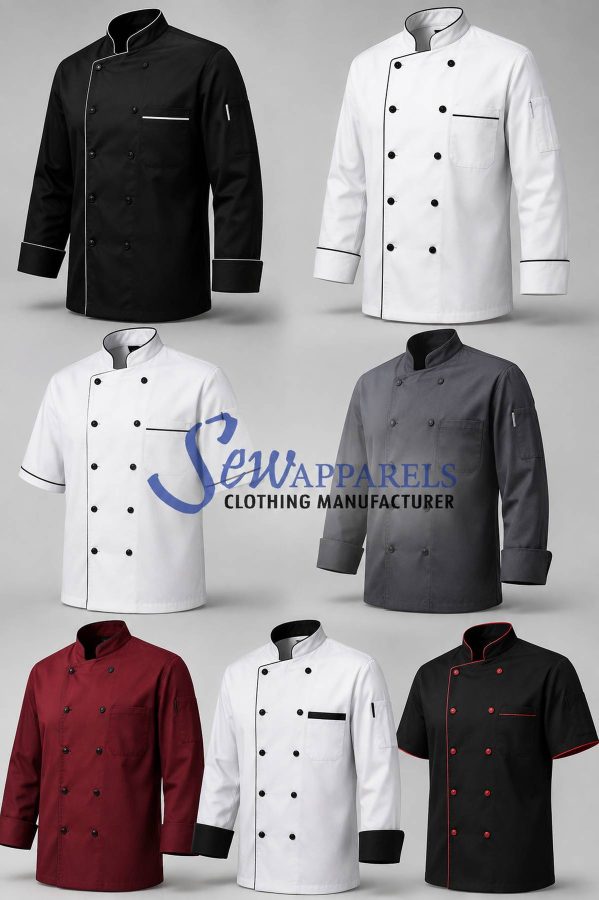
This guide helps hospitality brands, restaurant groups and culinary programmes compare options before sampling. It covers wearer trials, apron interaction, measurement records and order allocation. It does not claim that an ordinary chef coat provides certified protection against heat, cuts or chemicals. Any protective requirement needs its own assessment and suitable evidence, separate from a sleeve-style preference.
1. Define chef coat sleeve length assortment by role and requirements
Begin with hospitality coat role allocation. Identify the positions covered by the programme and the tasks those wearers perform. Separate a front-of-house presentation requirement from a back-of-house work requirement rather than applying one photograph to every department. Record who can approve the uniform specification and which decisions need consultation with the workplace’s responsible safety personnel.
A chef uniform employer specification should state required coverage, permitted styles, branding and any applicable workplace rules. If the employer requires a particular sleeve arrangement, document that requirement before offering an alternative. The buyer should also check local requirements relevant to the workplace; a garment supplier’s style description is not a substitute for that review.
For chef coat sleeve length assortment, describe the intended work setting alongside the role. A bakery, open restaurant kitchen and teaching kitchen may differ in tasks and presentation expectations. These descriptions establish questions for evaluation, not automatic conclusions about the safest or most comfortable option.
Separate ordinary uniform coverage from protective performance
A longer sleeve covers more of the arm, but coverage alone does not establish a certified protective function. Do not use a normal chef jacket as evidence of resistance to a specific hazard. Where protective clothing is required, confirm the appropriate specification and how the uniform works with it through the responsible workplace assessment.
2. Compare chef coat sleeve length assortment as complete constructions
A chef coat short sleeve range can differ in opening width, sleeve angle, upper-arm ease and finished length. The chef coat long sleeve assortment adds decisions about cuffs, fastening, wrist opening and forearm shape. Compare these features with the body, shoulder and armhole construction so the evaluation reflects the whole garment.
Use a chef coat sleeve style comparison that identifies the actual sample revision. Avoid calling two coats equivalent simply because they share a size label. Different armholes, shoulder widths or sleeve shapes can change how the garment moves even when nominal sleeve length is similar.
For chef jacket short long selection, show the intended endpoint on the wearer and specify the garment measurement method separately. A short sleeve should not be described only as “half sleeve,” nor a long sleeve only as “standard.” Those terms can leave the supplier and buyer interpreting different proportions.
Review cuff details before approving a long sleeve
Check whether the cuff is plain, fastened or designed for an approved adjustment. Assess its opening and interaction with the wearer’s tasks. Do not assume that rolling an unapproved cuff produces the same construction or behaviour as a purpose-designed shorter sleeve.
3. Measure chef coat sleeve length assortment consistently
Distinguish body measurements from finished-garment dimensions. A body reference helps describe the wearer population; a garment specification defines how the selected construction is measured. Keep the shoulder point, sleeve endpoint, measuring path and sample condition visible in the technical record instead of combining unrelated measurements in one column.
ISO 8559-1:2017 describes anthropometric measurements used in clothing development and population profiling. It provides a relevant reference for body-measurement terminology. It does not prescribe the finished sleeve length, allowance or production tolerance for your chef coat; those decisions belong in the buyer’s agreed garment specification.
For chef coat sleeve length assortment, record the method used for each style and inspect samples across the planned size range. A satisfactory middle-size sample does not establish that sleeve proportions or cuff openings work at the extremes. Agree the necessary size-set review with the supplier based on the actual collection.
Keep care condition attached to the measurement
State whether the measurement is taken before or after a defined care evaluation. Where post-care fit matters, record the procedure and the changed dimensions rather than comparing an unwashed sample with an unidentified washed coat. Agree tolerance and acceptance criteria instead of inventing a universal allowance.
4. Test chef coat sleeve length assortment with realistic movement
A chef uniform sleeve preference trial should involve relevant wearers and controlled tasks appropriate to the workplace. Check reaching, bending, turning and normal arm positions in a suitable trial setting. Record where the sleeve pulls, catches, restricts movement or feels unnecessarily loose. Keep observations linked to the sample and wearer size.
Chef coat apron sleeve interaction needs the intended apron or other authorised layers. Examine whether straps, arm movement or the coat’s shoulder construction affect comfort and access. A coat tried on alone may behave differently when the complete uniform is worn, so use the same combination when comparing alternatives.
Include a chef coat sample sleeve option for each proposed variant instead of assuming that approval transfers from one to the other. Ask wearers for specific observations rather than a general vote. “The cuff interferes with this task” provides a more actionable development comment than “I prefer the other one.”
Use consistent comparison conditions
Keep the trial tasks, garment fit and intended layers comparable where possible. If fabric weight or body construction also changes, record that difference. Otherwise, a perceived improvement may be attributed to sleeve length when another feature changed at the same time.
5. Evaluate chef coat sleeve length assortment within the work environment
A chef coat season sleeve brief should describe actual conditions rather than relying on calendar labels. Indoor temperature, humidity, air movement, workload and authorised layers may matter more than the season name. Identify when a proposed seasonal option will be used and which requirements continue to apply throughout the year.
HSE’s workplace heat-stress guidance includes work clothing among the factors to consider alongside workload and the environment. It identifies catering kitchens as a relevant setting. This is Great Britain guidance, not a universal sleeve rule; a shorter sleeve by itself is not evidence that workplace heat risks have been controlled.
For chef coat sleeve length assortment, keep comfort observations separate from safety conclusions. A wearer may report that one option feels cooler, but that report does not establish a measured thermal performance claim or replace the employer’s assessment. Avoid ranking every long-sleeve style as unsuitable or every short-sleeve style as preferable without project-specific evidence.
Respect dress requirements without concealing trade-offs
A chef jacket dress requirement may specify a traditional presentation for certain roles. Record it, then assess the proposed garment against the actual tasks and conditions. Where requirements conflict, involve the authorised decision makers before sampling or purchasing an option that cannot be used as intended.
6. Turn chef coat sleeve length assortment into an order matrix
The chef jacket sleeve option matrix should connect style, sleeve variant, colour, size, quantity and destination. Give each variant a clear identifier, even if the body design is shared. This helps the supplier, packing team and buyer distinguish physical items without relying on a free-text description.
For a chef coat sleeve variant order, reconcile totals by both variant and size. Check that the combined allocation matches the purchase order and that each location receives the intended range. Do not silently substitute long sleeves for short sleeves, or the reverse, when one allocation is unavailable.
Kitchen coat range duplication can increase the number of stock combinations without creating useful choice. Keep a variant when it serves a documented role, requirement or approved wearer need. Where two entries describe the same garment, consolidate the records before release so repeat orders do not acquire conflicting codes.
Hypothetical allocation example
Imagine a restaurant programme with one approved variant for a presentation role and another for a separate operational role. The order file should show the specific quantities and sizes for each, plus the approval basis. This example does not prescribe which sleeve either role needs or represent a Sew Apparels production result.
Maintain the assortment through repeat orders
Chef coat collection sleeve planning should include a retained specification and approved sample reference. Record the revision used for each variant, including cuff construction and measurement method. If a supplier proposes a material or construction change, review the affected fit and care questions before carrying the old approval forward.
For the approved assortment, monitor issue feedback by variant instead of merging every complaint into one style total. An opening-width concern in a short sleeve needs a different review from a cuff-fastening concern in a long sleeve. Identify the garment and observed problem before changing the whole collection.
When discussing custom chef coat manufacturing, provide the role brief, selected variants and size allocation together. For private label chef coat production, keep the brand’s presentation requirements and variable sleeve codes in the same released specification pack. Confirm project-specific availability, quantities and sampling terms rather than assuming that every combination is offered.
Use the chef coats kitchen heat comfort features review alongside sleeve trials so fabric, ventilation and whole-uniform conditions remain part of the decision.
Common buyer questions
Should a brand offer both short and long sleeves?
Only when the proposed variants serve a clear buyer need and can be specified and allocated reliably. A broader range is not automatically better. Begin with documented roles and trial findings, then confirm the commercial and production implications with the supplier.
Can one sleeve sample approve every size?
It provides limited evidence for its own size and construction. Review the size-set scope appropriate to the project, including proportions and movement at relevant range limits. Keep unresolved fit questions open for assessment rather than claiming that a single sample proves universal fit.
Can wearers choose any option they prefer?
That depends on the employer’s authorised uniform rules and the relevant workplace requirements. Preference is useful feedback, but the final range and allocation need a documented approval. State which options are permitted before collecting individual choices.
Prepare a sleeve brief for sampling
Bring the role allocation, garment dimensions, cuff details, trial observations and proposed quantities to the chef coat manufacturing page. Confirm the available development scope directly. Startup brands can start with a focused, clearly documented range instead of creating extra variants before their intended use is established.
The Chef Coats Buying Guides connect sleeve planning with other construction and approval decisions. Retain one released record for each chosen variant so sampling, ordering and repeat supply all refer to the same garment. That makes the range easier to explain and the delivered allocation easier to verify.