
Knit Pajama Sets Covered Waistband Buying Guide
Knit pajama sets buying guides help brands define a covered waistband that stays comfortable, secure and repeatable from sample to bulk production. Start with the approved elastic, casing width, seam allowance and size chart, then connect those decisions to fit, movement, laundering and the intended sleep environment. Keep the reference set connected to the product brief so a small startup label and an established retailer can review the same construction logic.
A reliable knit pajama waistband depends on elastic recovery, casing width, stitch security, drawcord placement and the way the top and bottom move together. Use these buying guides to review waistband bulk, comfort, opening control and wash response, then confirm the sample after movement and laundering. The published covered-waistband article keeps the supporting decisions in one path for product teams and buyers.
Knit Pajama Sets Covered Waistband Design: 9 Smart Checks
Specify elastic casing width, waistband seam bulk, drawcord placement and recovery on an approved knit pajama set sample. Use this covered-waistband checklist to keep comfort, security and repeat production consistent before bulk approval.
Read the covered waistband design guideElastic Casing Width and Recovery Review
Specify elastic width, recovery target, casing ease and pre-wash measurement on the knit pajama set sample. Compare relaxed and stretched waist measurements, then keep the accepted elastic route with the production brief.
Read elastic casing and recovery checksWaistband Seam Bulk and Comfort Check
Review waistband seam bulk, stitch density, turn-of-cloth allowance and inside comfort on the knit pajama set sample. Record where layers stack or twist, then keep the accepted seam construction with the production brief.
Review Coats guidance on soft, secure seamsDrawcord Placement and Security Review
Place the drawcord, exits, bartacks and cord ends against the size chart before cutting. Check that the cord remains secure, comfortable and easy to control across the approved knit pajama set sample.
Read the waistband drawcord reviewKnit Pajama Set Waistband Fit, Movement and Wash Approval
Check waistband comfort, rise, sitting movement and recovery in natural wear. Repeat the review after laundering so the approved covered waistband remains stable across sizes and repeat orders. Confirm the wash and drying procedure, cycle count, measurement points and relaxation interval with the laboratory before comparing samples. A reference method is not proof that the actual garment meets an agreed requirement.
Review the waistband fit and wash checksConnect Waistband Approval with Pajama Fabric Balance
Start with the covered-waistband article, then record elastic width, casing depth, seam bulk, drawcord position and wash results that still need sample confirmation. Keep the approved reference, measurement sheet and revision notes together so every change can be checked against the same pajama-set brief. Use the companion fabric-balance guide when top and trouser materials have different weight, stretch or laundering behaviour.
Compare pajama fabric balance with waistband approvalKnit Pajama Set Elastic, Trim and Label Approval
Review elastic, labels, bartacks and trim coordination on the approved knit pajama set. Use the product-specific decision guide to compare samples, document the construction and keep a low MOQ route clear for startup brands.
Review the knit pajama set manufacturing pageKnit Pajama Sets Covered Waistband Buying Guide: Approval Steps
Begin with the wearer, climate, size range and intended pajama-set use before reviewing the sample. A useful covered-waistband buying guide turns waistband design into decisions that can be sampled: elastic width, casing depth, seam bulk, drawcord control and wash response. Keep the approved trim card and annotated sketch beside the measurement chart so comments refer to a clear construction point rather than a general feeling.
Review the approved top and bottom in relaxed standing, sitting and sleeping movement. Note whether the waistband stays flat, comfortable and secure; check whether the casing rolls, twists or creates excess bulk; and record any drawcord or trim concern. After laundering, compare the same points again so the factory has a repeatable approval record for costing, sampling and bulk production.
Specify Elastic Casing Width and Recovery for Knit Pajama Sets
Elastic recovery changes how a knit pajama waistband sits after movement and laundering. Record relaxed and stretched waist measurements, casing width, elastic width, seam allowance and waistband position on the same size. Mark the agreed tolerance and keep the elastic lot and care method with the approval file.
Sample reviews should include turning, stretching, sitting and lying movement rather than a flat-table check alone. Compare the waistband before and after movement, then repeat the measurements after washing. Record elastic composition, casing construction, stitch density, drawcord position and any point where comfort or recovery drifts away from the approved set. For a repeatable wash comparison, agree on a domestic laundering procedure such as ISO 6330 and document the cycle used for the sample.
Control Waistband Seam Bulk and Comfort in Knit Pajama Sets
Waistband seam bulk is a product decision, not a vague finishing phrase. Record casing depth, fold direction, stitch density, seam allowance, elastic width and surface feel. A compact casing may look clean but restrict movement, while excessive layers can feel heavy; the correct balance depends on climate, fit, care route and target price.
Ask the sample team to review the waistband before and after washing, including edge comfort, casing roll, elastic exposure, bartack security and shape recovery. A soft finish should not conceal weak construction or uncontrolled extension. Keep the approved elastic, casing dimensions and wash comments with the pajama-set brief so a low MOQ programme can reproduce the same comfort when more colours or sizes are added.
Plan Drawcord Placement and Security for Pajama Sets
Drawcord placement depends on the waistband opening, casing width, exit position, seam allowance and intended wearer. Review cord length, end finish and bartack position, decide where the exits should sit, and record whether the design uses a single cord, paired exits or no cord for a specific size range.
For technical development, compare the cord and casing on the sample before and after washing. Record exit spacing, cord length, end finish, bartack security and shade standards beside stretch, recovery and wash observations so the waistband stays specific to the approved sample rather than becoming a generic trim promise.
Low MOQ Knit Pajama Set Manufacturer: Prepare the Sample Route
A buyer comparing a low MOQ knit pajama set manufacturer should clarify elastic width, casing construction, cord policy, size range, branding, trims and packing before requesting a quotation. Prepare the covered-waistband brief first, then confirm which elastic is stock supported, which trims require custom development and which approvals must happen before bulk production.
Support for Startup Brands Developing Knit Pajama Sets
Sew Apparels supports startup brands by turning an early pajama-set waistband idea into an organized development record. Bring the reference garment or sketch, intended wearer, size chart, elastic preference, cord direction, planned quantity and packaging direction. Keep the approved sample, wash notes, revision history and packing details together so the next discussion starts from evidence.
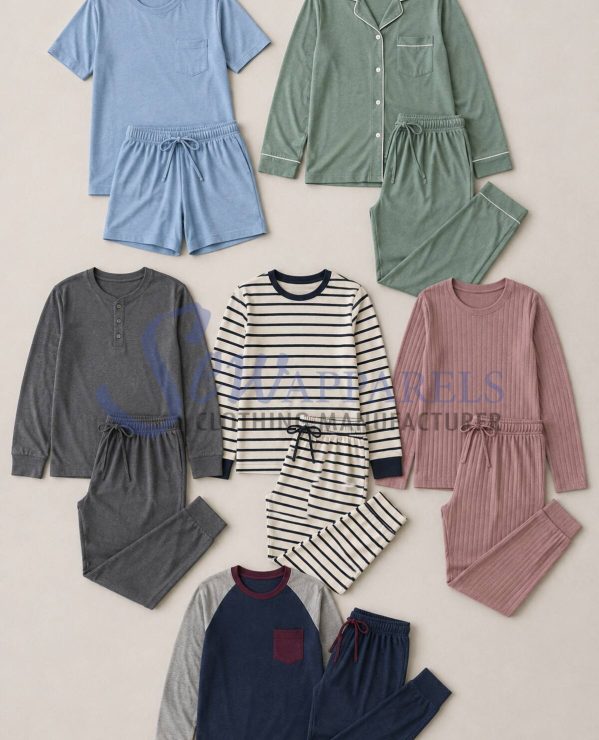
Turn Covered Waistband Decisions Into a Clear Product Brief
After using these knit pajama set buying guides, collect the approved garment reference, elastic width, casing depth, seam-bulk notes, drawcord policy, fit measurements, wash comments and size-set feedback. Keep the decision record with the quotation so the production team can review the exact covered waistband before sampling. Add trim notes, labels and packaging instructions to the same file, and identify the sample date, elastic lot and requested change for every revision.
Explore custom knit pajama set manufacturing