
Knit Shorts Side Seam Pocket Buying Guide
Knit shorts buying guides help brands make side seam pockets comfortable, stable and repeatable by controlling pocket bag fabric, opening reinforcement, placement and seam bulk before sampling and bulk production. Start with the approved knit, size chart and intended use, then connect every pocket decision to movement, laundering and the final product brief.
A reliable knit shorts pocket keeps its opening clean, holds the pocket bag without pulling the leg, and remains comfortable when the wearer sits, walks or stretches. Use these buying guides to compare the sample against measured tolerances, then connect the published side-seam pocket article to the product route for clear approvals and repeat orders.
Knit Shorts Side Seam Pocket Construction: 9 Smart Checks
Review pocket bag fabric, opening reinforcement, placement and seam bulk on the approved knit shorts sample. Use the complete side-seam pocket checklist to keep movement, comfort and repeat production under control before bulk approval.
Read the knit shorts side-seam pocket articleKnit Shorts Pocket Bag Fabric and Drape Review
Compare pocket bag composition, GSM, stretch, opacity and wash response inside the actual shorts. Record whether the bag twists, shows through or changes the leg drape, then keep the accepted fabric route with the production brief.
Read pocket construction and fabric checksKnit Shorts Pocket Opening Reinforcement Checklist
Define opening length, seam allowance, stitch density, topstitch and bartack positions before sewing. Check the reinforced mouth after movement and laundering so the opening remains clean without making a soft knit feel stiff.
Read pocket-opening reinforcement checksKnit Shorts Pocket Placement and Wear Comfort
Set pocket angle, start and end points, distance from the waistband and hem, then review reach while standing, sitting and walking. Keep left and right legs aligned so the approved placement repeats across sizes.
Read pocket placement and movement checksKnit Shorts Seam Bulk and Stretch Recovery
Review shell, pocket bag and facing together to control seam thickness and stretch. Measure the finished ridge, inspect the side seam after washing and record the accepted operation sequence for a low MOQ repeat order.
Review Coats guidance on soft, secure seamsConnect Pocket Approval with Knit Shorts Hem Stability
Start with the side-seam pocket article, then record bag fabric, opening reinforcement, placement, seam allowance and wash decisions needing sample confirmation. Keep the reference, measurement sheet and comments together so every revision can be checked against the same knit-shorts brief. Use the companion hem-stability guide to keep pocket approval, leg balance and the final hem review in one sample record.
Review the companion hem-stability guideKnit Shorts Trims, Labels and Startup Brand Review
Review labels, trims, artwork and pocket-bag coordination on the approved knit shorts. Use the product-specific guide to compare samples, document the construction and keep a clear low MOQ route for startup brands.
Review knit shorts manufacturingKnit Shorts Bursting Strength Test Plan: 9 Essential Checks
Define the fabric lot, test method, conditioning, reporting units and buyer acceptance basis before approving knit shorts production material.
Read the bursting-strength test planKnit Shorts Drawcord End Specification: 10 Essential Checks
Define cord form, end treatment, length, exits, care behaviour and supplier identity before approving an adult knit shorts waistband.
Read the drawcord specificationKnit Shorts Side Seam Pocket Buying Guide: Pocket Bag Fabric
Pocket bag fabric changes drape, stretch, drying time and the way a knit shorts leg hangs. Record fibre composition, GSM, recovery, opacity and surface feel for the pocket bag, then compare it with the shell fabric. A light jersey may feel comfortable but can distort at the opening; a denser knit may hold shape while adding bulk. Keep the approved swatch, fabric code and wash comments with the brief so a low MOQ programme can repeat the same feel.
Review the pocket bag inside the actual shorts, not as a loose swatch. Check whether the bag catches on the wearer’s hand, shows through the shell, twists after laundering or adds a visible ridge. Approve the bag length, width, turn and seam allowance together with the intended pocket opening so the pattern and sewing route remain aligned.
Reinforce the Pocket Opening
A side seam pocket opening takes repeated hand entry and movement loads. Specify the opening length, seam allowance, topstitch or bartack plan, stitch density and reinforcement position on the construction sheet. Test the opening on the approved knit after movement and laundering, then check for stretching, skipped stitches, seam grin and local puckering. If the programme needs a laboratory comparison of local bar-tack weakness, ASTM D7506/D7506M describes a pocket-reinforcement test method for garment pocket areas.
Keep reinforcement proportional to the fabric and use. A heavy bar tack can stiffen a soft lounge short; an under-specified opening can spread during wear. Compare the front and back of the opening, confirm the pocket bag is caught securely, and photograph the accepted construction for every size set.
Control Seam Bulk and Stretch
Side seam pocket construction brings the shell, pocket bag and sometimes a binding or facing together. Specify the order of operations, seam allowance, stitch type, differential feed and pressing route so the seam does not become a hard ridge. Measure the finished seam bulk and inspect it while the wearer sits, walks and bends.
If the leg twists or the pocket mouth waves, review grain, feed, tension and pocket-bag recovery before changing the size chart. Keep the pocket entry level on both legs and make the accepted tolerance clear to the operator. A controlled seam is easier to repeat across colours and small startup-brand quantities.
Confirm Placement and Movement
Pocket placement affects reach, comfort and the visual balance of knit shorts. Mark the opening start, end, angle and distance from the side seam, waistband and hem on the approved pattern. Check the pocket with the shorts standing, sitting, walking and stretching so the hand can enter naturally without pulling the leg or opening the seam.
Run the same movement review after washing and conditioning. Note whether the bag collapses, the opening rolls, the side seam drifts or the trim adds weight. Keep the approved reference and measurement sheet together so comments point to a measured construction detail rather than a general impression.
Low MOQ Knit Shorts Manufacturer: Prepare the Sample Route
A buyer comparing a low MOQ knit shorts manufacturer should clarify pocket bag fabric, opening reinforcement, pocket position, seam allowance, stitch route, labels, trims and packing before requesting a quotation. Prepare the pocket brief first, then confirm which fabric is stock-supported, which colour or artwork needs development and which approvals must happen before bulk production.
Support for Startup Brands Developing Knit Shorts
Sew Apparels supports startup brands by turning an early knit shorts idea into an organised development record. Bring the reference garment or sketch, intended wearer, size chart, fabric preference, pocket requirements, artwork, planned quantity and packaging direction. Keep the approved sample, wash notes, revision history and trim details together so the next discussion starts from evidence.
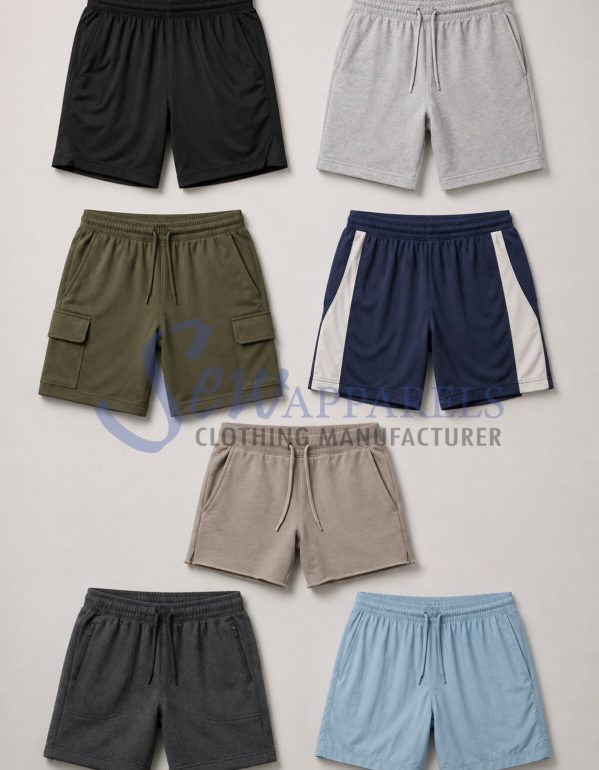
Turn Knit Shorts Pocket Decisions Into a Clear Product Brief
After using these knit shorts buying guides, collect the approved reference, pocket bag fabric, GSM, opening reinforcement, placement measurements, seam allowance, movement notes, wash comments and size-set feedback. Keep the decision record with the quotation so the production team can review the exact pocket construction before sampling. Add labels, trims and packaging instructions to the same file, and identify the sample date, fabric lot and requested change for every revision.
Explore custom knit shorts manufacturing