GUIDE 01
Rib Shade Coordination: School Sweatshirts
Coordinate body and rib colour, dye-lot matching, contrast rib, controlled viewing and care validation through one measurable school-sweatshirt shade method.
Read the rib shade coordination guide
SCHOOL SWEATSHIRTS PRODUCT DEVELOPMENT
Use these school sweatshirts buying guides to turn school sweatshirt concepts into measurable shade, rib, fabric, fit, care and production requirements. Each guide covers one development decision while connecting sampling evidence, approvals and bulk controls. Begin with the current shade-coordination article below, then review the product page when your school, distributor or uniform brand is ready to prepare a focused manufacturing enquiry.
Review the School Sweatshirts product page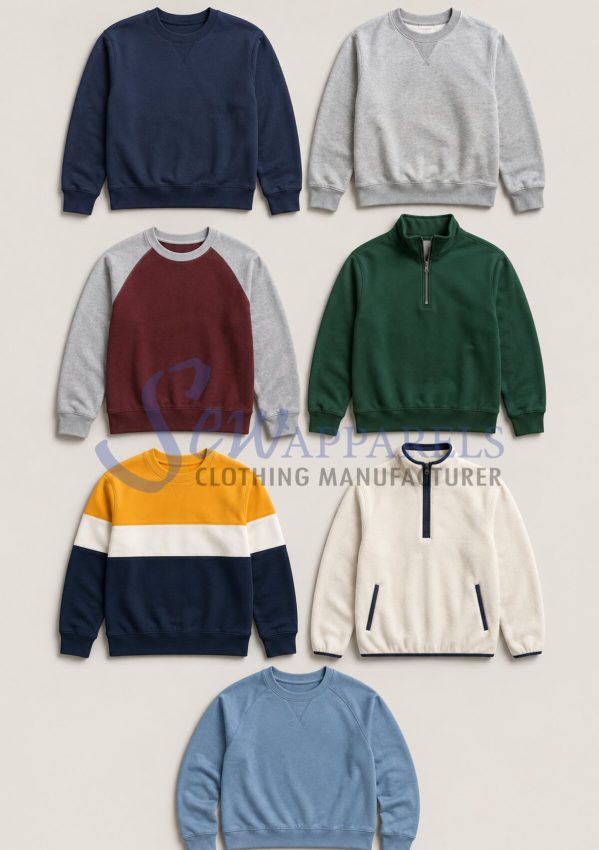
Style reference from the existing product page. This image does not verify body-to-rib shade matching, laundering performance or certification.
GUIDE 01
Coordinate body and rib colour, dye-lot matching, contrast rib, controlled viewing and care validation through one measurable school-sweatshirt shade method.
Read the rib shade coordination guideGUIDE 02
Control neck rib length, knit recovery, seam stretch, back neck tape, grading and laundering through one measurable crew-neck approval method.
Read the crew neck shape retention guideGUIDE 03
Review how raised embroidery contacts the sweatshirt inside its proposed fold. Use five critical checks and a contact packing map to connect badge position, trial conditions and unpacked observations before approving a defined presentation arrangement.
Read the embroidery packing marks guideGUIDE 04
Evaluate a proposed badge change using the actual sweatshirt and an authorized sample process. Use five critical checks and a comparison card to connect attachment details, exposed fabric condition, care evidence and controlled replacement approval without guaranteeing clean removal or reuse benefits.
Read the removable badge evaluation guideA useful school sweatshirt brief starts with the wearer, uniform policy, climate, layering system, school colours and expected care route. Define whether the garment is unisex or shaped, the approved size range, the fabric family and the visual identity elements that must remain consistent. Convert appearance words into measurements, colour references, construction drawings and acceptance checks. Record the fit-model profile, base size, representative graded sizes and wearing trial.
Treat body fabric, rib, thread, embroidery and print as one coordinated system. This approach prevents separate approvals from producing a garment that looks inconsistent when assembled and gives the factory clear evidence for sampling, bulk cutting and repeat orders. Use the school sweatshirts buying guides to connect these approvals with the neckline, crest and packing decisions required for the same uniform programme.
Body fabric and rib rarely appear identical by accident because their fibre content, yarn structure, knit construction, weight and finishing route can differ. State whether the rib must match the shell visually, sit within an approved tolerance, or create an intentional contrast. Approve the actual sweatshirt fleece or jersey together with production-intent cuff, hem and neck rib under the same viewing condition.
Include thread, drawcord and branding when they affect the colour impression. Label every swatch with supplier, colour code, dye lot and approval status. A sealed shade set should show the target relationship after conditioning and laundering, so purchasing and quality teams compare bulk combinations against one controlled reference rather than separate colour names.
School sweatshirts dye-lot matching requires traceability from yarn or greige material through dyeing, finishing, cutting and packing. Ask suppliers to identify body and rib lots before assembly, then compare representative pieces from the beginning, middle and end of each lot. Allocate compatible lots to the same order, school and delivery batch. Do not rely on one small lab dip when surface texture can change the visual result.
Record instrumental readings where appropriate and confirm the final combination visually in a controlled light booth. If exact pairing is impossible, define a written tolerance and an allocation rule before cutting. Retain sealed production swatches so later replenishment orders can be assessed against the approved school identity. Within the school sweatshirts buying guides, shade allocation should remain linked to the actual neck-rib specification and approved care records.
Contrast rib can reinforce a school identity, but the brief must describe more than a colour name. Specify the exact reference, approved light source, placement, finished rib width, stripe sequence and relationship to embroidery, print or piping. Review the combination at garment scale because a narrow swatch may not reveal how strongly the contrast reads across cuffs, hem and neckline.
Check colour transfer, crocking risk and staining during the stated wash route, especially when dark rib meets a light body. Confirm that stretch and recovery do not expose an unintended pale ground. Photograph the sealed sample and keep physical references for each approved colourway. These controls preserve intentional contrast without allowing lot variation to look like a production fault.
Colour approval should combine measurement with controlled human evaluation. Agree the instrument geometry, illuminant, observer, specimen preparation, number of readings and calculation method before using numerical limits. ISO 105-J03:2009 provides a method for calculating colour differences, while ASTM D1729-22 describes visual appraisal under controlled illumination.
Instrumental results help screen variation, but textured fleece and rib may look different even when numbers are close. Assess conditioned specimens flat and, where relevant, stretched to their normal worn state. Use trained observers, neutral surroundings and defined viewing time. Record pass, conditional approval or rejection with the sample identity. The final decision must match the buyer’s written tolerance and sealed garment standard.
Confirm the real laundering temperature, detergent, drying method, cycle count and pressing condition before sealing the school sweatshirt. Measure body and rib shrinkage, twist, recovery, seam appearance, shade change and staining before and after care. Unequal dimensional change can make cuffs flare, hems wave or neck rib distort even when the initial colour match is acceptable. Build the production inspection plan around measurable shade zones, lot identity, garment measurements and functional rib checks.
Inspect representative pieces after the agreed care cycle, and quarantine mixed or unidentified lots before they reach sewing. Retain approved pre-production and washed samples, test reports, shade records and defect limits. Traceable evidence helps the factory correct causes early and supports consistent term-to-term replenishment. The school sweatshirts buying guides organize the review; a style illustration or supplier assurance cannot replace the actual care evidence.
A low MOQ school sweatshirts manufacturer can help a startup uniform brand, school club or new distributor validate colour, rib construction, fit, branding and packaging before committing to a larger programme. Small MOQ development still needs a controlled technical pack, approved materials, size set, care route, inspection plan and sealed sample. For startup planning, limit variables and define clear approval gates before requesting a quotation. Begin with one base silhouette, one fabric family and one rib system, then document measurable changes between colourways.
Confirm the current commercial minimum, material availability, dyeing constraints and development schedule for the chosen sweatshirt. Treat the first order as a disciplined validation stage that creates dependable evidence for repeats. The current product page states 1,000 pieces per design and colour, sampling of 10–15 days, and bulk production of 15–30 days at MOQ after PP approval, depending on quantity. These published figures are planning references; confirm customized fabric, rib-colour minimums, material availability and the current schedule in the written quotation.
The final school sweatshirt package should connect the technical drawing, measurement chart, grade rules, bill of materials, Pantone or buyer colour references, rib specification, artwork, labels, packaging, care method and quality plan. Give every file a version and date, and name the person responsible for each approval. Use a change log to show what changed, why it changed and which sample replaced the previous reference.
Costing should reflect the confirmed construction, colour-control route and testing plan. Before production, reconcile the purchase order with the sealed sample and technical pack so quantity, size ratio, school colour, lot allocation, labelling and delivery terms all point to one controlled product definition. Use the school sweatshirts buying guides for navigation, and retain each actual approval in the buyer’s versioned technical pack.
The school sweatshirts buying guides distinguish visual appraisal from instrumental colour calculation. ASTM D1729-22 addresses visual colour appraisal under controlled illumination. ISO 105-J03:2009 calculates colour differences between specimens of the same material measured under the same conditions. Body fleece and rib can differ in construction and composition, so ask the laboratory which comparison is applicable rather than assuming the method makes unlike materials equivalent. Agree viewing conditions, buyer tolerances and specimen identity. Neither reference supplies a universal sweatshirt acceptance limit, proves Sew Apparels certification or replaces a sealed production-intent garment and relevant care evidence.
ASTM visual colour appraisal practice ISO textile colour-difference calculationUse the guide above to prepare the body and rib standards, colour references, dye-lot rules, fit measurements, care evidence, branding details and quantity route. Send the confirmed brief for focused costing and sample development. Keep every approval measurable so bulk school sweatshirts can be inspected against the same sealed standard.
Review custom School Sweatshirts manufacturing