
SCHOOL TRACKSUITS PRODUCT DEVELOPMENT
School Tracksuits Buying Guides
Use these school tracksuits buying guides to turn a school tracksuit concept into measurable colour, fabric, fit, trim, care and quality requirements. Each guide addresses one development decision while keeping jacket and trouser approvals connected. Start with the current colour-matching guide below, then use the product page when your school, club or brand is ready to prepare a focused manufacturing enquiry.
Review the School Tracksuits product page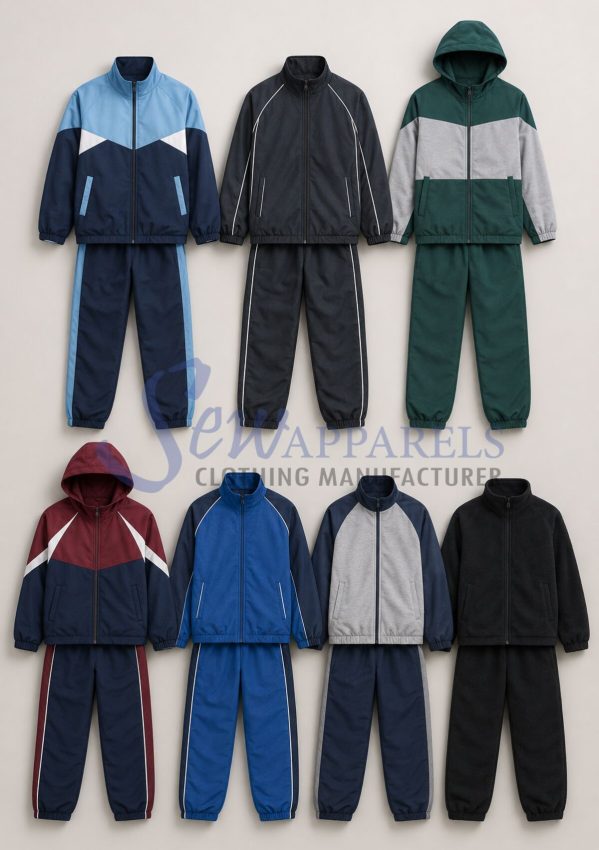
Tracksuit style references from the existing product page. These illustrations do not establish an approved colour match, tested care performance or product certification.
GUIDE 01
Jacket Trouser Colour Matching: School Tracksuits
Control panel shade, trim colour, viewing conditions and repeat-order continuity through one measurable paired-set approval method.
Read the jacket and trouser colour guideGUIDE 02
Ankle Opening Options: School Tracksuits
Compare open hems, rib cuffs and ankle zippers through measurable fit, footwear, care and bulk-inspection checks.
Read the ankle opening options guideGUIDE 03
Jacket pocket bag control: review anchors, use states and care
Map actual pocket-bag anchors and compare the finished jacket empty, in agreed ordinary use and after care. Use five critical checks and a behaviour map to connect size coverage, hanging, twisting, visibility and approved construction revisions.
Read the jacket pocket bag control guideGUIDE 04
Jacket and trouser packing: reconcile component identities and permitted pairs
Verify permitted top-and-bottom size combinations from the approved set master. Use five critical checks and a pairing worksheet to connect component identifiers, versions, pack references, quantities and documented mismatch correction.
Read the jacket and trouser packing checks guideGUIDE 05
Laundry turnaround: compare jacket and trouser drying evidence
Define the care route before comparing jacket and trouser readiness. Use five critical checks and a component drying trial record to connect starting conditions, thick seams, enclosed areas, observation methods and supported conclusions without universal drying-time claims.
Read the laundry turnaround evaluation guideGUIDE 06
Lining bagging review: connect dimensions, attachments and care states
Investigate lining gathering or protrusion through the complete jacket. Use five critical checks and a lining balance record to connect shell and lining measurements, actual attachments, care states, sample sizes and the authorised correction.
Read the lining bagging review guideBuild a controlled school tracksuit specification
A useful school tracksuit brief begins with the wearer, climate, activity, uniform policy, care route and delivery calendar. Define whether the set is for daily class, physical education, travel or competition, then record jacket type, trouser silhouette, size range, colour blocking, branding and pocket needs. Translate appearance words into drawings, measurements, material codes and acceptance checks.
The jacket and trouser must be approved as one coordinated product because colour, fabric, fit and trim decisions affect both pieces. Record the fit-model profile, approved base size and representative graded sizes so sampling decisions become repeatable production evidence. Use these school tracksuits buying guides to identify which paired-set decisions need an actual sample before approval.
Plan jacket and trouser colour architecture
Map every visible body panel, contrast insert, rib, zipper tape, drawcord, thread, print and embroidery colour before sampling. Give each component a code, physical standard, substrate and intended relationship: exact match, coordinated tone or deliberate contrast. Mark fabric face and nap direction where surface orientation changes appearance.
Approve the jacket and trouser together under controlled light, both flat and on a wearer, because curved seams and adjacent panels can expose differences hidden in separate swatches. Pair production lots through shade grouping and retain a signed colour map, trim card and sealed set for bulk inspection and repeat orders. These school tracksuits buying guides keep the panel colour map connected to the same jacket and trouser reference.
Select fabric surface, weight and shade controls
Specify fibre blend, knit or woven structure, finished weight, stretch, recovery, brushing, surface direction, dimensional change, pilling expectation and colourfastness route. Two fabrics carrying the same colour code can look different when texture, gloss or pile alters reflected light. Approve production-intent shell, lining, pocketing and rib together.
Define the instrument settings, visual booth conditions, colour-difference formula and tolerance used for lab dips and bulk lots. Require roll identification, shade sorting and cut-bundle traceability. Retain readings with the physical master so purchasing, cutting and quality teams compare materials against one controlled target instead of independent colour memories. In these school tracksuits buying guides, material identity and viewing conditions stay beside each recorded colour decision.
Balance paired-set fit and movement
School tracksuit fit should be reviewed through the jacket shoulder, chest, armhole, sleeve, body length and hem together with the trouser rise, seat, thigh, knee, inseam, hem and waistband. Test reaching, sitting, running, bending and layering on representative wearers. Jacket length and trouser rise must remain visually balanced across the size range, while grade rules should preserve panel proportions and stripe alignment.
Measure selected small, middle and large sizes before and after care. Photograph consistent front, side and back views and log every pattern revision so an attractive sample becomes a reproducible specification rather than a one-time visual approval. The school tracksuits buying guides link the size review to the complete paired set rather than a single garment.
Coordinate trims, pockets and decoration
Plan zipper gauge, puller, elastic, drawcord, eyelets, toggles, pocket closures, labels, thread, print and embroidery as one bill of materials. State whether each trim matches, coordinates or contrasts with the shell and approve it beside the actual fabric. Define pocket opening, usable depth, reinforcement and access during movement.
Place emblems from stable garment landmarks and control size, orientation and tolerance across graded sizes. Test zipper operation, waistband recovery and loaded pockets before sealing the sample. Record trim supplier references and decoration files so a later substitution cannot enter production without a fresh colour, performance and appearance review.
Validate care, colour and bulk quality
Confirm the required wash temperature, detergent, drying method, cycle count and recovery interval before final approval. Measure jacket and trouser dimensions, then review shade change, staining, migration, surface appearance, pilling, seam puckering, zipper behaviour, waistband recovery and decoration condition. Inspect the coordinated set after care because body fabric, rib and trims can change at different rates.
Build bulk inspection around measurable points, visual zones, paired-set colour checks and functional tests. Sample multiple sizes, fabric rolls and trim lots at startup and defined intervals. Retain approved unwashed and washed garments, test reports, shade records and defect limits for traceable repeat production.
Low MOQ school tracksuits manufacturer support for startup brands
A low MOQ school tracksuits manufacturer can help a startup brand, school club or new uniform programme validate colour blocking, fit, trims, branding and packaging before a larger rollout. Small MOQ development still needs a controlled technical pack, approved materials, size set, care route, inspection plan and sealed sample. Startup development can stay focused when the brief limits variables and defines clear approval stages.
Begin with one base silhouette, a focused colour range and shared compatible trims. Confirm the current commercial minimum, fabric availability, custom-dye requirements and development schedule before committing launch dates. Treat the first order as a disciplined validation stage that creates dependable evidence for repeat production.
The current School Tracksuits product page lists a minimum of 300 sets per design and colour, sampling in 10–15 days and bulk production in 15–30 days at MOQ after PP approval, depending on quantity. Use these published figures for initial planning and request a current product-specific quotation. Confirm the jacket and trouser configuration, fabric route, colour split, decoration, size ratio and destination before relying on the commercial minimum or timing. A request below the published minimum remains a feasibility question; it is not an accepted order or guaranteed startup arrangement.
Prepare documentation and an approval route
The final school tracksuit package should connect technical drawings, measurement charts, grade rules, panel map, bill of materials, physical colour standards, artwork, labels, packaging, care method and quality plan. Give every file a version and date, and identify the person authorised to approve each sample stage. Use a concise change log to show what moved, why it moved and which sample replaced the previous reference.
Costing should reflect the confirmed construction and material route. Before production, reconcile the purchase order with the sealed jacket-and-trouser set so quantity, size ratio, colour, labelling, packing and delivery terms point to one controlled product definition. Return to the school tracksuits buying guides when a revision affects several connected development decisions.
Technical references for tracksuit colour control
Use these school tracksuits buying guides with the public scope of ASTM D1729-22 for visual colour appraisal of diffusely illuminated opaque materials by appropriately trained observers. It does not supply a universal paired-set acceptance limit. ISO 105-C06:2010, confirmed in 2026, covers colourfastness under specified domestic or commercial laundering methods. Its public scope excludes the effects of optical brighteners and does not establish suitability for every industrial or hospital wash route. Agree the actual procedure, material configuration and buyer limits with the responsible technical team. These references do not certify a garment or replace paired-set trials, retained samples and recorded approval evidence.
Review ASTM visual colour appraisal Review ISO laundering colourfastnessTurn your school tracksuit decisions into a product brief
Use the guide above to prepare the coordinated colour map, material standard, jacket and trouser measurements, trim schedule, care evidence, branding details and quantity route. Send the confirmed brief for focused costing and sample development. Keep each approval measurable so production can be inspected against the same sealed set and documented repeat-order standard.
Review custom School Tracksuits manufacturing