
Sweatshirts Buying Guides
Use this practical resource hub to plan custom sweatshirts with clearer decisions about fit, fabric, construction, branding, testing and production. Each published guide answers one defined development question and connects the answer to the original Sew Apparels sweatshirt manufacturing service, helping sourcing teams turn research into an accurate, traceable product brief.
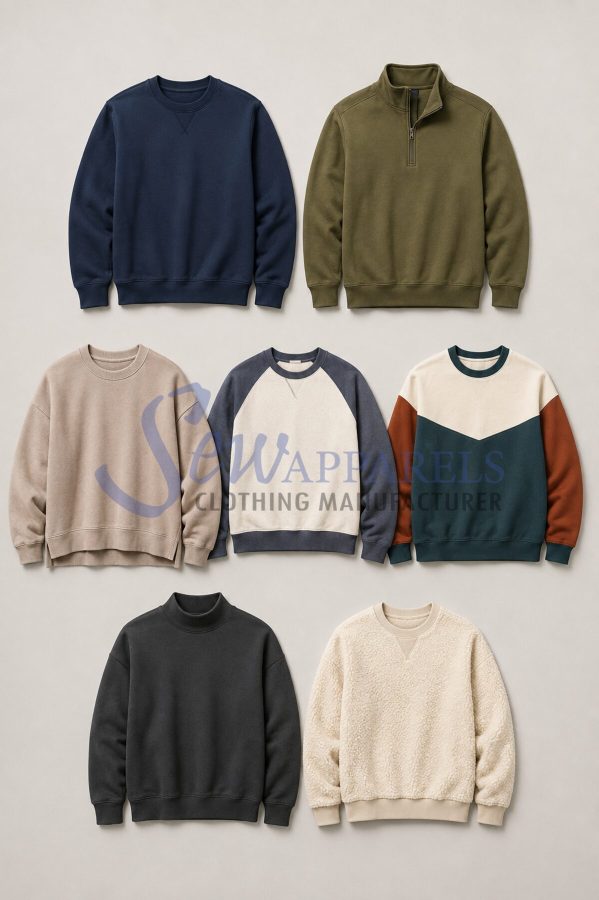
Published Sweatshirts Buying Guides
Drop Shoulder Proportioning: Sweatshirts
Balance shoulder drop, sleeve length, body width, armhole depth, grading and wash approval before bulk production.
Read the drop shoulder proportioning guideCuff Rib Recovery: Sweatshirts
Control elastane content, rib length, attachment ratio, seam stretch, washing and graded cuff measurements before bulk approval.
Read the cuff rib recovery guideInside-Out Sweatshirt Construction Brief
Specify the intended exposed surface, seam presentation, labels, pocket treatment and approved reference so an inside-out sweatshirt design remains consistent in production.
Read the inside-out construction brief guideSweatshirt Applique Development Approval
Review applique material, artwork scale, edge finish, stitch route, placement and laundering appearance before approving the sweatshirt decoration sample.
Read the applique development approval guideSweatshirt Raglan Sleeve Specification
Set raglan seam landmarks, sleeve balance, underarm ease, cuff position and grading measurements before approving sweatshirt fit across sizes.
Read the raglan sleeve specification guideSweatshirt V-Insert Neckline Development
Define V-insert dimensions, fabric, rib relationship, seam finish and neckline recovery in the development brief before sampling and bulk approval.
Read the v-insert neckline development guideStart with the sweatshirt product brief
A useful sweatshirt brief identifies the wearer, market, season and intended use before material selection begins. Define whether the silhouette should be classic, oversized, cropped, relaxed or athletic. Add the destination climate, target retail price, size range, colour count and order quantity. These decisions shape shoulder drop, chest ease, sleeve volume, body length, rib depth, fabric weight and finishing choices.
Include front, back and detail sketches with a measurement chart and point-of-measure diagrams. Record shoulder width, chest width, body length, armhole depth, sleeve length, cuff opening, neck width and rib height. State whether sleeve length is measured from centre back, shoulder seam or another fixed point. Clear grade rules and tolerances prevent a fit correction from being interpreted differently across sizes.
Connect fabric, fit and construction
Sweatshirt proportions respond to material behaviour. Brushed fleece, French terry and interlock can differ in thickness, stretch, recovery and drape even at a similar finished GSM. A soft, heavy fleece may pull the sleeve down and make the shoulder appear lower, while a firm fabric can make the same pattern look wider and more structured. Approve fabric and fit together rather than as separate decisions.
Review the neck rib, shoulder seam, armhole, cuff and hem as one construction system. Rib recovery affects neckline shape and cuff position; seam bulk affects how the shoulder sits; armhole depth affects mobility and sleeve hang. Confirm stitch type, seam allowance, reinforcement and differential feed for the approved fabric. Decoration placements must also be checked after the proportion is stable.
Plan the wearer experience
Describe how the sweatshirt should feel during daily wear, layering, travel, work or training. The intended use determines the balance between ease and control. An oversized style still needs a stable neckline and deliberate sleeve length, while a closer silhouette needs enough chest and armhole room for movement. The brief should explain the intended visual effect instead of relying only on a generic fit label.
Run wear trials that include reaching forward, raising both arms, sitting and layering over the planned base garment. Check sleeve stacking, hem lift, neck distortion, cuff position and excess fabric under the arm. Photograph front, side and back views on the intended size, then record comments against measurements. Measured evidence makes the next pattern revision faster and easier to approve.
Sampling and quality approval
Use a documented development sample, washed sample and pre-production sample. The final pre-production sample should use approved fabric, rib, thread, branding, labels and finishing. Measure the garment before and after the agreed wash procedure, and retain signed swatches plus one sealed reference garment. Revision numbers should appear on the specification, sample comments and test reports.
Plan dimensional-stability, spirality, pilling, abrasion, colourfastness and seam-performance checks for the target market. Confirm how the body, sleeve and shoulder measurements may change after laundering. Dark shades, garment dye, enzyme wash, printing and heat transfer can affect surface, shade and dimensions. Bulk inspection should compare measurements, workmanship and appearance with the same approved references.
Low MOQ sweatshirt manufacturer
Sew Apparels lists a starting MOQ of 300 pieces per design and colour for custom sweatshirts. A workable low MOQ depends on fabric and dye-lot minimums, colour count, rib and trim availability, decoration, packaging and delivery terms. A focused brief lets the factory confirm feasibility and costing around the real product instead of making assumptions from a visual reference alone.
For a small MOQ sweatshirt programme, control the first assortment. Use one approved base construction, a practical size range and a limited number of commercially useful colours. Send the target quantity, fabric composition and weight range, measurement chart, artwork, labels, packing method and delivery country. This information supports a clearer sampling route, price review and production plan.
Giving priority to startup clothing brands
Startup brands can follow a controlled sequence: define the customer, approve fabric direction, confirm fit, review branding, test the washed garment and sign the final sample. Separate essential launch features from ideas that can wait for a later collection. This keeps development focused and helps control sampling time, minimum quantities and unit cost without weakening the product brief.
Sew Apparels can discuss startup sweatshirt development after the specification is clear. Structured comments, dated approvals and labelled swatches give a new brand a reliable record for production and future reorders. The process still requires testing and signed approval, but it gives the startup team a practical route from concept to measurable factory instructions.
Technical references and next steps
ASTM D5219 defines terminology for body dimensions used in apparel sizing. Use it to align measurement language in the size brief; agree a separate suitable method for fabric stretch and recovery. CottonWorks Knit Basics explains core knit structures and production principles that influence sweatshirt fabric behaviour. These references help buyers ask more precise questions; the final specification and test plan must still match the garment, destination market and agreed care method.
ASTM D5219 apparel body-dimension terminology CottonWorks Knit BasicsKeep approvals traceable
Label every fabric swatch and garment sample with the style, supplier, construction, colour, date and revision. If a sample is rejected, record the reason and required correction. Do not leave an obsolete garment as an informal reference. A simple change log prevents the pattern team, merchandiser and buyer from following different shoulder, sleeve or body measurements.
The quotation should identify fabric, rib, labels, decoration, packing, testing and delivery terms. When a material, colour, artwork or measurement changes, review the effect on price, lead time and minimum quantity before approval. This discipline is especially useful when several people comment on samples from different locations or when the style continues into another season.
Before bulk cutting, condition and check the approved fabric against the signed standard. Review usable width, weight, shade continuity, surface, shrinkage and defects. Confirm the graded nest and measure the final size set, paying close attention to shoulder drop, sleeve length and body width. This final gate reduces avoidable rework and protects fit consistency across the range.
Use the published guide card above to specify drop shoulder proportions, then return to the Custom Sweatshirts Manufacturer page to prepare a complete enquiry. As more sweatshirt articles are published, this hub will add separate, consistently designed cards for each approved guide so buyers can follow the relevant development topic without placeholder links.
Turn your development decisions into a product brief
Combine the intended silhouette, shoulder drop, sleeve length, body width, fabric, rib, construction, measurements, test requirements, branding and order quantity in one controlled document. A complete brief lets the sampling and production teams quote, develop and inspect the same approved target.
Request a Custom Sweatshirt Quote