Post-Wash Shape Retention
Check crown softness, visor stability, closure shrinkage and finished dimensions after the approved wash and dry route.
Read the shape retention guide
Washed Cap Buying Guides help brands turn a vintage finish into a measurable development brief. A washed cap can look relaxed, softly faded and individual, but the crown, visor, seams, sweatband, closure and decoration still need to work as one finished product. Use this guide beside the custom washed cap manufacturing page to record the visual target before sampling and bulk approval.
Use these six buying guides to coordinate post-wash shape retention, shade development, finish-change quotation, label legibility, metal-trim compatibility and wet crocking evidence. Begin with the decision that is still open, then keep the approved physical cap, shade board, measurements and process record together. A finish revision may affect several components at once, so check the label and hardware on the same completed sample rather than approving disconnected swatches.
Startup brands can use this hub to organise an initial development brief and identify which trials need quotation before committing a first order. Low MOQ discussions should separate garment quantity, wash-batch constraints and supplier component minimums; confirm the actual arrangement for the proposed construction instead of assuming one minimum covers every operation.
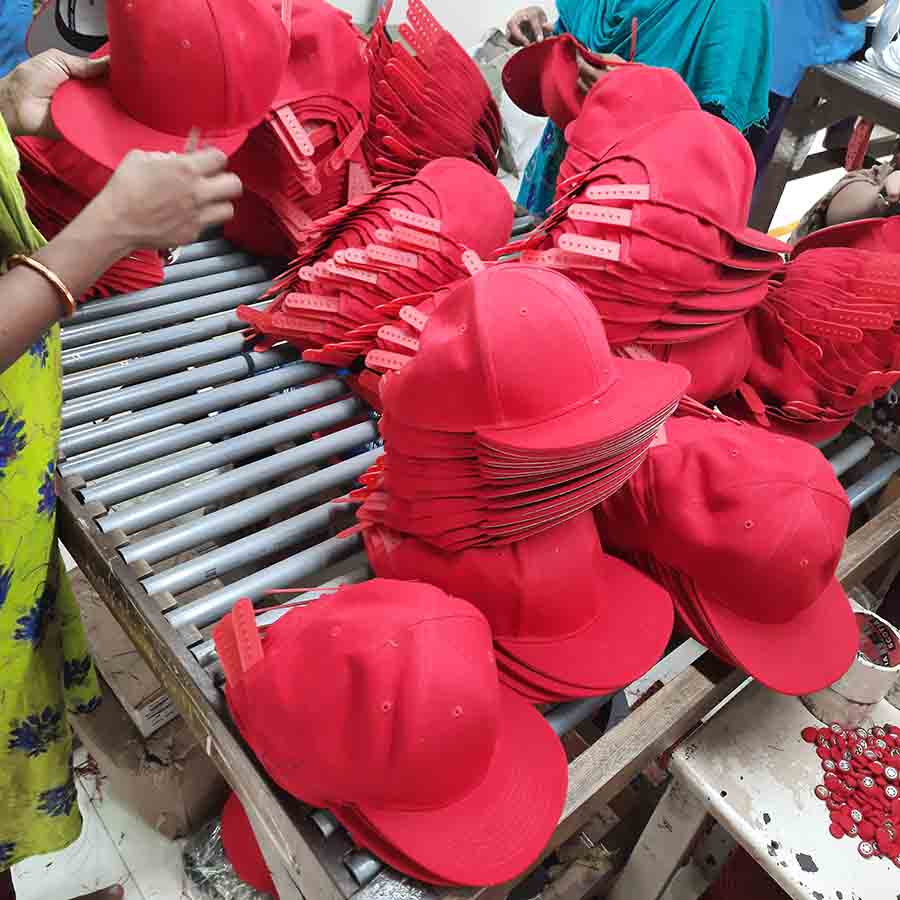
Cap-handling reference from the washed cap product page. This photograph does not establish an approved wash route, shade range or test result; use dated finish samples, measurements and the written approval record for those decisions.
Check crown softness, visor stability, closure shrinkage and finished dimensions after the approved wash and dry route.
Read the shape retention guidePlan fade distribution, seam highlights, shade range and repeatable inspection for washed cap production.
Read the shade development guideReview trial charges, booked material, fresh-batch and rewash options, timing and replacement sample approval before authorising a finish revision.
Read finish change quotation guideCompare pre-process proofs with finished labels, inspect attachment and exposed barcodes, and retain the approved information and sample revision.
Read label legibility guideCompare hardware specifications, wash exposure and attachment timing, then inspect metal finish, fabric staining and the approved replacement sample.
Read metal trim compatibility guideIdentify representative processed samples, review wet and dry rubbing results separately, and document agreed acceptance and production release.
Read wet crocking approval guideStart with the finished silhouette: relaxed or structured crown, low or regular profile, front panel height, visor length and closure range. Garment washing can soften interlining, change hand feel and slightly alter dimensions, so approve the profile on a completed cap rather than a flat fabric swatch. Record front, side and back photographs with the sample number and date. If a logo sits on the front panel, measure its position from stable construction points so a softer crown does not make the artwork appear misplaced.
Confirm the fabric composition, weave, weight, prepared base shade, thread, sweatband, visor insert, labels and hardware. A cotton twill, brushed fabric and blended base may react differently to the same wash route. Keep one physical retained cap with the tech pack and label every revision. This gives the factory and inspection team the same reference when a new colourway or repeat order is reviewed.
Describe where the cap should become lighter, darker, softer or more worn. Mark the front, side, top and underbrim views and state whether the fade should be balanced across panels, concentrated on seam ridges or intentionally irregular. Define areas that must remain clean for embroidery, patches, labels or closure hardware. A phrase such as “vintage blue” is not enough for production; use an annotated image or shade board with the lightest and darkest acceptable results.
Review seam highlights separately. Panel joins, eyelets, visor attachment and closure seams can react differently because thread, compression and friction change how the wash reaches each area. State whether the thread should match, resist the dye or create a tonal line. Inspect the visor edge, sweatband and closure after the complete wash and dry route. The approved sample should show the same seam balance that the buyer expects in the retail product.
Confirm whether the program uses garment dye, pigment dye, enzyme treatment, softener, stone effect, spray effect or a combination. The qualified wash facility should control chemistry and machine settings; the buyer brief should define the intended appearance, measurable limits and evidence required. Check compatibility of fabric, thread, labels, embroidery backing, patches, sweatband and visor insert before the route is locked.
Decoration order matters. A logo applied before a wet process may soften or change tone, while decoration applied afterward may look too sharp against a faded base. Decide whether the artwork should remain crisp, develop a tonal relationship or be protected from abrasion. Review the complete branded cap after washing rather than approving colour and decoration in separate samples. For fabric colourfastness to laundering, buyers can specify an appropriate test method such as ISO 105-C06 alongside the actual decorative wash approval.
Consistency does not mean every washed cap must look mechanically identical. It means the acceptable range, process controls and sorting method are clear enough to accept normal character and reject a true deviation. Where possible, keep the same fabric and dye lot together, record load size and drying conditions, and retain a first-off reference. If the program welcomes irregular fade, define where irregularity is acceptable and where it becomes a defect, such as a centre seam, logo area, strap or underbrim.
Use the same comparison sequence for every review: view the dry cap under agreed lighting, check front and side panels, inspect visor and seams, confirm finished measurements, then compare the lot with the signed reference. Record crown height, circumference, visor length, visor width, closure range and any shrinkage or distortion. Also inspect seam puckering, panel twisting, sweatband recovery, hardware staining, label adhesion and artwork placement. For repeatable domestic-care testing conditions, ISO 6330 describes washing and drying procedures; agree with the lab which procedure is relevant to the finished cap.
A shade approval cannot replace fit and workmanship approval. Check the opening, crown balance, visor symmetry and adjustment range on the intended wearer or a representative head form. Confirm that embroidery, patches or print still sit on the planned usable area after the crown softens. Keep photographs, measurements, shade-band decisions, wash-route notes, decoration files and open corrections together in one dated approval record.
If fabric, pigment, trim or decoration sequence changes, repeat the relevant checks instead of carrying the old approval forward automatically. A small controlled sample round is faster than discovering during bulk production that a new base fabric has changed the fade, seam contrast or closure function.
Use the Washed Caps Post-Wash Shape Retention: 7 Essential Checks article to record visor stability, crown softness, closure shrinkage and final measurement evidence before confirming a repeat order. Keep the guide, article and product page together so the approved sample has one clear production path.
After the agreed wash and drying route, compare each size and colourway with its approved cap rather than with an unfinished blank. Check crown height, visor curvature, sweatband recovery and closure adjustment in the same sequence at every review. Keep the post-wash measurements and dated photographs with the first-off sample, and retest when the base fabric, visor insert, closure or wash recipe changes.
When comparing a low MOQ washed cap manufacturer, define the first run by fabric, colour, profile, wash effect, decoration, adjustment route and packing. Confirm sample charges, wash compatibility, shade sorting, inspection scope and lead time in writing. A smaller first order benefits from one tightly documented shade target because the brand can learn how the selected construction behaves before adding more colourways. Keep the retained cap and shade board with the quotation so the minimum is compared against the same finished brief.
Sew Apparels works with startup headwear brands that need a practical path from a reference cap to a repeatable washed finish. Share the intended customer, launch range, budget, logo method, fabric direction and preferred level of fade. A focused first sample can establish the crown, visor, sweatband and closure before the team tests additional shade options. This creates a clear decision record and makes the next colourway easier to compare without losing the original visual standard.
Use the technical article Washed Caps Garment Wash Shade Development: 7 Smart Checks for the detailed fade, seam and consistency checklist. When the visual target is approved, return to the custom washed cap manufacturing page to discuss the product brief, sampling and export requirements. Keeping the guide, article and product page connected gives buyers one clear route from inspiration to measurable production approval.
Discuss custom washed cap manufacturing