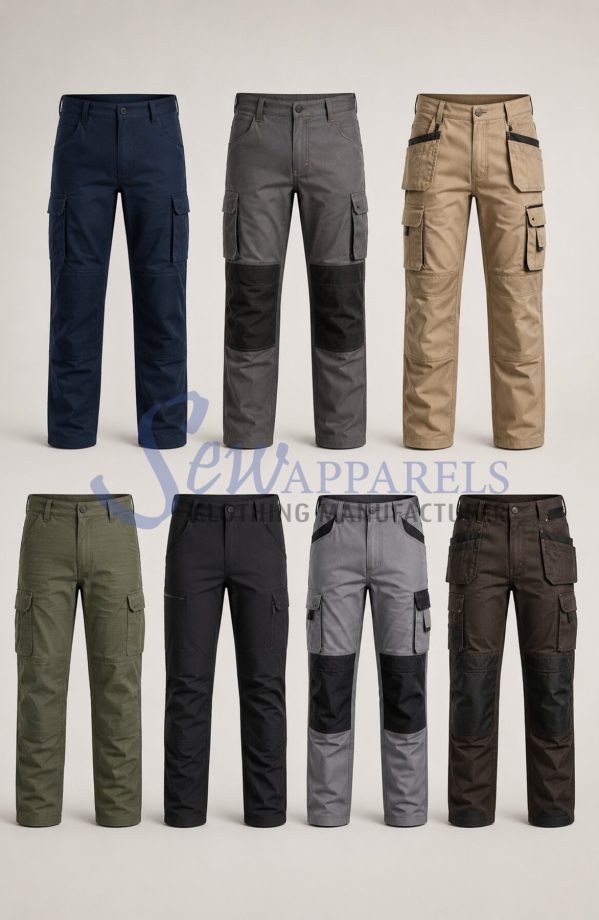
1. Start with the movement brief
Crouching fit development begins with the job, not with a generic trouser block. Ask how often the wearer squats, kneels, climbs ladders, enters vehicles or reaches into a low pocket. Record the footwear, base layer, tool load and protective equipment that will be used. The brief should state whether the garment is for light service work, construction, maintenance, warehouse handling or another environment. This context determines how much ease is useful and where extra fabric must be controlled.
Build a movement map for front rise, back rise, knee line, seat, thigh and lower-leg opening. A good work trouser lets the wearer bend without the waistband collapsing, the seat pulling down or the pocket mouth opening. It should also return to a clean standing silhouette after movement.
2. Set back rise for seated and crouched comfort
Back rise is one of the first measurements to review because crouching rotates the pelvis and increases demand across the seat. If the back rise is too short, the waistband can dip, the back seam can strain and the wearer may feel exposed. If it is too long, excess fabric can bunch under a belt or interfere with a harness. Measure the garment on a form and on a live fit model in standing, seated and crouched positions.
Record the rise from the approved measurement points and keep the method consistent across sizes. Use the same waistband construction, belt position and pocket load during each comparison. Changes to back rise should be reviewed with seat width and crotch extension; adjusting one measurement alone can create a false improvement.
3. Add articulated knees with a clear knee target
Articulated knees work when the bend point on the garment follows the wearer’s natural knee. Mark the knee level from the approved size chart, then check the front and back leg panels while the model reaches a deep crouch. Darts, shaped seams or panel rotation can create useful volume without making the standing leg look oversized.
Check that knee articulation does not push a cargo pocket forward or make a tool fall out when the leg bends. Confirm that the knee area can accept reinforcement or a pad if the product brief requires it. The sewing sequence should leave the knee smooth, with no sharp ridge that rubs during repeated kneeling.
4. Specify gusset allowance carefully
A gusset can improve mobility by distributing stress through the crotch rather than concentrating it at the inseam. Specify its shape, length, width, seam allowance and joining method in the technical pack. The gusset must work with the front rise, back rise and thigh width; a large gusset cannot compensate for a fundamentally incorrect block.
During fitting, inspect the crotch from the inside and outside. Look for seam torque, diagonal drag lines, restricted stride and excessive fabric that catches on equipment. Test the approved fabric after wash or finishing because shrinkage and stiffness can change the effective allowance.
5. Test the loaded crouch, not only the empty garment
Tools and personal items change the balance of a cargo trouser. Load the actual pocket bags with representative weight and repeat standing, half crouch, deep crouch, kneeling and stair movement. Check pocket opening, flap security, bartack position and whether the loaded garment pulls the waistband away from the body.
Use a short repeatable test protocol and photograph the same positions for every sample. Note pressure points, fabric drag, exposed waistband, pocket interference and recovery after movement. This evidence helps the factory make targeted pattern changes instead of adding random ease.
6. Grade the fit across the size range
A crouching fit that works in one sample size may fail at the ends of the range. Review the grade rules for rise, thigh, knee, leg opening and gusset. Body measurement references such as ISO 8559-3 can support a consistent measurement framework, while garment measurement practice can be checked against ISO 18890.
Keep the movement objective stable while proportions change. Larger sizes may need a different balance of seat and thigh ease; smaller sizes may need careful control of pocket scale and knee placement. Record the tolerance for each critical point so production inspectors can identify drift.
7. Avoid common development mistakes
- Changing back rise without checking waistband position and seat balance.
- Placing articulated knees by eye instead of against the wearer’s knee line.
- Adding a gusset that creates bulk but does not relieve the correct stress path.
- Approving an empty fit and skipping the real tool load.
- Ignoring wash shrinkage, fabric recovery and seam bulk.
- Using one sample size to approve every graded size.
The strongest approval process combines measured points, movement photographs and wearer feedback. Keep the decision notes with the tech pack so the same fit intent survives pattern revision, sampling and bulk production.
Low MOQ Work Cargo Trousers Manufacturer: Start With a Controlled Brief
Startup brands often need a clear development route before committing to a large production program. Discuss the target fabric, size range, pocket layout, reinforcement and testing plan early so the first sample answers the most important fit questions. Sew Apparels can help emerging teams organize a practical product brief and move from sample comments to a production-ready specification. A low-MOQ enquiry should specify the intended quantity by design and colour, size range, fabric, pocket layout, reinforcement and delivery window. Ask the production team to confirm the applicable minimum for that exact construction and to identify sample, pattern, testing and trim charges in the written quotation.
Startup Brands: Questions to Send With Your Brief
Sew Apparels welcomes startup workwear brands and can discuss a focused first collection using clear sample and fit evidence. Before development, answer these questions:
- What crouching, kneeling and climbing movements are essential?
- Which tools or devices will be carried in each pocket?
- Is a knee pad, reinforcement or special finish required?
- What wash, shrinkage and colorfastness standards apply?
- Which sample sizes and wear-testers will approve the fit?
Record the approved sample version, owner of each decision and next approval milestone so a smaller team can control revisions without losing the agreed fit.