
A lined vs unlined fleece jacket quotation is useful only when both offers describe the complete garment. Removing a lining can change the visible inner seams, pocket construction and finishing operations. Adding one can introduce another fabric commitment, attachment details and sample checks. A price difference without those details gives a buyer little basis for choosing the right version.
Build the lined vs unlined fleece jacket quotation comparison around the same outer fabric, fit, size range and order assumptions. Then identify the construction changes separately. This guide explains how to request comparable offers, assess representative samples and record the chosen scope before production. It does not assume a standard lining surcharge, a universal minimum order or a guaranteed warmth improvement.
1. Set one common outer-garment specification
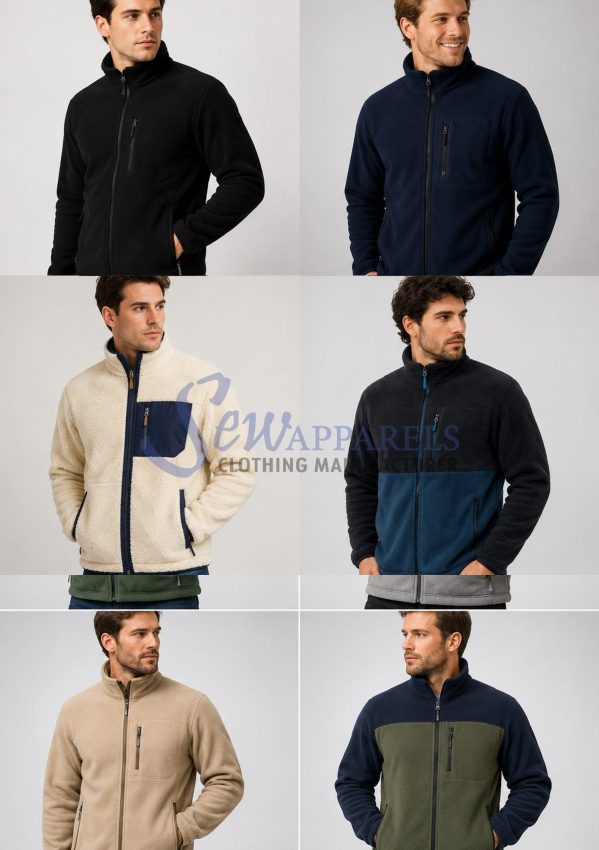
Start a lined vs unlined fleece jacket quotation with the outer garment information that should remain constant. Specify the fleece reference, colour, garment measurements, intended fit, closure, pocket arrangement and branding. Identify the size range and quantity split. If suppliers use different fleece or different closures, the resulting price difference cannot be attributed to lining alone.
A fleece jacket lined versus unlined RFQ should give each construction a separate version identifier while keeping the common requirements visible. State which details may change and which need to match. Include the delivery basis, packing requirements and sample expectations. Ask suppliers to mark assumptions or exclusions beside the affected item rather than burying them in a general note.
The fleece jacket lining quotation inputs should describe the proposed inner layer as precisely as the outer fabric. Ask for its construction, composition information, weight where relevant, colour and usable width. Confirm whether the offer uses an identified stock option or a material that must be sourced. A vague reference to standard lining leaves the buyer unable to compare two offers or approve a later substitution.
2. Define coverage before comparing prices
Full lining and no lining are not the only possible configurations. A fleece jacket partial lining option may cover the body, sleeves or selected areas. Draw the coverage boundaries and name the material used in each area. Clarify how the edges are finished and anchored. Otherwise, a partially lined quotation may be mistaken for a fully lined version because both are described simply as lined.
A fleece jacket sleeve lining comparison should include the sleeve opening, cuff connection and movement allowance. Ask how the layer is secured and whether it interferes with putting the garment on over the intended clothing. A smooth loose lining swatch cannot demonstrate how the completed sleeve behaves. Check reach, elbow movement and sleeve return on a representative sample.
In a lined vs unlined fleece jacket quotation, record the pocket bags and facings separately from the main lining. These components may be present in both versions, but their construction or visible appearance may differ. Hood coverage, if the style has a hood, also needs a separate decision. Do not let a supplier infer the coverage from a photograph that shows only the jacket front.
3. Specify the unlined inner finish
Use the fleece jacket pile construction guide to keep the outer material reference consistent when comparing exposed inner seams and lining options.
The unlined fleece jacket seam finish scope should describe what the wearer will see and feel inside the jacket. List the intended treatment of side seams, shoulder seams, sleeve seams and closure edges. Identify binding, covering or other finishes where proposed. An unlined garment still requires an approved construction; it is not a lined jacket with the inner fabric simply removed.
Coats’ soft and secure seams reference considers strength, appearance, stretch, bulk and softness when selecting a seam system. The relevant lesson is to assess these requirements together. The publication’s example thread choices are not a universal prescription for an unidentified fleece jacket construction.
Ask for a fleece jacket inner finish quote that includes the agreed seam treatments, facing arrangement and pocket presentation. Review the closure backing and neckline against the sample. Binding tape, additional sewing or a revised facing can affect the scope even when there is no lining fabric. Compare the approved inner finish rather than assuming that unlined always means fewer operations at every location.
A lined vs unlined fleece jacket quotation should also show which exposed seams need appearance approval. A neat-looking inside can still feel bulky or restrict movement. Handle and wear the sample over the intended base clothing, then record the areas requiring revision. Sample observations are useful evidence for development; they do not establish a performance claim for all wearers.
4. Separate fabric, operations and trim inclusions
Create a fleece jacket fabric layer bill that names the outer fleece, lining zones, pocket materials and facings. Connect each item to its version. This makes it easier to see whether the two offers use comparable components. It also prevents a cheaper version from appearing equivalent when a pocket bag, facing or sleeve layer has quietly been omitted.
The fleece jacket lining material allowance should relate to the approved pattern, size mix and material width. Ask how the supplier calculated the quantity basis and whether the quoted allowance covers the planned production requirements. Do not assume a single consumption figure fits all sizes or constructions. A change in coverage, width or layout may require the allowance to be reviewed.
Request the fleece jacket lining operation cost as an identified part of the comparison where the supplier can provide it. Clarify which cutting, sewing, joining and finishing steps are included. The goal is not to dictate a factory’s costing method; it is to understand whether the complete proposed assembly has been priced and whether an apparent saving comes from an omitted requirement.
Fleece jacket lining trim inclusions should identify attachment tapes, labels, closure backing and any other additional components proposed for the lined version. Keep common trims visible too. A quotation that includes the lining fabric but excludes its assembly or related components is incomplete. Ask for a revised written scope before treating the unit price as ready for an order.
5. Compare garment behaviour and relevant evidence
Issue a fleece jacket lined sample request with the proposed materials and coverage identified. Request an unlined comparison sample with its agreed internal finish. Inspect the same relevant measurements and movement conditions on both. Review drape, sleeve mobility, hem behaviour, closure operation and whether either construction pulls the outer garment out of shape.
A lined vs unlined fleece jacket quotation should keep commercial comparison separate from performance claims. Additional layers may alter the assembly, but the buyer still needs evidence that matches any stated benefit. Define the fleece jacket warmth claim evidence scope before asking for a claim such as warmer or more breathable. Identify the specimens, method, comparison and conditions relevant to the intended statement.
ISO 11092:2026 covers steady-state measurement of thermal and water-vapour resistance for textile materials, including multilayer assemblies. Its stated conditions do not represent specific comfort situations. A suitable test result therefore needs careful interpretation; it does not by itself supply a jacket temperature rating or prove comfort during a particular activity.
Review fleece jacket lining care compatibility on the actual proposed assembly. Agree the garment care instructions and evaluation plan, then compare fit, surface, seam behaviour and layer distortion after care. Keep the sample identity and recorded conditions with the observations. A material report for one layer does not automatically establish the response of a sewn jacket containing several components.
6. Confirm availability and release the selected version
Fleece jacket lining supplier availability can affect the offer’s validity and development sequence. Confirm the material code, colour availability, order basis and any sourcing conditions. Ask what happens if the proposed material becomes unavailable. A visually similar replacement should be reviewed against the approved requirements rather than accepted as an automatic substitute.
Use a fleece jacket scope comparison worksheet to connect the price, construction version, sample status and outstanding evidence. Mark each requirement included, excluded, assumed or awaiting confirmation. Record quotation validity and the basis for any additional charges. A low opening figure with unresolved scope should remain a provisional comparison, not become the production purchase specification.
Before accepting a lined vs unlined fleece jacket quotation, close the points that affect the selected version. Identify the controlling sample and specification revision. Confirm that the price corresponds to those references and the stated order assumptions. Preserve the unused option as a comparison record so later requests to change the construction do not erase the original decision.
A practical way to compare three offers
For a lined vs unlined fleece jacket quotation, consider a brand requesting an unlined jacket, a body-lined jacket and a fully lined jacket using the same outer fleece. Give them versions A, B and C. Keep the size range and outer components constant. Map the coverage differences, internal seam treatments and sleeve assembly on one worksheet before reviewing the prices.
- Common basis: outer material, fit, closure, pockets, branding and order assumptions.
- Version differences: lining zones, identified inner materials and attachment details.
- Visible finish: exposed seams, facings, pocket bags and closure backing.
- Cost scope: fabrics, operations, additional trims and stated exclusions.
- Sample review: movement, dimensions, drape and after-care observations.
- Release record: final quotation, specification, approved sample and open-point closure.
If version B is cheaper than C, first check whether that reflects the defined coverage or a different lining material. If A and B are close in price, check the unlined seam finishing operations before assuming an error. These are questions to resolve with the supplier, not proof that one configuration must cost more by a fixed percentage.
Frequently asked questions
Does a lined jacket always need a higher order minimum?
No universal minimum follows from the word lined. Material sourcing, colours, quantities and production arrangements need supplier confirmation. Ask for the applicable commitments for each identified option. Keep provisional sourcing assumptions separate from confirmed order conditions.
Can lining be added after the unlined sample is approved?
It can be proposed as a revision, but the resulting assembly needs review. Confirm coverage, attachment, movement allowance and the effect on fit or finishing. Update the quotation and sample reference. Do not treat the earlier unlined approval as evidence that the revised lined garment is already acceptable.
What should a startup brand send for a quotation?
Provide the intended fit, outer fabric, size range, quantities and the lining versions being considered. A focused brief makes custom fleece jacket manufacturing enquiries easier to evaluate. Ask which development and sourcing options are feasible rather than relying on an assumed low minimum or an unconfirmed delivery promise.
Should the buyer choose on unit price alone?
Compare the complete approved scope, sample response and confirmed terms. For private label fleece jacket production, missing inner finishing or material evidence can make an apparently cheaper offer difficult to use. Resolve the important differences before deciding which construction supports the product brief.
Lined vs unlined fleece jacket quotation: approval scope
Keep the lined vs unlined fleece jacket quotation alongside the material and construction references. The Fleece Jacket Buying Guides connect related development decisions so the lining choice remains part of the overall garment plan.
When the comparison is ready, share the selected version and remaining questions through the custom fleece jacket manufacturing page. A clear enquiry identifies the inner coverage, complete finish, evaluation needs and order assumptions, giving the supplier a defined garment to price and sample.