
Private Label T-Shirt Buying Guides
Private label T-shirt buying guides for brands that need a clear, repeatable way to specify neck labels before sampling. Use this page to compare label construction, placement, contrast, seam comfort and compliance details, then carry the approved choice into your tech pack and sample review.
Start with printed or woven neck-label construction, then review placement, contrast, retail presentation, sourcing routes and reorder consistency.
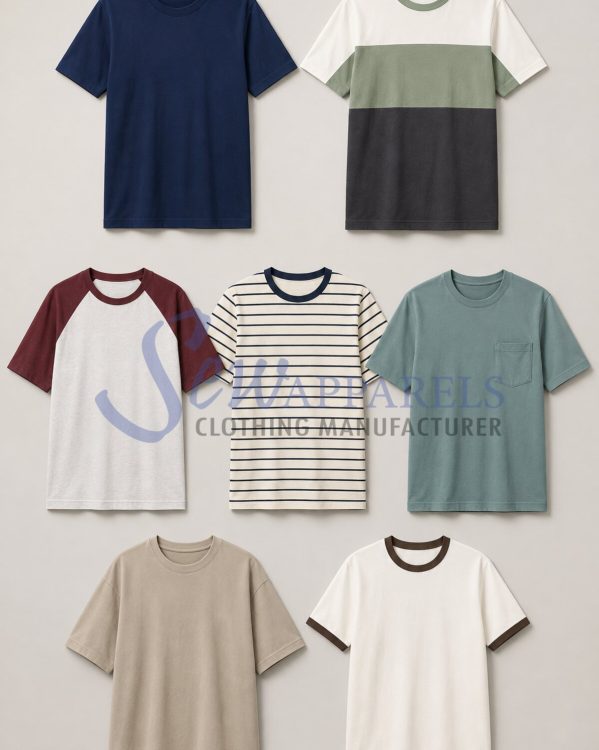
Product examples for private label T-shirt buying guides. Confirm the fabric, neckline, labels and artwork on your own approved sample; this reference image does not establish garment performance or certification.
Printed or woven neck label: choose the right route
Compare a printed neck label with a woven label by considering artwork detail, hand feel, wash exposure, colour count and the visual character of your private label T-shirt. A printed label can keep a fine care or size message compact, while a woven label may give a premium tactile finish. Approve the actual strike-off or sample rather than choosing from a name alone.
Read the neck label placement articlePlace the label for comfort and clean construction
Confirm the exact neck label position, top edge, seam allowance and stitch path on the sample. Check whether the label touches the wearer, folds into the collar seam or creates a visible ridge after washing. Ask the factory to show the label placement from the front, inside and shoulder views so the approved position can be repeated across sizes.
Read the neck label placement articleCheck contrast, artwork and care information
Review label contrast against the actual body colour, logo artwork, size mark, fibre information, country-of-origin wording and care instructions. Keep the neck label readable without making it visually heavy. Separate branding decisions from mandatory information, then record the approved artwork file, ink or yarn colours and finished dimensions in the specification.
Read the neck label placement articleRetail Fold Presentation: Private Label T-Shirt
Check fold dimensions, front-print visibility, size identification and packaging before approving a retail-ready private label T-shirt sample. Use this practical sequence to keep presentation consistent across colours, sizes and repeat orders.
Read the retail fold presentation articlePrint On Demand vs Cut And Sew T Shirt Sourcing: 7 Checks
Compare blank availability, custom fit and fabric control, decoration, fulfilment responsibilities, repeat-product identity and commercial scope before choosing a sourcing model.
Read the sourcing model comparisonPrivate Label T Shirt Reorder Consistency: 7 Proven Checks
Control master samples, specifications, fabric and colour references, trims, artwork, substitutions and release records before approving a private label T-shirt reorder.
Read the reorder consistency guideHow to use these private label T-shirt buying guides
Use these private label T-shirt buying guides as a focused route through the decisions that shape a neck-label specification. Start with the label method, then check placement, seam comfort and contrast on the actual garment colour. Record every approved choice in the tech pack so the private label T-shirt manufacturer, trim supplier and quality team review the same version. Keep open questions visible until the sample proves the result.
Use the four cards as one product-development sequence: first choose the label method, then confirm neck-label placement and seam comfort, next approve contrast and information hierarchy, and finally check folded retail presentation. Link each decision to the relevant article and your private label T-shirt product page so buyers can move from technical guidance to a scoped quotation without losing the approved specification.
Prepare a clear neck-label specification
Start with the garment colour, neckline construction, target wearer, brand mark, size range and planned care route. State whether the label should sit inside the back neck, along the collar seam or in another approved position. Include the finished label width and height, artwork version, type size, thread or ink colours and the information that must remain readable after washing.
Before requesting quotations, organise the reference pack by style code, colour, size and label version. Include the private label T-shirt quantity range, branding files, folding or packing requirements and launch timing. Mark which label details are fixed and which may be discussed during development. Ask the supplier to identify assumptions behind the quotation so every sample and bulk comparison uses the same label scope.
Connect label, collar and production decisions
A neck label decision belongs in the same development record as the collar rib, neckline tape, seam allowance and garment colour. If the label contrast changes, review the logo, type size and care information together. Keep fixed branding choices separate from details open to supplier suggestions, and record any alternative that could change comfort, production method or the visual balance of the finished T-shirt.
When the sample arrives, group feedback under artwork, placement, comfort, wash behaviour and compliance information. Describe each requested change with a location, measurement or clear reference. Keep the approved private label T-shirt neck-label placement with your comments, identify whether a revision needs a new strike-off or garment sample, and close the review with one agreed action list.
Use labeling requirements alongside sample evidence
The FTC textile and wool labeling guidance explains why country-of-origin information must be placed correctly for garments with a neck. The FTC care-labeling guidance helps teams separate care information from branding decisions. Use those references to prepare questions, then verify the final label artwork and placement on the actual T-shirt sample.
After checking the sample, consolidate accepted features, requested changes and items awaiting confirmation. Keep the strike-off, artwork file, measurements, wash comments and final country-of-origin wording in one dated approval record. The goal is a label specification that the brand, trim supplier and private label T-shirt manufacturer can review without guessing which version is approved.
Low MOQ Private Label T-Shirt Manufacturer: Plan the Label Scope
If you are comparing a low MOQ private label T-shirt manufacturer for a new collection, plan the order around the actual production minimum and the label method required for the first run. Share your quantity range, garment colours, printed or woven label preference, artwork files and launch schedule so the team can review the brief and confirm the applicable quotation. A focused label scope helps a startup brand avoid paying for unnecessary revisions while keeping the approved neck label consistent across repeat orders.
Support for Startup Clothing Brands
Sew Apparels welcomes startup clothing brands and gives early-stage product discussions a clear route. Share your reference T-shirt, target customer, budget range, proposed launch plan and label artwork so the team can discuss construction, comfort, branding and sample requirements with you. For a first private label T-shirt collection, agree on a focused set of colours and one approved label route, record the quoted scope and confirm sampling, minimums and production milestones before committing to bulk.
Turn your label decisions into a product brief
After reviewing these private label T-shirt buying guides, keep your selected label construction, artwork, placement measurements, garment colour and sample comments together. Visit our private label T-shirt manufacturing page to review the product route and discuss your requirements with Sew Apparels.
Explore private label T-shirt manufacturing