
Track pants care label translation control keeps a buyer-approved cleaning instruction consistent when an athletic trouser is sold in several languages. A fluent sentence can still change the meaning of a temperature limit, drying restriction or warning for a printed side stripe. Buyers need a controlled source, a track pant multilingual care proof and a released label version that follows the correct garment into production.
The decision concerns the assembled pant. Stretch fabric, a brushed interior, waistband elastic, ankle zips, decorative panels and branding can respond differently to care. Translating a familiar fabric instruction does not establish that the complete style can tolerate it. Build the message from the approved garment evidence, then carry that meaning across labels, retail information and packaging.
This guide explains six practical checks for development teams, sourcing managers and startup sports brands. It covers multilingual proofs, market variants, ambiguous wording and records needed for a repeat order. It does not provide ready-made care instructions for an untested style or a universal list of legally required languages.
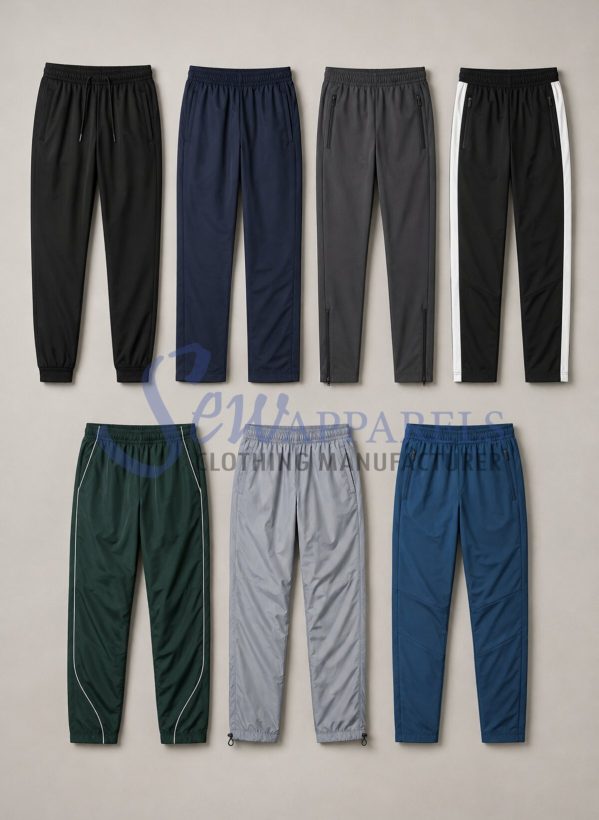
1. Start track pants care label translation control with an approved source
Identify the exact style, colour, construction revision and component combination before drafting the track pant master care wording. A pant with a heat-applied logo may need a different review from an undecorated version. A removable component can also introduce a separate instruction. Keep the evidence reference beside the proposed message so reviewers know which garment the instruction describes.
The FTC’s care-labelling guidance explains the reasonable-basis requirement for instructions and warnings within the US rule’s scope. It also discusses the garment as a whole and limitations of relying on individual components. Use that guidance as a US reference, rather than treating it as the language or symbol rule for every destination. Have the responsible importer confirm current requirements for the intended sale.
Record the care instruction translation source, its owner, revision and approval date. Include the supported cleaning method, relevant temperature limits and restrictions as applicable to the validated style. Do not allow the translation supplier to choose a wash process because it is common in their local market. A translation source is an approved technical message, not an opportunity to redesign the care specification.
Good track pants care label translation control also separates confirmed facts from open questions. If the decorated sample still needs evaluation, flag the instruction as unreleased. An attractive multilingual artwork proof must not turn an unresolved technical decision into an approved production label.
Create a readable source record
Use one controlled document for the source wording, evidence links or report identifiers, intended markets and label artwork references. Keep the wording selectable and legible. A screenshot of an old sewn label can help with comparison, but it should not be the only source when punctuation or a small warning is difficult to read.
2. Review meaning with a competent language reviewer
Give the track pant care translation reviewer the garment context, approved source and care glossary. Explain whether a restriction concerns washing, drying, pressing a decoration or another operation. Track trouser translation ambiguity can arise because gentle may describe a process setting or an informal preference. The reviewer needs enough context to retain the intended instruction rather than selecting a pleasant-sounding substitute.
During track pants care label translation control, check every restrictive word explicitly. Negatives, only, maximum and conditional phrases can materially change the message. Confirm that a prohibition remains a prohibition and that a limit remains a limit. Check temperature values, units and any abbreviations separately from sentence fluency.
A competent reviewer should compare the target-language text with the source and explain any uncertain phrase. Back translation can reveal a changed meaning, but it is an additional check rather than proof that the original translation is accurate. Keep the reviewer’s name, language competence, date and resolved comments in the track pant language proof approval record.
Machine translation may help prepare a working draft. It should not release a care label without human review of the technical meaning. Avoid asking a general marketing editor to approve specialised care terminology solely because the copy sounds natural. If two reviewers disagree, return the ambiguity to the source owner before printing.
Keep a visible comparison
A short comparison sheet can show the source instruction, target wording, reviewer comment and final approved text. Use a separate row for each instruction or warning. This helps expose a missing restriction that would be easy to overlook in a long paragraph of several languages.
3. Match symbols, wording and market variants
The GINETEX care-labelling principles describe symbols as information about permitted treatment, including critical features such as finishes, accessories and applications. The organisation also explains trademark licensing and correct-use obligations. A familiar symbol must not be copied from an unrelated garment without checking the applicable system, authorisation and meaning.
In track pants care label translation control, check translated care symbol consistency against the written message at the same time. A correct translation can still sit beside an inconsistent pictogram. Check that both describe the intended process and restrictions. Do not assume that one internationally recognised artwork file is automatically acceptable in every retail market.
Create track pants market label variants when the buyer requires different language combinations or information layouts. Identify the destination, approved languages, symbol system, artwork code and reviewer. The buyer or importer should complete market specific label language review using current authoritative guidance. Keep fibre composition, origin and other mandatory information under their own checks even if they share the physical label.
A variant should preserve the supported care message while meeting the destination brief. It should not gain a more permissive drying instruction because space is limited. If the label becomes crowded, revise the layout, label size or approved arrangement instead of deleting a meaningful restriction. Check any right-to-left script or line break in the actual artwork, not just in a plain-text file.
4. Check the printed proof and every customer-facing message
Review an actual-size artwork proof and, where needed, a physical label sample. Confirm type legibility, contrast, folds, seam allowance and access to the information after sewing. A complete sentence in the file may become partly hidden at the attachment point. Look at the finished pant with the label placed as intended.
Include a pack versus garment care message comparison in track pants care label translation control. A hangtag, bag insert or retailer product-data field may have been copied from an earlier season. Compare each care message with the released master, including any shorthand used online. A consumer should not receive conflicting washing or drying guidance from different parts of the same order.
Ask how track pant retail care data will be entered, exported or displayed. Some systems split washing, bleaching and drying into different fields. Check that the conversion retains the approved meaning and does not silently drop an important warning. Save a reviewed product-data export or presentation proof alongside the label approval.
Suppose a fictional artwork update removes a restriction while its garment label still contains it. The team should correct the mismatched message and review affected files before release. This example describes a document-control problem, not a recommended restriction for all track pants. The actual instruction must follow the specific garment evidence.
Check the final layout after corrections
After a text edit, repeat the comparison on the revised proof. Moving one line can change what sits inside a fold or crowd a second language. Approving a translator’s corrected sentence does not automatically approve the final printed layout containing that sentence.
5. Map the released version to orders and garment lots
Assign an identifiable track trouser care label revision to each approved variant. Care label version lot mapping should identify style revision, colour or decoration, purchase order and destination. Record which label batch was issued to production. If an old version remains in stock, identify its permitted use or isolate it while the responsible team decides how to handle it.
A practical track pants care label translation control system records both the approved file and the label actually used. A supplier acknowledgement proves that the artwork was received, but it does not prove the correct label was sewn into every affected batch. Use first-piece checks and proportionate production verification to compare the physical label with the released variant.
When a material, trim or branding process changes, ask whether the care basis needs review before carrying forward the label. A new ankle zip, elastic specification or brushed interior finish may affect the decision. Do not restrict change control to visible spelling corrections. The same wording can become inappropriate when the product behind it changes.
Archive the previous revision, the reason for change and the date the new version became effective. Keep superseded files clearly distinguished from current production files. For a repeat order, retrieve the approved version from the controlled record rather than copying a label photo from a previous shipment.
6. Close approval with an evidence archive
Complete track pants care label translation control with a care translation evidence archive that another team member can follow. Include the source message, garment evidence references, language comparisons, resolved comments, market register, artwork proof and physical-placement approval. Add the order and lot mapping plus the release owner’s decision.
Keep approval responsibilities explicit. Technical staff confirm the care basis, competent language reviewers confirm meaning, and the responsible buyer or importer confirms the destination brief. One signature on a design PDF should not conceal several unfinished decisions. Record any conditional approval precisely and close its condition before production release.
For custom track pants manufacturing, bring the destination list and approved care evidence into the development brief early. Startup brands can use the same process on a focused first range. Private label track pants production still needs style-specific wording even when several designs share a supplier. Confirm label options, quantities and review responsibilities for the actual order rather than assuming fixed commercial terms.
Questions buyers should resolve before release
Can every market use the same label?
Possibly, if the approved combination meets the relevant destination requirements and remains readable. Decide this from a documented market review. A single artwork can simplify stock control, but convenience alone does not establish suitability. Keep that decision within the track pants care label translation control record.
Does an accurate translation prove the care instruction is safe?
No. Language accuracy preserves the message. The underlying garment evidence supports the message itself. Keep those approvals separate so a technically unsupported instruction cannot pass because its wording was translated correctly.
What should happen when a customer reports conflicting instructions?
Identify the garment, label revision, order and retail information the customer saw. Compare them with the approved source and investigate the affected versions. Correct the verified inconsistency through the responsible buyer’s process, preserving the evidence needed to understand its scope.
Turn the label decision into a development brief
Use multilingual pant information control within track pants care label translation control as one part of full sample approval. Confirm the source, language meaning, symbols, customer-facing information, production mapping and archive before releasing the label. The Track Pants Buying Guides connect this decision with construction, size extensions and inside-finish review so the garment and its instructions develop together.