
Bib Overalls Buying Guides
Bib overalls buying guides for workwear buyers planning pocket access, strap adjustment, packing, laundry evaluation, side entry and component evidence. Use the six technical resources below to turn wearer tasks into a clear construction brief before requesting a production quotation.
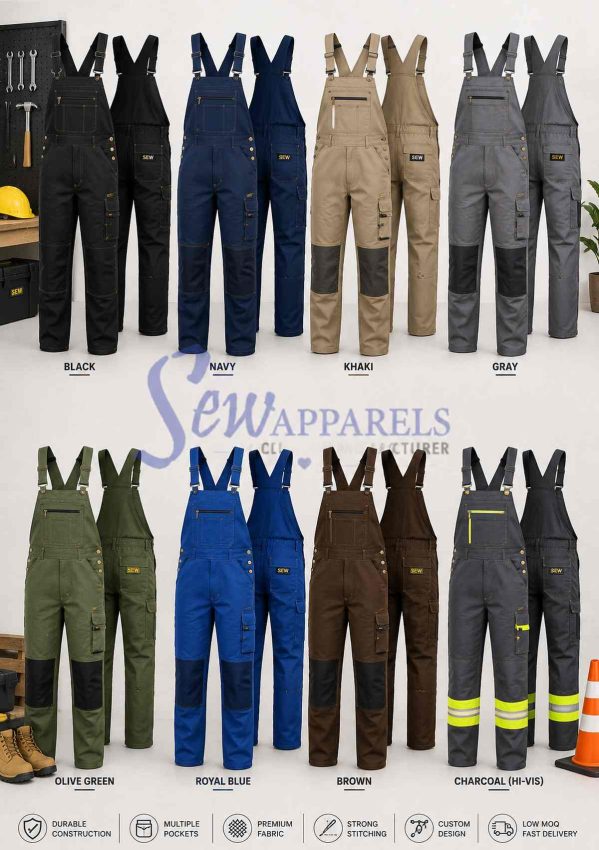
Use these bib overalls buying guides to start with the tools and movement the wearer needs. Then assess how the bib pocket and adjustable shoulder straps work together on the same sample, fabric and size range. The product image below illustrates design options; it is not evidence of testing, certification or an approved production sample.
1. Plan the bib pocket configuration
Define the items the wearer carries, pocket depth, opening direction, reinforcing stitches and clearance from the straps. Review the pocket with a loaded sample while the wearer bends, reaches and climbs.
Read the bib pocket configuration guide2. Specify strap adjuster design
Compare buckle position, strap width, adjustment range, elastic use and attachment strength. Check that the bib stays level and the hardware remains accessible over the intended workwear layers.
Read the strap adjuster design guide3. Review manufacturing options
See the original Bib Overalls product page for the current fabric routes, minimum order quantities and enquiry details. Keep commercial terms on that page while using this guide to record technical decisions.
Explore bib overalls manufacturingBib Overall Packing: Hardware Placement and Arrival Appearance
Review buckle placement, folding and protective interleaves, then assess the complete carton trial and unpacking appearance before approving the pack.
Read the packing hardware marks guideBib Overall Hardware: Laundry Appearance and Fastener Function
Define the care route, record trim references and compare finish changes, fabric staining, snags and fastener operation on representative washed overalls.
Read the hardware laundry evaluation guideBib Overall Side Access: Entry Clearance and Fastening Usability
Review hip entry, opening measurements and fastening operation with planned layers, then check closed fit, coverage and the opening seam.
Read the side access design guideMetal-Free Bib Overalls: Component Evidence and Claim Scope
Define the metal-exclusion requirement, audit visible and concealed components, and keep supplier evidence separate from detector clearance or protective claims.
Read the metal-free component evidence guideHow to use these bib overalls buying guides
These bib overalls buying guides support a single development sequence. Begin with the wearer’s work task and the objects carried at chest level. Use the pocket resource to decide access, compartment shape and reinforcing points. Then use the strap resource to set bib height and the adjustment range for different body sizes and clothing layers. Record both decisions on one dated tech pack rather than sending disconnected comments to the pattern and trim teams.
Read the bib pocket configuration guide when planning tool access and pocket reinforcement. Follow it with the strap adjuster design guide to review fit range and hardware placement. Both decisions should be checked on the same sample: a loaded pocket can pull the bib downward, while a changed strap angle can shift the pocket opening. Bring the resulting measurements, photographs and approval comments into one controlled development file.
Build the work-task and fit brief
When preparing a brief with these bib overalls buying guides, describe whether the garment is intended for maintenance, construction, agriculture, warehouse work or another defined task. List the tools or small items the wearer will carry, how frequently each must be reached and whether the wearer bends or climbs while carrying them. State the base garment, planned size range, intended layering and fit allowance. Include front and back reference photographs or a marked sketch with pocket and strap positions. This information is more useful than asking a supplier for a generic utility overall without a wearer scenario.
Set measurable approval points before sampling. Record bib height from the waist seam, pocket opening width and depth, strap length at its minimum and maximum settings, and buckle position on each sample size. Mark where a pocket should be accessible while the wearer is standing, seated and reaching overhead. Note any required label, artwork or colour placement outside high-wear areas. Keep the pattern version, fabric reference and hardware finish beside the size chart so changes can be traced to the sample actually reviewed.
Keep pocket and strap decisions connected
These bib overalls buying guides connect pocket and strap choices because they affect each other. A deep pocket may be useful for a long tool but can add weight high on the bib. The straps must support that load without twisting or cutting into the shoulder. Review pocket-corner reinforcement, bib top edge, buckle anchorage and seam allowance as one construction system. Ask the sample team to identify where stress is transferred when the pocket is loaded and the wearer bends. Approve changes only after comparing the revised sample against the original use case.
During fitting, test the same bib overall on wearers near the small and large ends of the stated size range. Check whether the buckle can be adjusted without removing the garment and whether the bib stays centered as the wearer reaches, sits and climbs. Observe the pocket opening with the intended objects inside, rather than judging an empty pocket on a flat table. Record discomfort, gaping or hardware movement with a location and measurement. A clear change log helps the next sample address the actual problem instead of creating a different one.
Use technical references alongside sample evidence
For seam performance discussions, ISO 13935-2:2026 describes a grab method for measuring the maximum force to rupture a straight sewn seam. For comparative fabric abrasion questions, ASTM D4966-22(2026) identifies the Martindale abrasion tester method. ASTM cautions that this method alone is not recommended for acceptance testing of commercial fabric shipments. Discuss a suitable test plan with the supplier, and inspect actual production materials and approved samples rather than treating either reference as certification of a bib overall.
Use the bib overalls buying guides to frame test requests proportionate to the garment’s intended use. A high-contact pocket edge, strap attachment and seat seam may need different checks, even though they belong to one product. Specify the fabric, stitch type, reinforcement material and test location in writing. Compare the result with the approved sample and record any substitution before bulk cutting. If a fabric or buckle changes after approval, repeat the relevant fit and function checks instead of assuming the earlier sample covers the revised component.
Low MOQ Bib Overalls Manufacturer: Choose the Fabric Route
If you are comparing a low MOQ bib overalls manufacturer, separate the fabric route from the headline quantity. Sew Apparels currently lists two starting options on its Bib Overalls product page: 300 pieces per colour and style with matching export-quality stock fabric, or 2,000 pieces per colour and style with custom fabric. Share the exact fabric, colour, size breakdown, pocket layout, hardware and branding requirements when requesting a quote. Minimums and availability should be confirmed for the current project; a stock-fabric route does not automatically cover every material or trim requested by a buyer.
Support for Startup Workwear Brands
Startup workwear brands can use these bib overalls buying guides to present a focused first collection. Begin with one documented wearer task and a limited style, colour and size plan. Bring a reference sample or annotated drawing, the intended fabric route, pocket contents, strap-adjustment needs and launch schedule. Sew Apparels can review an early-stage brief and discuss sampling and quotation options with a startup team. Confirm the applicable minimum, sample charges, development costs, production milestones and commercial terms in the actual quotation before placing an order.
Turn your bib overall decisions into a product brief
Keep the pocket measurements, strap range, material specification, size chart and sample comments together. Use the manufacturing link below to review product options and discuss a project-specific quote with Sew Apparels.
Explore bib overalls manufacturing