
CAPRI PANTS DEVELOPMENT LIBRARY
Capri Pants Buying Guides
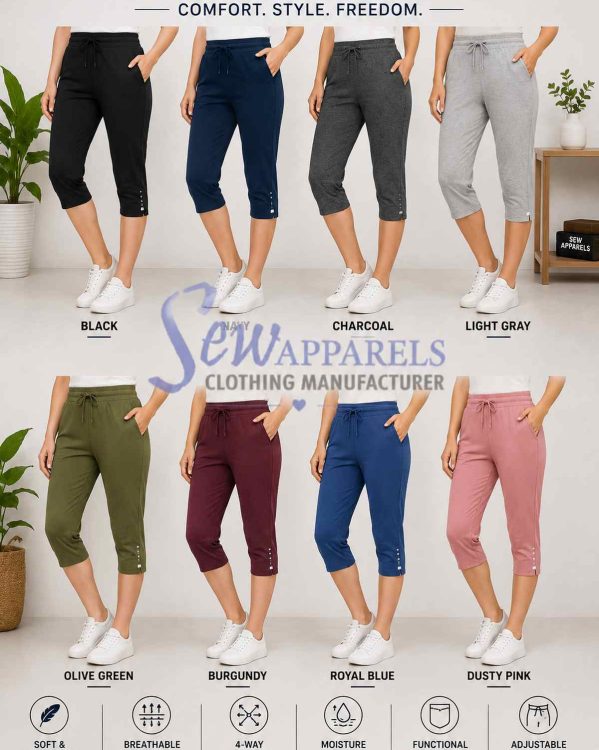
Capri pants sit between full-length trousers and shorts, so a small change in hem position can alter the silhouette. These Capri Pants Buying Guides bring the key fit decisions into one place for apparel brands developing a cropped-leg program. Start with the intended wearer, footwear and styling context; then specify how inseam, calf opening and side-slit height should work together. A measurement alone does not describe the finished appearance. The same inseam may land at a different visual point on wearers of different heights, and a narrow opening may pull upward when the wearer sits or walks. Use a fit sample and a clear measurement method before approving bulk production.
The four technical articles below connect cropped-leg proportions, waistband construction, repeat-order fabric reservation and linen-blend material sourcing. Start with the intended silhouette and waist support, then examine how the selected fabric behaves in a complete garment. For a repeat program, identify the reserved lot, usable quantity, inspection record and release window before treating stock as available. Each article helps buyers turn a separate development question into a documented decision. Read the relevant card before requesting a quotation, and include unresolved points in the sample brief. The manufacturing link leads to the commercial Capri Pants page when you are ready to discuss quantities and production requirements.
Capri Pants Cropped Leg Proportions: 7 Critical Checks
Choose a repeatable inseam reference, assess the calf opening on the body, and set a side-slit height that supports movement without disrupting the intended line. The article includes a buyer decision table and an example development brief.
Read the 7 critical checksCapri Pants Reorder Fabric Reservation Brief: Stock and Release Terms
Connect identified fabric lots and usable quantities with ownership, holding charges and inspection records. Define release windows, substitution approval, expiry and unused-stock decisions before committing to a repeat program.
Review fabric reservation briefLinen Blend Capri Pants Fabric Sourcing: Finished Offer Comparison
Compare identifiable finished fabrics using composition, surface character, opacity and garment trials. Connect care evidence, colour availability and quotation scope with a controlled material selection and substitution decision.
Review linen blend fabric sourcingCapri Pants Waistband Construction Choices: 7 Critical Checks
Compare facing stability, elastic insertion and front closure as one fit system. The guide includes seven construction checks, a buyer decision table, an annotated example and approval steps for a production-ready brief.
Read the waistband checklistBegin with the intended cropped-leg silhouette
A useful Capri Pants brief, prepared with these capri pants buying guides, describes where the hem should appear on the target wearer and what impression the leg should create: straight, tapered, relaxed or softly flared. “Mid-calf” by itself is too broad for a production specification. Ask the sample team to record a reference fit model, footwear and waist position, then photograph the garment from front, side and back while standing. Compare the actual hem point with the design reference. This gives everyone a common visual target before the inseam is frozen.
The fabric influences that visual result. A crisp woven fabric may hold the opening away from the calf, while a softer fabric may fall closer to the leg. A stretch fabric may recover differently after movement or laundering. Evaluate the selected fabric and finishing process on a physical sample, rather than transferring a successful measurement from an unrelated style. Record whether the garment will be assessed after washing, because a change in finished length can move the hem into an unintended part of the calf.
Specify inseam length with one measurement method
Measure the capri pants inseam from the crotch seam intersection to the finished hem along the inside leg. State whether the measurement is taken on the relaxed garment, which size it applies to, and what tolerance is permitted. Include a flat sketch showing the start and end points. If the garment has a curved hem or cuff, identify the exact endpoint. Different teams can otherwise report different numbers for the same sample. ASTM D5219 provides standardized body-dimension terminology, but your garment specification still needs its own style-specific measuring instructions.
When grading sizes, do not assume that every size should gain the same amount of length. Decide whether the design intent is a consistent visual hem position across the size range or a fixed inseam number. Confirm the choice on more than one fit size when possible. Note the intended waist placement and rise, since a capri worn lower on the body appears longer even if its measured inseam has not changed. For buyer approval, compare the requested inseam, actual sample inseam and visual hem position in one table.
Balance calf opening against mobility
Capri pants calf opening is the finished width at the hem, measured flat or as a circumference; state which convention you use. A narrow opening can create a clean tapered appearance, yet it may bind against the widest part of the calf when the wearer walks, sits or climbs steps. A wider opening changes the silhouette and may expose more of the leg. Evaluate the opening together with inseam because moving the hem higher or lower places it against a different calf circumference.
Use these capri pants buying guides to ask the fit reviewer to check both standing shape and movement. Record whether the hem catches, twists or rides up, and distinguish a pattern issue from a fabric-recovery issue. If a slit is part of the design, test the opening both with and without the slit lying open. Do not approve a width based only on a flat table measurement. The body shape, fabric stretch, seam construction and hem finish all affect how that same number behaves in use.
Set side-slit height deliberately
A capri pants side slit can relieve tension at the hem, support movement and give the cropped leg a more open appearance. Specify slit height from the finished hem to the top of the opening, measured along the side seam. Show the shape and reinforcement method on a detail sketch. A slit that is too short may add little mobility; one that is too high may reveal more leg than the design allows or weaken the desired line. The correct choice depends on hem width, fabric, styling and the intended market.
Review the slit while walking and sitting, not only on a standing model. Confirm that both legs match after construction, that the slit top is secure, and that the hem edge remains tidy after the intended finishing process. Coats explains how seam types serve different construction functions; use that background to discuss a suitable seam and reinforcement with the factory. These capri pants buying guides are a development aid, not a substitute for a construction drawing and approved physical sample.
Low MOQ capri pants manufacturing for startup brands
A startup brand may begin with a limited Capri Pants range rather than a broad color and size assortment. Low MOQ planning works best when the brief is focused: choose one base silhouette, identify the essential fabric and trim decisions, and test the most important fit risks before adding variants. Sew Apparels gives startup brands a path to discuss sample development and a feasible production quantity through its Capri Pants manufacturing page.
An inquiry should include the target market, size range, estimated quantity, fabric reference, artwork or trims if relevant, desired delivery window and any special wash or compliance requirements. Quantity and feasibility depend on the final specification; these capri pants buying guides do not promise a universal minimum. Clear early decisions reduce avoidable sample rounds and make quotations easier to compare.
Capri Pants Buying Guides: approve a production-ready brief
Before approval, record one inseam method, one calf-opening method and one side-slit-height method in the technical pack. Attach a dated fit photo set, sample measurements, approved fabric and any wash-test observations. Identify the sample version that becomes the reference for bulk production, and document every accepted deviation or correction. Buyers should also define the size range and decide which critical dimensions require separate graded measurements. Check the waistband facing, elastic and closure together, because a stable waist position helps preserve the intended cropped length.
For linen-blend options, attach the actual composition, finished-fabric identity and garment-trial results rather than relying on a fibre name. A repeat-order brief also needs the fabric lot, usable quantity, ownership terms, inspection status and agreed release or expiry dates. Keep these sourcing decisions tied to the same approved garment version. Use the relevant article cards to resolve technical questions, then send a consistent specification to the manufacturing team.
Turn your Capri Pants decisions into a product brief
Use these capri pants buying guides to bring the approved fit direction, inseam, calf opening, slit detail, waistband construction, fabric and target quantity together before contacting the manufacturing team. For repeat orders, include the identified fabric lot and agreed reservation and release conditions. If a point remains uncertain, mark it for sample testing instead of leaving two conflicting instructions in the same brief. A focused first sample gives the factory a clearer path to the intended cropped-leg result.
Explore Capri Pants manufacturing