
Linen blend capri pants fabric sourcing should start with a finished-material specification, not a blend name alone. A buyer comparing two offers needs to understand composition, construction, finish, width, appearance and the evidence behind the proposed care instructions. Similar descriptions can refer to fabrics that behave differently in the same cropped-leg pattern.
This guide explains six checks for linen blend capri pants fabric sourcing. It helps apparel brands compare offers on a common basis, review representative samples and prepare a quotation brief. It does not prescribe one ideal blend or claim that fibre content alone establishes comfort, durability, opacity or suitability for a particular design.
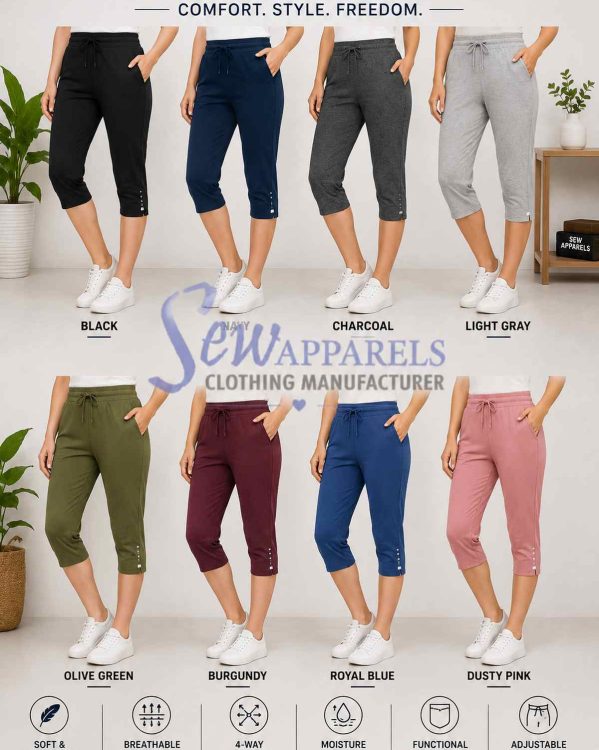
1. Define linen blend capri pants fabric sourcing with a complete declaration
The capri linen blend fibre declaration should identify the stated fibre names and percentages, together with the supplier’s article reference. Ask whether the declaration applies to the actual offered fabric and finish. Keep supporting documents linked to the sample identity so a composition statement for one article does not accidentally accompany a different swatch.
Include fabric construction, finished weight, usable width and processing reference in the specification. Clarify how these values were measured and which tolerances are proposed. The buyer and supplier should resolve any incomplete information before comparing prices, since a wider or differently finished fabric may not be commercially equivalent to another offer.
Align the declaration with the destination market
The FTC’s textile-labeling guidance explains that covered U.S. products generally disclose generic fibre names and percentages by weight in descending order. This is a U.S. labeling reference, not a universal rule for every market. Confirm the applicable destination requirements and keep the supplier declaration consistent with the approved product labeling.
For linen blend capri pants fabric sourcing, distinguish the technical material description from proposed marketing language. A linen appearance or trade name should not be treated as evidence of a particular linen percentage. Any additional origin, certification or performance statement needs its own relevant support before being included in the buyer’s product information.
2. Compare finished offers rather than general blend reputations
A linen cotton capri fabric comparison should identify the actual articles being assessed. Compare the finished samples under the same viewing and handling conditions, using the proposed garment purpose. Record composition, weave, weight, width and finish for each. Changing several variables at once makes it difficult to attribute an observed difference solely to the blend.
A linen viscose capri blend offer needs the same level of identification. Ask for the actual composition and fabric reference rather than assuming a standard ratio from the phrase “linen viscose.” Evaluate whether its observed drape and handling suit the intended Capri Pants silhouette, and keep these sample observations separate from unverified durability or care claims.
Use an identifiable representative swatch
The capri linen blend supplier swatch should be labelled with article, colour, finish and version references. Establish whether it is taken from available production material, a development trial or a display collection. A development swatch can guide selection, but the buyer should know which features remain subject to production confirmation.
For the comparison, retain observations such as surface character, drape, thickness and handling with the sample identity. These are useful selection notes, not automatically measured performance results. The linen blend capri pants fabric sourcing decision should state which sample is preferred and which further checks are necessary before it becomes an approved material.
3. Review surface character, creasing and transparency in context
Linen capri fabric crease appearance should be assessed against the desired design presentation. A relaxed summer garment and a sharply pressed product may have different expectations. Define the agreed observation conditions and accepted reference. Avoid promises such as wrinkle-free or easy-care unless the proposed wording is supported by relevant evidence for the product.
The capri linen fabric slub reference should show the surface variation the buyer intends to accept. Compare the approved sample with the offered material and distinguish intentional character from an observed irregularity requiring review. Describing every visible variation as “natural” does not settle whether it matches the agreed appearance or affects the intended construction.
Judge opacity on the proposed garment
A linen capri fabric transparency review should consider colour, lighting, stretching and the garment arrangement. Review a representative sample with pockets, seams and any proposed lining where relevant. A flat swatch held in one condition does not show how the completed Capri Pants will look when worn or moved.
Record the observation method and the agreed appearance expectation. If the garment needs a lining or a changed pocket construction, identify that decision in the costing and sample brief. In linen blend capri pants fabric sourcing, a fabric approval should not silently introduce extra garment components that were excluded from the quotation.
4. Check seam suitability and care evidence together
Capri linen fabric seam suitability should be reviewed with the planned seam arrangements, thread and reinforcement details. Trial representative waistband, pocket, side-seam and hem areas as appropriate to the design. Inspect the sewn result for the agreed appearance and relevant function. A material that looks attractive as a swatch may still need construction development.
Linen blend capri strength evidence should relate to the specific performance question and material identity. Identify what was assessed, by whom and under which method and conditions. Fabric strength results do not automatically establish the performance of the assembled seam, and an unrelated test report should not be accepted simply because it mentions a similar blend.
Support the intended care instructions
Linen blend capri care evidence should support the proposed care route for the completed garment. Consider the shell, pocketing, interlining, trims and other components together. Ask what information supports the instructions and which garment observations remain to be reviewed, rather than assigning a wash temperature from the fibre name alone.
The FTC’s care-labeling guidance explains that covered manufacturers and importers need reliable evidence for care instructions and that the garment as a whole matters. This U.S. guidance supports evidence-based label decisions. It does not certify a particular blend, establish a universal wash route or replace destination-specific review.
For linen blend capri pants fabric sourcing, connect any care-stage observations with the same fabric and garment version that the buyer intends to order. Record changes in appearance, dimensions and relevant construction after the agreed assessment. If the finish or component package changes, identify which earlier evidence needs reconsideration.
5. Confirm colour scope, availability and quotation assumptions
The linen capri fabric colour scope should identify offered colours and their approval status. Distinguish a display shade, a development reference and actual available material. Ask how a new colour would be developed and approved. A colour shown in a collection should not be assumed to be available in the required quantity or delivery window.
For a repeat programme, connect the preferred fabric with our capri pants reorder fabric reservation brief. A sourcing approval identifies an acceptable article; a separate accepted reservation confirms which quantity, period and commercial conditions actually apply.
Capri linen blend material availability should state whether the proposal is stock material, a confirmed allocation or fabric to be produced. Request quantity, lot identity and relevant timing information where available. Fabric availability and garment production readiness are separate decisions; trims, sample approvals and sewing capacity can still affect the order schedule.
Make price comparisons use the same basis
A capri linen fabric quote specification should state article, composition, finish, colour, usable width, quantity, price unit and currency. Ask which services and costs are included, such as sampling, processing or transport to the agreed point. Keep any unresolved assumptions visible instead of treating the lowest unit figure as the cheapest completed program.
For garment costing, discuss the consumption basis with the technical team. The cropped-leg pattern, size assortment, usable width and appearance requirements can change the material needed. Compare quotes against the same approved style and material assumptions so a lower fabric price does not hide a different width or additional garment work.
6. Control substitutions and document the sourcing decision
The capri linen fabric substitution rule should identify who approves a proposed change and what evidence must be reviewed. A replacement described as the same blend may differ in weave, weight, finish, colour or usable width. Compare it with the current approved article and determine its effect on appearance, fit, care and quotation scope before release.
A linen capri sourcing comparison worksheet should list the shortlisted articles and their confirmed attributes in consistent units. Add swatch identity, observations, supporting evidence, quotation scope and open questions. Mark each entry proposed, reviewed or approved, making the actual decision easier to trace than a folder of loosely labelled samples.
Fabric offer comparison worksheet
- Identity: supplier article, finish, colour, sample date and composition declaration.
- Commercial basis: usable width, price unit, quantity and included services.
- Appearance: labelled swatch, surface reference, opacity and intended silhouette.
- Construction: relevant sewn trials and unresolved component decisions.
- Care: evidence source, complete garment version and intended destination.
- Release: preferred or approved status, conditions, decision owner and substitution route.
Prepare the supplier enquiry and handover
For custom capri pants manufacturing, send the garment reference, target size range, material shortlist and intended quantity with the enquiry. Explain which aesthetic features are essential and which points still need development. Ask the supplier to identify feasibility and assessment steps rather than expecting an initial fabric suggestion to represent a fully approved construction.
For private label capri pants production, connect the chosen material with branding, trims, fit and care requirements. The Capri Pants manufacturing page is the relevant commercial starting point. Confirm actual availability, minimum quantities, development scope and order terms for the proposed program.
Release the current linen blend capri pants fabric sourcing record with the accepted sample, material specification and related garment approvals. Keep unresolved decisions clearly marked. If approval is conditional, state the condition and its owner so the next reviewer can distinguish a preferred sourcing option from material authorised for bulk cutting.
Frequently asked questions
Is one linen blend always best for Capri Pants?
No. Linen blend capri pants fabric sourcing should evaluate the finished article against the intended design. Composition matters, but construction, finish, weight and the garment arrangement also need review. Compare identifiable samples and relevant evidence instead of selecting from a general blend reputation.
Can a startup begin with available fabric?
A startup can ask whether available material suits a focused style and quantity. Request the actual stock reference and review it before committing. Stock availability does not promise every colour, size assortment or minimum quantity, and the completed garment still needs its relevant approvals.
Can the supplier’s care note become the garment label?
It can inform the review, but the completed garment and its components need appropriate support for the final instructions. Identify the intended market and evidence basis. Do not transfer a generic care note without checking whether it applies to the approved fabric finish and assembled product.
How should the final choice be recorded?
Retain the selected article, accepted swatch, confirmed quotation and closed review points. The Capri Pants buying guides connect fabric selection with other development decisions. A controlled linen blend capri pants fabric sourcing record helps the next sample or reorder use the same approved basis.