
CHINO PANTS DEVELOPMENT LIBRARY
Chino Pants Buying Guides
Chino pants have a familiar appearance, yet small changes in twill structure, weight, stretch and finishing can produce a noticeably different garment. These Chino Pants Buying Guides organize the technical decisions a brand should make before approving a sample or requesting bulk production. Start with the intended wearer and season, then compare fabric hand, opacity, movement and post-care appearance. A fabric name or weight alone cannot guarantee the finished result. Review swatches and sewn samples from the actual material, and record which tests support the final selection.
The six articles below connect twill selection, waistband stability, garment-dye batch purchasing, prepack size ratios, fly zipper approval and peached-finish assessment. Start with the material and intended silhouette, then review the construction and purchasing decisions that depend on them. A colour allocation needs its own trial and quotation scope; a prepack needs a complete size sequence and quantity reconciliation. Use the fastening and finish articles when you need a focused sample review before release. These Chino Pants Buying Guides help you prepare a consistent technical brief. Brands ready to discuss fabric availability, development, production quantity or delivery can use the original manufacturing page linked below.
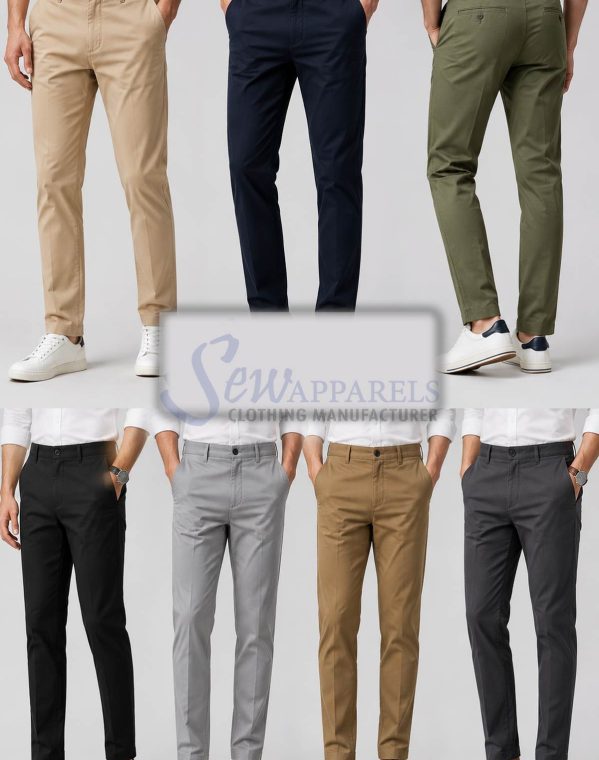
Use these chino pants buying guides to connect a visual style reference with the actual sample brief. This image shows trouser silhouettes and colour directions; it does not establish fabric composition, garment-dye performance or approved bulk shades. Request identifiable swatches and a dated garment sample before confirming material and finishing decisions.
Chino Pants Twill Fabric Selection: 7 Critical Checks
Compare weight, stretch and surface finish together before choosing a chino fabric. Use the seven-check article to build a measurable swatch brief, test a sewn sample and avoid costly fabric-selection mistakes.
Read the twill selection checklistChino Pants Garment Dye Batch Quotation: Colour and Trial Scope
Compare colour commitments, representative garment trials and component inclusions before accepting a price. Connect finishing exclusions, quantity terms and rework approval with a clear purchasing scope and production release decision.
Review garment dye quotation scopeChino Pants Prepack Size Ratio Ordering: Packs and Quantity Reconciliation
Define the size sequence and complete assortment before multiplying the order. Reconcile pieces, packs, cartons and residual quantities, then connect identifiers and packing sample approval with the receiving arrangement.
Review prepack size ratio orderingChino Pants Fly Zipper Approval: Opening, Clearance and Function
Review the fastening inside the finished trouser, from component identity and usable opening to shield clearance and slider operation. Connect after-care observations, assembly corrections and a traceable approval record.
Review fly zipper approvalChino Pants Peached Finish Approval: Surface, Colour and Care
Compare identifiable finish trials using hand, twill appearance, direction and colour observations. Connect garment review, relevant performance evidence and after-care results with a traceable material and surface approval.
Review peached finish approvalChino pants waistband roll prevention
A practical buyer checklist for keeping the chino waistband upright: compare contour, interlining, waist seam support, belt-loop anchors and performance after wear and washing.
Read the waistband guideChino Pants Buying Guides begin with the intended use
Define whether the chino is intended for warm-weather casual wear, a year-round uniform, a structured retail silhouette or another specific use. The target season influences weight and breathability; the fit direction influences how much the fabric must bend and recover. Note the consumer, expected care method, opacity requirement and desired surface appearance. A useful brief describes what the buyer should feel and see in the finished garment rather than only naming a generic chino twill.
Obtain more than one relevant swatch in the same color family if possible. Compare them under consistent light and by touch after conditioning. Look for a diagonal twill line, surface evenness, creasing and drape. CottonWorks describes twill weaves by their diagonal pattern; weave type is a useful starting point, but finishing and yarn choices also affect the result. Label each swatch with supplier, composition, construction and lot so a preferred sample can be traced later.
Specify twill weight after finishing
When using these chino pants buying guides, record chino pants twill weight in a named unit such as grams per square metre, and specify whether the value applies to greige, finished or washed fabric. A finished-weight target is easier to connect to the garment the customer receives. State an acceptable range based on tested swatches, not an arbitrary number copied from another product. Fabric mass affects drape and perceived substance, but the same mass can feel different when yarn, weave density or finish changes.
Compare the weight with opacity, hand and climate suitability. A lighter fabric may feel comfortable in heat but show pocket bags or underwear; a heavier option may hold a sharper crease but feel less airy. Check that the pocketing and waistband construction suit the selected shell. Ask for a sewn sample because flat swatches do not reveal how a fabric hangs across the seat, knee and hem. Approve the fabric only after the garment is evaluated in the intended size and care state.
Treat stretch content and recovery separately
Chino pants stretch content is usually expressed as a fibre percentage, but that percentage alone does not describe how the fabric behaves. Direction of stretch, extension under a defined force, growth during wear and recovery afterward all matter. Specify the composition and ask the mill which direction contains the stretch yarn. If movement comfort is essential, test the actual fabric and garment through sitting, walking and repeated bending rather than assuming a small elastane percentage will solve a restrictive pattern.
ASTM D3107 describes testing stretch, growth and recovery of woven fabrics made with stretch yarns within its stated scope. Use a suitable test method and agreed acceptance criteria when the fabric qualifies; do not treat the standard as a universal guarantee of fit or a substitute for wearer testing. Check knee and seat areas after movement for bagging. A fabric that stretches readily but grows without recovering can change the chino silhouette during a day of wear.
Describe the surface finish the buyer should receive
Chino pants surface finish may be crisp, softly brushed, washed, peached or another clearly defined effect. Name the intended appearance and hand, then provide an approved physical reference. A finish can alter shade, softness, crease behavior, apparent weight and dimensional stability. Specify whether the benchmark is the roll fabric, a garment-washed sample or the finished retail garment. A phrase such as “soft hand” is too subjective unless the buyer and supplier compare the same approved sample.
Inspect finish uniformity across panels and around seams. Different fabric lots or inconsistent washing can make a leg panel appear unlike its pair. Check color in the intended light and after the planned care process. Record any acceptable variation. If garment washing is part of the design, sample with the actual trims and construction so that puckering, seam abrasion and shade effects are visible before bulk approval. A finish that looks attractive on a swatch may behave differently once cut and sewn.
Low MOQ chino pants manufacturing for startup brands
A startup brand can reduce avoidable sample rounds by defining one clear chino silhouette and a small set of fabric options before asking for a quote. Low MOQ planning should identify the base size, target quantity, size range, fabric weight, composition, finish, trim needs and delivery window. Sew Apparels gives startup brands a route to discuss feasible sampling and production through the original Chino Pants product page. A specific minimum quantity cannot be assumed from these chino pants buying guides: fabric sourcing, dyeing, finishing and trim commitments depend on the final brief. Prioritize a tested swatch and a well-documented fit sample before multiplying colors or styles.
Approve a production-ready chino fabric brief
Bring the selected swatch, composition, weave description, finished weight range, stretch and recovery criteria, surface-finish reference and intended care process into one approval record. Attach dated garment photographs from front, side and back, and note any after-wash observations. State whether the approval applies to one color or several. For each change to yarn, weight, finish or supplier, decide what must be retested. Include the reviewed waistband and fly zipper assembly, because a fabric approval alone does not release the completed trouser.
For a garment-dyed program, retain the agreed colour allocation, representative trial reference, finishing scope and quotation exclusions. For prepacked orders, record the complete size assortment, pack quantity, residual pieces and carton identifiers. Keep the approved peached surface reference linked to the same material version. These Chino Pants Buying Guides separate the review questions while helping purchasing and development work from one current garment brief.
Turn your chino fabric decision into a product brief
Use these chino pants buying guides to share the approved swatch, target weight, stretch behavior, finish standard, waistband and zipper decisions, size range and expected quantity with the manufacturing team. Where applicable, include garment-dye colour allocations and the prepack size ratio. Mark uncertain points for sampling, and keep the approved reference available for bulk comparison. A clear first brief makes development discussions faster and keeps the intended chino appearance consistent.
Explore Chino Pants manufacturing