
Chino pants prepack size ratio ordering turns a retail size curve into a repeatable assortment of garments. The challenge is to make the pack definition, total order and destination allocation agree. A supplier cannot interpret “balanced sizes” reliably without knowing the size sequence, pieces of each size, colour treatment and number of packs requested.
Build the order from a written matrix rather than a verbal ratio. This guide explains how to compare prepacks with open size ordering, reconcile residual pieces and prepare a packing brief that purchasing, production and receiving teams can read consistently. The numerical examples are illustrative planning exercises, not a recommended sales curve or a promise about a particular supplier’s packing service.
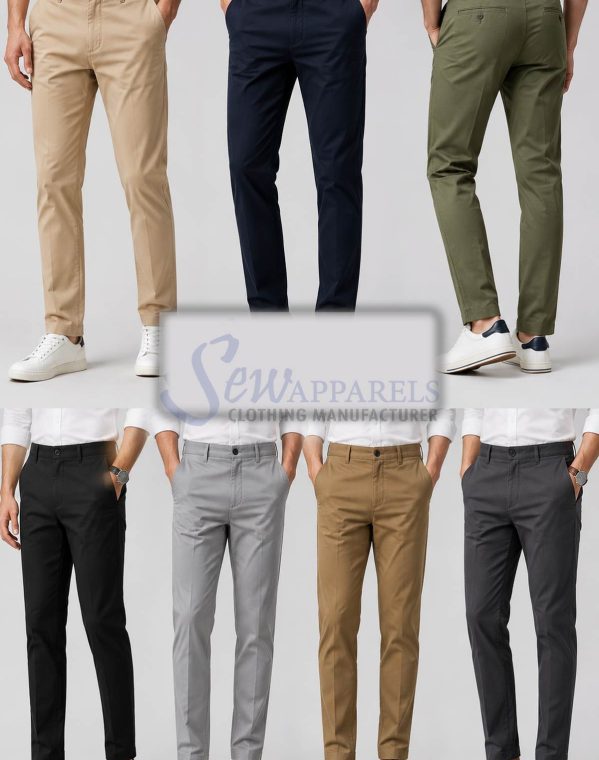
1. Define the retail pack before multiplying it
A chino trouser retail prepack ratio needs an explicit size sequence. A ratio of 1:2:2:1 has no dependable meaning unless the corresponding sizes are stated. Define the garment style, colour and size labels alongside the quantity of each size. If waist and inseam are both part of the offer, show how they are combined instead of treating the waist label as the complete size identity.
Chino pants prepack size ratio ordering should distinguish an assortment used for warehouse handling from a bundle sold as one retail item. These arrangements can require different identification decisions. Ask the retailer how it orders and receives the pack, whether individual garments are sold separately and whether the pack itself has an item identifier. Do not assume that every mixed carton is a consumer multipack.
A chino pants size curve order matrix should include the pack code, colour, size sequence, pieces per size and total pieces per pack. State whether one pack contains one colour or a mixture of colours. Record which version is approved. Use the same matrix in the purchase order and packing instructions so a later explanation cannot overwrite the quantities already quoted.
2. Choose between prepacks and open size orders
Compare chino prepack versus open size ordering against the actual receiving process. A fixed assortment can make a repeated store allocation straightforward, while an open size order lets the buyer specify independent quantities for each size. Neither method establishes consumer demand. Use relevant sales or allocation information to decide the desired quantities and then assess whether a repeatable pack represents them accurately.
For chino pants store allocation pack planning, show the number of packs intended for each destination. Check whether all stores use the same size curve or require different approved pack codes. If two assortments are needed, give each one a distinct definition. An unexplained instruction to adjust the smaller stores invites a receiving mismatch even when the total order quantity is correct.
Chino pants prepack size ratio ordering can coexist with chino pants open stock replenishment when the order identifies each part separately. For example, the initial allocation may use complete prepacks while a later top-up uses individual size quantities. Ask how each part will be priced, identified and packed. Keep open stock pieces visible in the reconciliation instead of disguising them as incomplete packs.
3. Reconcile pieces, packs and cartons
A reliable chino pants pack quantity reconciliation starts at the smallest defined unit. Add the pieces within one pack, multiply by the number of packs and compare the resulting size totals with the requested order. Then check the proposed number of packs per carton. These are separate calculations: a carton count alone cannot show whether the intended size allocation is correct.
Consider an illustrative pack containing one size S, two size M, two size L and one size XL. Each pack contains six garments. An order for 40 identical packs therefore contains 240 garments: 40 S, 80 M, 80 L and 40 XL. If the packing arrangement uses four complete packs per carton, ten cartons contain the complete order. This example assumes one colour and one approved pack definition.
For chino pants size ratio carton count planning, confirm that the proposed carton arrangement is feasible for the actual folded garment and packaging. Do not transfer a carton capacity from another style without review. Chino pants prepack size ratio ordering should use the agreed packing arrangement, including any restriction on mixing colours or pack codes inside an outer carton.
Suppose a buyer requests 250 garments using the six-piece illustrative pack. Forty-one complete packs produce 246 pieces, leaving four pieces outside that pack calculation. The buyer must define those four by size or revise the order. Treat chino retail pack residual quantities as an approval decision; do not let the packing team choose whichever sizes are convenient.
4. Assign identifiers at the right level
Chino prepack SKU identification should connect the pack code to its contents. The internal SKU, or stock keeping unit, must be distinguishable from individual garment identifiers and any outer carton reference. Ask which identifiers the buyer supplies and which labels the supplier prints. A readable description should accompany the code so the approved packing sample can be checked without guessing its meaning.
GS1’s predefined assortment rule describes fixed combinations sold as a single physical trade item. Within that scope, changing the included trade items requires a new GTIN. Confirm the correct identification treatment with the buyer; a warehouse prepack should not automatically be treated as that consumer assortment.
A chino retail prepack barcode brief should specify the approved identifier, label level and required text. Obtain buyer-approved artwork and explain which pack code it represents. A barcode that scans successfully can still identify the wrong assortment. Chino pants prepack size ratio ordering therefore needs a content check as well as a scan check before labels are reproduced for the order.
GS1 explains the Serial Shipping Container Code as an identifier for a logistics unit, such as a case, pallet or parcel. This is a different identification purpose from describing the size ratio itself. Agree the applicable shipping labels and data with the receiving partner rather than assuming a pack SKU replaces a logistics identifier.
5. Quote the packing scope explicitly
Where colour batches are part of the order, use our chino pants garment dye batch quotation guide to align the accepted colour quantities with the pack matrix. Packing instructions should use the released finished-garment allocation, including any approved exceptions after processing.
A chino trouser carton assortment quote should show the garment price basis and the packing work included. Ask whether the offer covers individual bags, grouped assortments, printed pack labels, outer carton labels and any buyer-specific documentation. Identify additional charges or exclusions. Comparable quotations must describe the same assortment and presentation, not just the same number of trousers.
Obtain chino pack ratio supplier confirmation against the dated matrix. The supplier should confirm how the proposed assortment is interpreted and identify any unresolved packing conditions. Ask whether the commercial offer changes if multiple pack codes, mixed colours or open stock pieces are added. Chino pants prepack size ratio ordering becomes a clear buying instruction only after those differences are documented.
For private label chino pants production, connect individual labels and pack references to the same approved style and colour names. Avoid using one colour description in production and another on the retail pack. If the buyer provides identifiers, clarify who verifies the supplied data and who checks the printed result. Keep responsibilities visible without assuming that printing a label includes creating or licensing the identifier.
6. Approve revisions and a representative packing sample
A chino size pack order revision should update every affected total. Changing one size quantity can alter pieces per pack, the required number of packs and the number of cartons. Give the revised matrix a new version and state which earlier version it replaces. Review the quotation and label artwork if their assumptions have changed; do not communicate an important amendment through an isolated message.
Use a chino prepack packing sample approval to inspect the actual garment grouping, label position, readable content and outer arrangement. Open the sample, count the garments by size and compare them with the matrix. Record the pack code and artwork version checked. The sample should represent the agreed scope rather than a generic empty bag with an attractive label.
Chino pants prepack size ratio ordering also needs a final exception process. If the accepted garment quantities cannot form complete packs, ask for a revised allocation before dispatch. Record short quantities, open stock pieces or another approved arrangement in the packing list. A correct total must not hide the wrong size mix or an unapproved incomplete pack.
Chino Pants Prepack Size Ratio Ordering: Purchasing Worksheet
A chino size ratio purchasing worksheet gives the order a single reference. Include style, colour, complete size sequence, ratio, pieces per pack, pack count, totals by size and proposed carton arrangement. Add the destination allocation and any open stock lines. Check both the overall quantity and the individual size totals after each revision.
- Pack definition: code, version, colour treatment and quantities for each size.
- Order calculation: complete packs, open stock pieces and resulting totals by size.
- Destination plan: approved assortment and quantity for each receiving location.
- Identification: garment, pack and logistics labels confirmed at their respective levels.
- Commercial scope: included materials, packing operations and additional charges.
- Release record: sample approval, accepted revisions and exception decisions.
Keep chino pants prepack size ratio ordering attached to the approved garment brief. The existing Chino Pants Buying Guides connects purchasing decisions with material and construction review. A sound assortment cannot compensate for a garment that differs from the approved style, fit or finishing reference.
For a custom chino pants manufacturing enquiry, share the matrix and intended packing scope through the Chino Pants manufacturing page. Ask the team to review feasibility and quote the actual request. Startup brands can begin with a clearly defined allocation and identify unresolved demand assumptions before committing to multiple pack formats.
Frequently asked questions
Is a size ratio enough to place an order?
No. State the corresponding sizes, colour arrangement and number of packs. The same ratio can describe very different orders when the size sequence or pack quantity changes. Keep the complete definition in the approved matrix.
Can leftover pieces be included in the last carton?
Only through an agreed arrangement. Define the residual pieces by size and identify them as open stock or another approved pack. Update the packing list so the receiving team can distinguish them from the complete assortments.
Does each carton represent one retail prepack?
Not necessarily. An outer carton may contain multiple complete packs or another agreed grouping. Confirm the relationship between garment, pack and carton rather than using the terms interchangeably.
What should be checked before releasing the order?
Confirm that the dated matrix, offer, label artwork and packing sample describe the same allocation. Chino pants prepack size ratio ordering is ready for release when quantities reconcile and the receiving arrangement is explicitly accepted.