Sweatpants Buying Guides
Use this resource hub to plan custom sweatpants with clearer decisions about fabric, fit, construction, branding, quality control and production. Every published guide connects a specific development question to the original Sew Apparels sweatpants manufacturing service, so sourcing teams can move from research to a practical product brief.
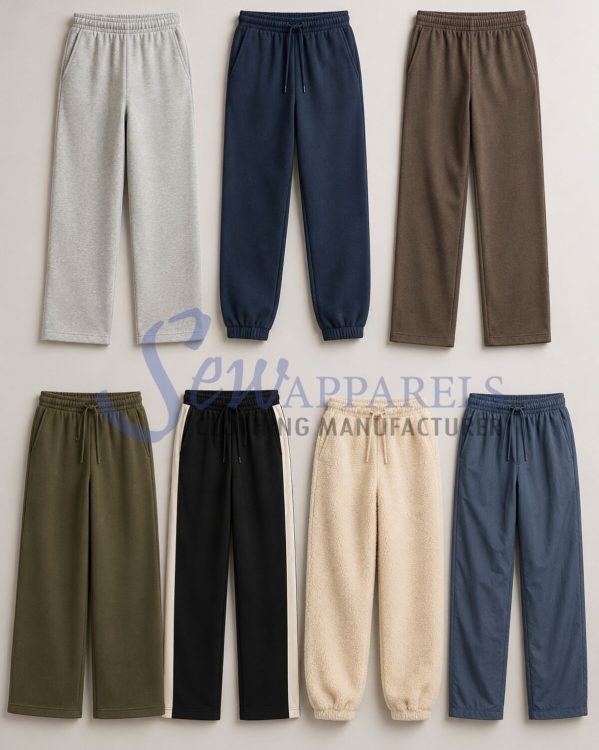
Published Sweatpants Buying Guides
Brushed Fleece Weight Selection: Sweatpants
Compare finished GSM, seasonal warmth, drape, inner-surface brushing, two-end and three-end construction, shrinkage and sampling checks before approving a fleece sweatpants programme.
Read the fleece weight selection guide
Seat Bagging Prevention: Sweatpants
Control fabric growth, seat ease, back rise, thigh balance, knee shape and repeatable wear testing before bulk approval.
Read the seat bagging prevention guide
Sweatpants Bulk Carton Quotation Inputs
Define carton dimensions, size assortment, units per carton, packing materials, destination and shipping terms before comparing bulk sweatpants quotations.
Read the bulk carton quotation inputs guide
Sweatpants Fleece Nap Direction Cutting
Control nap direction, pattern arrows, cutting orientation, shade appearance and bundle identification before cutting brushed fleece sweatpants.
Read the fleece nap direction cutting guide
Sweatpants Fleece Shedding Approval
Record fleece surface condition, lint observations, laundering conditions, sample references and acceptance limits before approving shedding performance.
Read the fleece shedding approval guide
Sweatpants Zipper Pocket Specification
Set zipper length, opening position, pocket bag dimensions, seam clearance, puller requirements and movement checks in the sweatpants specification.
Read the zipper pocket specification guide
Start with the product brief
A useful sweatpants brief explains who will wear the garment, where it will be sold and what the wearer should feel. Define the sales season, destination climate, intended activity, target price, order quantity and size range. Add the preferred silhouette: relaxed, straight, wide-leg or tapered jogger. These decisions guide fabric weight, stretch, waistband construction, cuff or hem finish, pocket design and seam specification.
Include clear front, back and detail sketches with a measurement chart. Mark the rise, inseam, hip, thigh, knee, leg opening and waistband dimensions. Identify the grade rules and permitted tolerances. When a reference sample is available, explain which features should be matched and which must change. A reference without written direction can create conflicting assumptions.
Connect fabric, fit and construction
Sweatpants performance comes from the combination of material and pattern. Finished GSM is useful, but fibre blend, yarn, knitting structure, brushing, compaction and finishing affect warmth, softness, bulk and stability. Approve the fabric together with the fit sample and repeat the review when a material changes. A heavier or more elastic fleece can alter the same pattern’s drape and measurements.
Review seam thickness at the waistband, crotch, pockets and cuffs. Confirm whether the waistband uses self fabric or rib, how elastic is joined, and whether a drawcord is required. Pocket bags, zip openings and branding patches add local bulk. The sewing method, needle and differential feed should suit the approved fabric so seams remain smooth and recover after stretch.
Plan the wearer experience
State whether the sweatpants are intended for winter warmth, year-round casualwear, training, travel or indoor comfort. Describe the expected outer-face appearance and inner-surface handfeel. A technical team can then compare fleece, French terry or another knit construction with the intended use. The decision should also consider drying time, layering, breathability and the care method customers are likely to use.
Use wear trials to evaluate movement, knee bagging, waistband security, pocket access and ankle comfort. Photograph the sample before wear, after a controlled wear period and after washing. Record feedback against the measurement chart instead of relying on general comments such as “too loose” or “too warm.” Specific evidence makes the next sample more efficient.
Sampling and quality approval
Begin with documented fabric choices, then approve a development sample and a washed sample. The pre-production sample should use the final colour, fabric, trims, branding and finishing route. Retain signed swatches and one approved garment with revision numbers. Bulk inspection can then compare weight, shade, measurements, surface appearance, seam quality and packing against the same references.
Plan dimensional-stability, spirality, pilling, abrasion, colourfastness and seam-performance checks for the target market. Test the garment under the intended wash and drying conditions. Dark shades, garment washes, prints and heat transfers may need additional assessment because processing can change colour, handfeel and measurements.
Low MOQ sweatpants manufacturer
Sew Apparels lists a starting MOQ of 300 pieces per design and colour for custom sweatpants. The workable quantity for a specific programme depends on fabric and dye-lot minimums, colour count, trims, decoration, packaging and delivery requirements. A focused specification helps the factory confirm feasibility without hiding important cost or material constraints.
For a low MOQ discussion, keep the first assortment controlled. Use one approved construction, a realistic size range and a small number of commercially useful colours. Send the target quantity, fabric composition and weight range, measurement chart, artwork, labels, packing method and delivery country. The team can then review sampling, costing and production options around the actual order.
Giving priority to startup clothing brands
Startup brands can work with a clearer sequence: customer and use case, fabric direction, fit sample, branding, wash test, price review and final approval. Early planning should separate essential product features from ideas that can wait for a later drop. This improves control over sampling time, minimums and unit cost.
Sew Apparels can discuss startup sweatpants development and prepare a quotation after the specification is clear. The service does not remove the need for testing or signed approvals; it gives a new brand a structured route for turning its concept into production information. Keeping revision notes, approved swatches and measured samples also makes reorders easier to reproduce.
Technical references and next steps
ASTM D3776/D3776M provides recognised methods for fabric mass per unit area. CottonWorks also explains knit structures and how brushing or napping distinguishes fleece from French terry. These references help buyers ask more precise questions, while the final specification and test plan must be agreed for the product and sales market.
ASTM fabric weight method
CottonWorks knit construction guide
Keep approvals traceable
Name every fabric swatch and garment sample with the style, supplier, construction, colour, date and revision. Store the test report with the same reference. If a sample is rejected, write the reason and the required correction instead of allowing it to remain an informal visual reference. This prevents the bulk team from following an obsolete weight, colour or fit.
The quotation should also identify what is included: fabric, rib, elastic, drawcord, labels, decoration, packing, testing and delivery terms. When any of these items changes, review the effect on cost, lead time and minimum quantity before approving production. A controlled change log is especially useful when several people comment on samples from different locations.
Before cutting bulk, confirm that the approved fabric has been conditioned and checked against the signed standard. Review shade continuity, usable width, weight, surface, shrinkage and defects. This final gate protects both the brand and manufacturer from avoidable rework.
Use the guide card above to review brushed fleece weight selection, then return to the Custom Sweatpants Manufacturer in Bangladesh page to prepare your product brief. As more sweatpants articles are published, this hub will add separate cards for each approved guide without creating placeholder links.
Turn your development decisions into a product brief
Combine the intended season, silhouette, finished fabric weight, construction, inner surface, measurements, test requirements, branding and order quantity in one controlled document. A complete brief lets the sampling team quote and develop against the same target.
Request a Custom Sweatpants Quote

