Leg Opening Mobility: 7 Smart Checks
Specify inseam length, hem width and side-panel shape before approving work cargo shorts for bending, climbing and seated movement.
Read the article →
Use this guide to specify inseam length, hem width and side-panel shape so work cargo shorts stay mobile when the wearer bends, climbs, kneels and sits.
Leg opening mobility is a pattern, measurement and movement decision. A short can fit correctly at the waist yet restrict a step if the inseam is too short, the hem is too narrow or the side panel pulls across the thigh. For a private-label workwear range, approve the leg opening on a sample that uses the intended shell, pocket system, waistband and finishing process. Record the wearer, base layer, footwear and work movements before setting dimensions. Repeat the same test across the smallest, middle and largest sizes so a comfortable sample does not hide a grading problem.
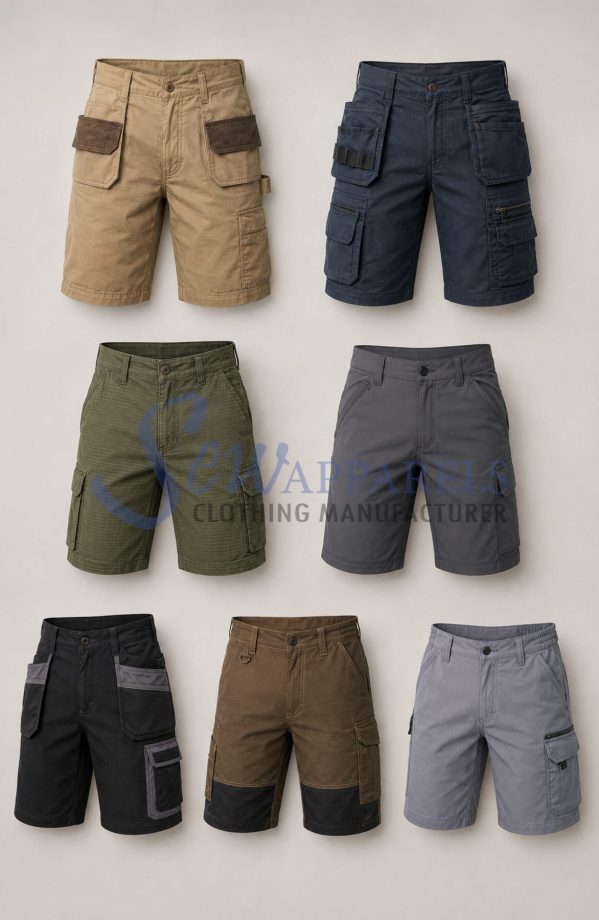
Specify inseam length, hem width and side-panel shape before approving work cargo shorts for bending, climbing and seated movement.
Read the article →Explore the work cargo shorts guide library for connected fit, pocket and production decisions.
Browse all guides →Review fabrics, pocket options, sampling, MOQ and production details on the core product page.
View product page →Define inseam length from the agreed crotch reference to the finished hem, and state whether the measurement is taken on a flat garment, along a seam or after pressing. Use one method on the tech pack, sample comments and final inspection sheet. Show the base size, grading increments and tolerance so the leg does not become progressively shorter or longer than intended.
Test the inseam with the wearer standing, walking, sitting and climbing one step. A short inseam can expose the leg when the wearer bends; an overly long inseam can stack at the knee, catch on footwear or change the hem opening. Approve the measurement after the planned wash or finishing process because shrinkage can alter the usable length.
Compare the finished inseam with the rise, seat and knee position. Mark the knee level on the pattern and confirm that the wearer can flex without the leg pulling upward.
If the short includes a gusset or articulated panel, record how that construction changes the measured path. Keep the measurement linked to the intended size chart rather than copying a trouser measurement without checking the shorter silhouette.
Specify hem width as a finished half-hem or full-circumference measurement, with the measurement point clearly marked. State whether the hem is straight, slightly shaped or curved.
Include turn-up, binding or facing details because a bulky finish can reduce the clear opening. Check the opening with the target footwear and with any protective layer worn under the shorts.
Hem width controls stride clearance and airflow but also affects appearance. A very narrow opening can catch the thigh during a high step; a very wide opening can swing, expose the pocket bag or look unbalanced beside a fitted waist.
Load the pockets and repeat the movement sequence before approving the final width.
Draw the side seam, pocket edge, hem and any contrast panel on the technical drawing. Identify where the panel changes direction and give finished measurements at the waist, hip, thigh, knee and hem.
A side panel should support the intended movement without pushing a pocket toward the front or twisting the side seam. Note seam allowances and the grain or stretch direction for every panel.
Review the panel on a live sample rather than a flat sketch alone. Ask the wearer to step up, crouch and rotate the trunk.
Look for diagonal drag lines, a seam that rolls forward, pocket access that closes and a hem that catches on the knee. If a stretch insert is used, record its recovery and ensure the woven shell does not become the limiting layer.
Use a repeatable sequence: walk, sit, bend, kneel, climb and reach across the body. Repeat it empty and with the representative tools in the pockets.
Record whether the waistband stays stable, the side seam remains aligned, the pocket opening stays accessible and the hem clears the knee. Photograph front, side and seated views with the measurement sheet beside the sample.
Review the smallest and largest sizes first. Grading can move the knee, alter the side-panel angle and change the relationship between hem width and thigh width.
Set a practical tolerance for inseam and hem, then repeat the check after washing, pressing or any garment dye process. ISO 18890:2018 provides a consistent method for garment measurement and allows additional points to be agreed between the parties.
Common work cargo shorts leg opening mobility mistakes include copying a trouser inseam, approving hem width while standing only, measuring a curved seam as if it were straight, ignoring pocket load, and changing fabric recovery without repeating the movement trial.
Another mistake is widening the hem to hide a tight thigh; the pattern balance should be corrected at the point where the restriction occurs.
Inspect the side seam, inseam, hem and any gusset after the movement sequence. Look for seam slippage, thread breakage, puckering and a panel that pulls away from the body.
ASTM D1683/D1683M-22 describes a method for evaluating failure in sewn seams of woven fabrics; use it as technical context while setting a product-specific loaded-use and wear test.
Freeze the inseam method, hem measurement, side-panel map, grading rule, fabric direction, seam allowance and tolerance in the tech pack. Keep the signed sample and movement photographs with the approval record.
During pilot production, inspect the same points and repeat the same movement sequence. If a substitution is proposed, require a measurement comparison and a new loaded-use check before bulk approval.
Ask which measurement method will be used, which shrinkage allowance is included, how the hem is pressed, and whether the side panel is cut on the same grain in every size. Agree what may change between sample rounds and require the factory to identify the exact pattern or sewing point affected.
A clear record protects the approved work cargo shorts leg opening mobility when the order moves from development to production.
For a low MOQ work cargo shorts program, start with one approved shell fabric, pocket layout and leg-opening specification before adding colours or trims. Confirm minimums by fabric, colour and component with the production team. A smaller first run still needs the same signed sample, size grading, wash allowance, movement trial and inspection points as a larger order. Keeping those decisions stable makes a repeat order easier to compare against the approved sample.
Startup workwear brands can discuss a focused first collection with Sew Apparels. Share the intended wearer, work movements, target size range, fabric, pocket load and launch quantity so sampling can focus on the decisions that matter most. Approve inseam, hem width and side-panel shape on a complete garment before committing to bulk production. Keep measurements and trial photos with the product brief for future colourways or repeat runs.
Share the approved inseam method, hem width, side-panel map, size grading, movement-test record and signed sample with the production team. The core work cargo shorts product page covers fabrics, sampling, minimum quantities and manufacturing options.
Discuss Work Cargo Shorts Manufacturing →