
Work Cargo Shorts Buying Guides
Work cargo shorts buying guides help a product team turn a pocket idea into a measurable tech-pack decision. Pocket position, bellows depth, opening reinforcement and pocket-bag support affect balance, access, durability and the way the shorts sit when tools are loaded.
Use these work cargo shorts buying guides before sampling, when comparing a supplier sample or when preparing a repeat order. The six articles cover pocket layout, leg-opening mobility, size-mix costing, dark-fabric colour transfer, exposed metal and repair access. Connect each decision to the actual specification, sample identity and intended use; keep proposed features separate from approved construction.
The custom work cargo shorts manufacturer page is the route for fabric, sampling, quantity and production enquiries. Provide quantities by size and colour, pocket references, artwork, packaging and destination. A guide supports clearer questions, but does not establish an actual quotation, a guaranteed order minimum or suitability for every workplace. Keep the approved sample, quotation assumptions and inspection scope connected.
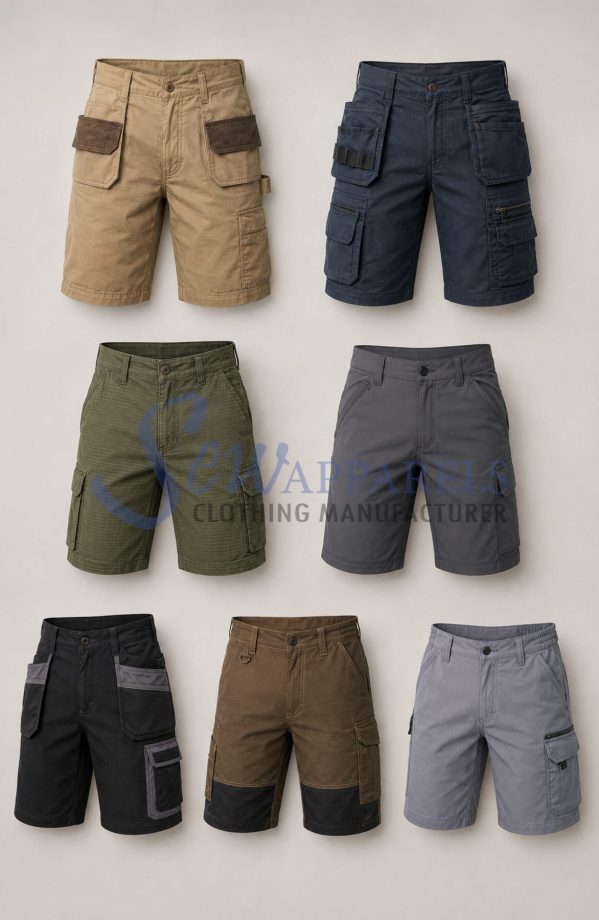
Loaded Pocket Comfort
Specify pocket position, bellows depth and reinforced openings before approving work cargo shorts for real movement and loaded use.
Read the loaded pocket guideLeg Opening Mobility
Specify inseam length, hem width and side-panel shape before approving work cargo shorts for bending, climbing and seated movement.
Use the leg-opening measurement and approval checklist to record the sample decisions.
Work Cargo Shorts Size Mix Costing: Ratios, Consumption and Quote Basis
Define quantities by size and colour, keep fabric width and cutting assumptions consistent, and compare the actual order scenarios. Preserve the consumption basis and confirmed quotation terms before approving the assortment.
Read the size mix costing guideWork Cargo Shorts Dark Fabric Colour Transfer: Rubbing Evidence and Shade Coverage
Review identifiable dry and wet rubbing reports, colourway coverage, care state and relevant contact observations. Keep appearance approval separate from evidence and define the limits before approving dark fabric.
Read the dark fabric colour transfer guideWork Cargo Shorts Exposed Metal Review: Components, Contact and Site Requirements
Map rivets, zipper parts and other hard components against the actual site brief. Review material information, normal contact positions and alternative designs, then record the accepted configuration and its limits.
Read the exposed metal review guideWork Cargo Shorts Repair Access: Pocket Bags, Seam Routes and Approval
Review access through the actual construction, identify replacement pocketing and confirm component arrangements. Demonstrate the proposed repair on a sample and keep inspection, authorization and replacement decisions traceable.
Read the repair access planning guideWork Cargo Shorts Buying Guides: Sampling and Approval
Start with the guide that matches the decision in your tech pack. Fit the sample over the intended base layer, walk, sit, bend, climb and load each pocket with the objects the wearer will actually carry. Record the measurement, fabric, pocket bag, hardware, reinforcement and tolerance rather than relying on comments such as “make it stronger.”
Load both left and right pockets with representative tools, then compare the garment empty and loaded on the intended wearer. Check whether the waist tilts, the hem swings outward or a pocket edge rubs during bending. Repeat the trial on the smallest and largest planned sizes; scaling a pocket without checking access can make one size comfortable and another awkward. Photograph the front, side and seated views and record the actual load used.
Work Cargo Shorts Buying Guides: Buyer Checklist
- Confirm the wearer, tools, hand preference, base layer and intended work movement.
- Show pocket opening, centre line, top edge, bottom edge and side-seam relationship on the technical drawing.
- Specify bellows depth, fold direction, finished width, pocket-bag shape and drainage or closure details.
- Define reinforcement type, bar-tack position, stitch density, seam allowance and tolerance.
- Load the smallest and largest sizes with representative tools and review sitting, bending and walking.
- Keep the approved sample, measurement chart, comments and inspection record together.
Turn each checklist item into a pass/fail observation on the sample sheet. Mark the pocket opening position from the side seam and waist, record how many tools the pocket can carry comfortably, and state whether the closure remains easy to use with work gloves. A signed sample should define acceptable tolerance for the opening, bellows, reinforcement and leg opening. Keep the same terms in the tech pack, sample comments and final inspection checklist.
Why a connected brief improves the result
A pocket decision belongs to the whole garment. Moving an opening changes the side seam balance; increasing bellows depth changes the silhouette; adding reinforcement changes local stiffness. Reviewing the sequence before bulk cutting lets the factory solve conflicts while the pattern is still easy to adjust.
The same record supports repeat production. If fabric weight, wash or hardware changes, the team can return to the relevant guide and recheck affected measurements rather than starting from memory. For sewing inputs, Coats’ garment costing guidance explains that thread consumption depends on stitch type, seam type, material thickness, layers, construction and stitch density. This supports identifying the actual construction before comparing estimates. It is not a complete cargo shorts price or evidence that Sew Apparels uses a particular costing system. Record the proposed change and ask which sample or calculation needs review.
Questions to settle with the production team
Ask how the pocket is balanced from the waist, side seam and hem, which seam allowances are included, and whether the pocket bag is cut from the shell or a lighter support fabric. Request front, side and seated photographs with the pockets empty and loaded. Agree what may change between sample rounds: fabric substitution, wash shrinkage, trim availability and pressing can all affect the final result.
When a substitution is proposed, require a measurement comparison and a loaded-use check. That record makes a repeat order faster because the factory can see which features are essential and which can be adjusted for availability. Ask the supplier to identify which tolerances require a fresh sample after a component substitution. A pocket bag that changes weight or a new bar-tack thread can alter comfort and appearance even when the exterior dimensions look unchanged.
Low MOQ Work Cargo Shorts Manufacturer: control the first run
For a startup brand or a smaller first run, approve one controlled pocket block before adding multiple colours and trim options. This keeps the development budget focused while protecting the approved fit. For a low MOQ work cargo shorts program, define the first run around one approved fabric, pocket layout, reinforcement method and size range. Confirm minimums per colour and trim, sampling charges, pocket-bag materials and inspection scope in writing. A smaller opening order can still be technically rigorous when the retained sample, measurement chart and loaded-use checklist travel with the production order.
Support for startup workwear brands
Use the work cargo shorts buying guides to stage development for a startup workwear brand around a clear first-release specification. Share the intended wearer, common tools, work movements, fabric direction and proposed quantities. Begin with a defined pocket block and leg-opening specification, then evaluate the actual shorts in the approved activities. Record essential details and distinguish optional variants from the agreed base construction.
Give the sample room and purchasing team the same revision references. Assign responsibility for fit, component information, colour-transfer evidence, costing assumptions and repair decisions. A first collection can use a modest set of well-defined samples without treating a small order as exempt from technical review. Confirm any startup support, sampling charges, minimums and schedule for the particular project; this page does not promise a priority slot or fixed commercial terms.
A practical work cargo shorts buying guides method
Use the work cargo shorts buying guides to keep the same measurement names on the technical pack, sample comments and final inspection sheet. Agree additional pocket and leg-opening reference points where necessary so both parties can reproduce the measurement. Record the load, size and sample configuration behind each observation. A neat pocket appearance or one successful fitting does not establish every durability or workplace requirement.
For quotation preparation, Lectra’s material estimation discussion identifies width, shrinkage, motif repeats, rotation restrictions and size-mix constraints as inputs in its software workflow. That is useful context for defining an estimate; it does not establish Sew Apparels software adoption or guaranteed savings. Ask the supplier to explain the actual inputs used for the proposed cargo shorts order.
Return to the relevant guide when fabric, hardware, size allocation or pocket construction changes. Keep the confirmed product specification and quotation authoritative. Send the approved measurements, fabric identity, reinforcement, quantities, branding and unresolved questions to the manufacturing team. Separate requested options from confirmed arrangements before accepting the final order basis.
Discuss custom work cargo shorts manufacturing