
SEW APPARELS · DEVELOPMENT RESOURCES
Jeans Buying Guides
Jeans buying guides help brands connect denim selection, pattern development and finishing before committing to a production order. A fabric swatch, a fit photograph and a wash reference answer different questions. Bring them together so the approved jean has the intended shape, movement and appearance. Begin with the customer, wearing occasion and target silhouette, then record the material and measurement decisions that support that direction.
Before approving a denim sample, record the intended rise, leg profile, wash appearance, waistband construction and movement allowance. Use finished garment points rather than a generic size label, and identify whether the review is made before or after the agreed care process. Compare front, side and seated views, then relate any change in fabric, pocket or seam treatment to the fit decision. Keeping those observations together helps the brand protect its silhouette when the size range or wash route changes.
Use these jeans buying guides with the eight detailed articles below. Begin with rigid versus stretch denim and yoke and rise development, then review wash quotation scope, back pocket branding, pocket position grading, leg twist evidence, low impact wash claims and rivet or button attachment. Each card addresses a distinct approval decision. Keep the current fabric, pattern, artwork and finish references linked so a change in one area prompts a review of the others. Read the relevant guide for an unresolved question, then return to the complete sample rather than approving a loose component or photograph in isolation.
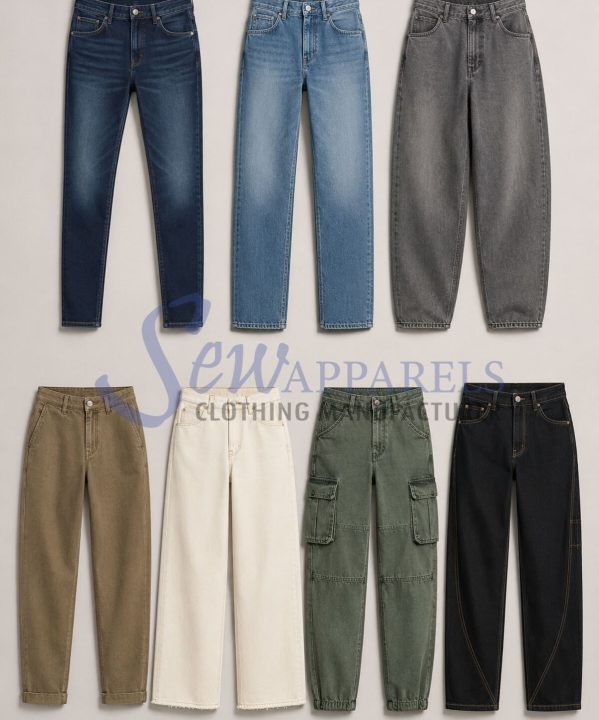
1. Choose rigid or stretch denim
Compare composition, extension, recovery and fabric weight in the intended finished condition. Evaluate the material with the approved silhouette so a comfortable sample also retains the shape your collection requires.
Read the rigid versus stretch denim guide2. Develop the yoke and rise
Define waist position, rise measurement and upper-seat shaping with clear references. Review standing and seated fit, adjoining seams and the complete size range before approving the production pattern.
Read the yoke and rise development guideJeans Wash Development Quotation Brief: Scope and Approval
Separate sampling charges from bulk inputs. Define finish references, revision conditions and approval responsibilities before comparing development quotations.
Review jeans wash quotation planningJeans Back Pocket Branding Approval: Placement and Finish
Lock artwork and finished pocket reference points. Review embroidery, left and right balance, size policy and branding after the planned denim finish.
Review jeans pocket branding approvalJeans Back Pocket Position Grading: Balance Across Sizes
Define pocket height, spacing and angle from clear references. Compare size policies, graded layouts and finished wearer samples before releasing the pattern.
Review jeans pocket position gradingJeans Leg Twist Approval: Evidence and Root Cause
Separate fabric skew from garment seam rotation. Compare starting and washed samples, construction evidence and agreed criteria before approving a correction.
Review jeans leg twist approvalJeans Low Impact Wash Claim Evidence: Data and Scope
Define process boundaries and a comparable baseline. Review supplier data, calculation assumptions and verification before approving environmental wording.
Review jeans wash claim evidenceJeans Rivet and Button Attachment: Assembly Approval
Identify component pairs and fabric stacks. Review setting trials, attachment evidence and finished operation before releasing jeans hardware.
Review jeans hardware attachmentBuild a Clear Denim Collection Brief
Start with the product your customer will wear: a structured straight leg, a relaxed everyday jean or a closer stretch fit. Record the waist position, leg profile, size range and desired surface character. These jeans buying guides help turn those broad choices into questions for the sample team, rather than treating a reference photograph as a complete production instruction.
Identify what must remain consistent across the collection and what can vary by style. Shared fabric, hardware or stitching may simplify development, but different silhouettes can still require separate patterns and approvals. Keep the denim article reference, measurement chart, trim list and wash target under one revision number so costing and sampling refer to the same proposed product. Separate development charges from bulk inputs and record quotation exclusions before comparing suppliers. Assign the visual finish approval and commercial authorisation to named reviewers. A clear file should identify what is accepted, what remains provisional and which change requires another sample or quotation.
Compare Denim Construction and Recovery
CottonWorks explains that denim character comes from the interaction of yarn, dyeing, weaving and finishing. Its denim basics resource provides useful background for a material discussion. For your order, retain an identifiable swatch and specify composition, weight units and finishing condition. A fabric description alone should not replace approval of the actual material.
Use the jeans buying guides to separate stretch from recovery. Easy extension does not establish how well a garment returns to its intended shape. Agree the relevant evaluation method and acceptance criteria with the testing provider, then compare the selected fabric in the intended pattern. Record any proposed fabric substitution and review its effect before allowing a change to production.
Review Rise, Yoke and Wearing Comfort
A balanced fit depends on the relationship between the waist, seat and leg. Define whether rise measurements include the waistband, and mark the reference points on the technical sketch. These jeans buying guides encourage specific sample comments: describe where the garment pulls, when the waist shifts and which movement reveals the problem. A clear observation is more useful than an untested correction.
Closet Core’s jeans fitting guidance recommends testing with material similar to the final denim and reviewing the garment from several views. Apply that principle when preparing sample feedback. Keep front, back and side observations together, and ask the pattern team to assess the complete fit before changing the yoke or rise. Recheck adjoining seams and pocket placement after an approved adjustment.
Approve Wash, Hardware and Production References
A wash target should describe the finished garment, including shade, hand feel and the agreed measurement condition. Keep an approved physical reference where possible, supported by clear detail photographs and tolerances. The jeans buying guides connect this finishing approval with the fabric and fit records so a revised wash is assessed for its effect on the whole product. Review our sanforized versus unsanforized denim comparison to align shrinkage evidence, pattern allowances and the garment’s delivered condition.
Review buttons, rivets, zippers, patches and topstitching on the intended construction. Confirm appearance, placement and suitability for the planned finishing route with the relevant suppliers. Compare back pocket branding and graded positions on finished samples; record the intended balance across the size range. Investigate leg twist using identifiable starting and processed garments instead of assuming every rotated seam has the same cause. Any low impact wash claim needs a stated boundary, comparable baseline and supporting process data. Before bulk release, align the sealed sample, size chart, trim approvals and packing instructions. Give each approval an owner and date, and retain unresolved comments separately.
Low MOQ Jeans Manufacturer: Plan the Fabric Route
Brands seeking a low MOQ jeans manufacturer should confirm the denim and component route before dividing an order into many styles and colours. Our jeans manufacturing team can review the proposed brief for an order-specific quotation. Discuss available denim, custom shades, hardware minimums, wash development and the size allocation together. A small garment order does not automatically remove a fabric mill or trim supplier’s procurement minimum. Use these jeans buying guides to prioritise the first collection and identify which details require sampling. Confirm applicable quantities, development charges, revision scope and delivery assumptions in writing before making a production commitment.
Development Support for Startup Denim Brands
Sew Apparels welcomes startup clothing brands planning a first denim collection. Share your customer profile, reference fit, preferred wash and launch timing so the team can review practical development options. These jeans buying guides help organise the conversation around one clearly defined product before expanding the range. Keep first-order decisions traceable, review costs alongside sample requirements, and retain the final fabric and fit references so later colours or repeat orders can follow the approved direction.
Turn your denim decisions into a product brief
Bring your denim reference, silhouette, rise measurements, wash target and branding requirements together before requesting development support. Include the pocket grading policy, hardware component references, care route and any leg twist observations requiring investigation. Identify the sampling deliverables, approval responsibilities and commercial inputs that remain open. Keep the jeans buying guides beside the sample approval file so each material or pattern change can be assessed against the same intended product. For repeat orders, retain the accepted fabric, finish and component identities rather than assuming a similar-looking substitute carries the same approval.
Explore jeans manufacturing