
A jeans wash development quotation brief defines what a finishing supplier is being asked to develop, what the brand will approve and which charges belong to sampling rather than bulk production. A photograph of a faded jean cannot answer all three questions. The fabric, garment construction, local effects, reference samples and revision conditions need identifiable records before quotations can be compared fairly.
For custom jeans manufacturing, a useful enquiry connects the desired appearance with the proposed denim and the sample approval route. It does not turn an untested wash name into a guaranteed result. This guide helps sourcing teams organise that discussion, separate commercial assumptions and protect the approved finish when the order moves from development to production.
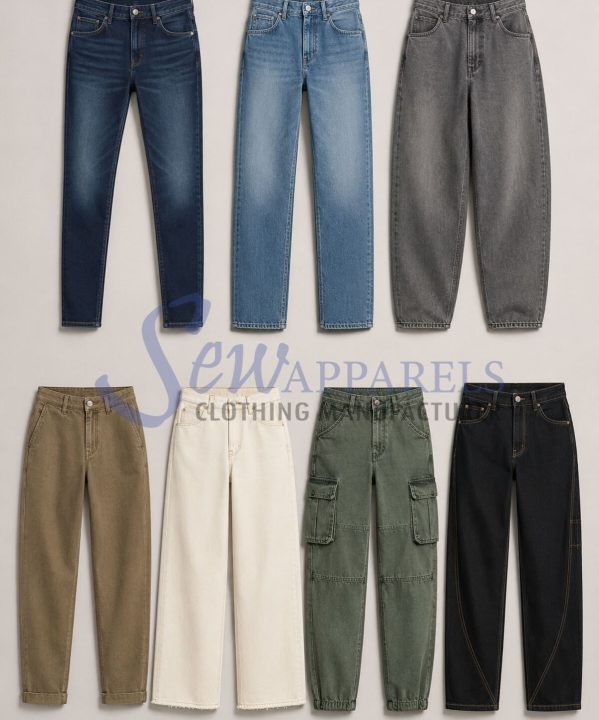
Why a Jeans Wash Development Quotation Brief Matters
Two quotations can describe the same style yet cover different work. One may include an initial wash trial on buyer-supplied garments; another may include garment making, several local effects and a retained approval reference. Comparing their total prices without checking these boundaries can conceal additional charges or leave essential development tasks unassigned.
In the jeans wash development quotation brief, record the jeans wash process quotation scope in plain language. Identify the style, denim article, proposed finish, number of development options and required sample deliverables. Ask the supplier to state which inputs are provisional. If fabric availability or the processing route remains undecided, keep those assumptions visible instead of presenting the quotation as an approved bulk commitment.
A jeans wash development quotation brief is most useful as a shared working document. Give it a revision number and name the people responsible for commercial review and technical approval. A lower price becomes meaningful only when it covers the same deliverables and the samples support the intended product.
1. Identify the Denim and Starting Garment
Record fabric composition, weight units, article code, colour or shade reference and the condition in which the garment enters finishing. Include the sample pattern revision, size and relevant trims. A trial on a different denim or an unfinished garment construction should not silently become evidence for the final jean. Use the rigid versus stretch denim comparison when defining the starting fabric.
The denim finish development reference should explain whether the target concerns overall shade, contrast at seams, hand feel, whiskers, worn areas or a combination. Mark the relevant zones on photographs or a technical sketch. Where a physical sample is available, give it a unique identifier and describe which features are being adopted; a reference garment may contain details that the new style does not require.
Agree denim wash trial garment ownership before material is sent. State who supplies the blanks, who pays for them and whether processed garments will be returned, retained or used for evaluation. Record what happens if a trial garment cannot be reused. These are commercial arrangements to confirm with the parties, rather than fixed industry charges.
Keep a pre-process measurement record when finished dimensions matter to approval. Identify the measurement points and condition. This helps the team distinguish a requested appearance change from an unintended fit change when reviewing the developed sample.
2. Describe the Finish Without Assuming a Recipe
A jeans wash development quotation brief should describe the required outcome and ask the supplier to propose an appropriate route. Avoid prescribing unfamiliar processing settings from a photograph. Material response and garment construction need review by the finishing team, and safety or chemical requirements belong with qualified process specialists.
CottonWorks’ denim finishing resource distinguishes basic finishing from additional effects used in premium denim. That background explains why a general wash label is insufficient for costing. List the effects requested for your style and ask which operations, samples and approval stages the supplier includes.
For denim finishing artwork approval, identify artwork files, placement, scale and the sample size used for evaluation. Mark left and right leg differences where intentional. Local effects should be assessed on the actual garment, including pocket position and seam relationships, rather than approved only as a flat image.
Jeanologia’s garment finishing overview describes laser marking and equipment intended for sampling and production. This illustrates that technology and development context can differ. Ask the proposed supplier to identify its actual route and how the sampled effect will transfer to bulk; the reference does not establish equipment availability at Sew Apparels.
Retain jeans local finish sample evidence through labelled detail photographs and the physical sample where agreed. Specify viewing conditions for shade discussions and flag any photo limitations. A screen image is useful for communication, but it should not quietly replace the agreed physical approval reference.
3. Separate Sampling Charges from Bulk Inputs
List denim wash development sample charges separately from the proposed bulk finishing charge. Ask what each charge covers: trial garments, finish options, artwork preparation, processing, review samples, delivery or another stated item. Keep currency, quotation validity and payment conditions alongside the amounts so the commercial comparison remains complete.
The jeans wash trial scope should specify the deliverables that will be supplied for the quoted development stage. Record the number of options or sample sets agreed with the supplier, their purpose and the point at which further work requires a revised quotation. Do not assume that a sampling payment includes unlimited finish changes.
Record jeans finishing revision assumptions clearly. Distinguish a correction against the agreed brief from a new buyer request, such as a different denim, another wash shade or changed local artwork. Ask how additional revisions are authorised and priced before requesting them. An approval trail protects both parties from conflicting instructions.
Document jeans finishing quote exclusions beside the included items. Independent testing, extra sample garments, freight, special packaging or other services may require separate discussion; whether they are excluded depends on the actual quotation. Avoid filling gaps with assumed allowances when the supplier has not confirmed them.
Keep jeans wash quotation exclusions visible in the jeans wash development quotation brief when a quotation is revised. A change in the total amount can reflect a change in scope rather than improved efficiency. Check that the comparison still covers the intended deliverables before treating the revised figure as a saving.
4. Assign Approval and Reference Responsibilities
A jeans wash development quotation brief should name the person who can approve the visual finish and the person who can authorise additional costs. If those roles differ, require both decisions at the relevant stage. A comment from a designer should not automatically release an unagreed charge, and a commercial acceptance should not substitute for sample approval.
Define jeans finish approval responsibilities for shade, local effects, hand feel, finished measurements and any agreed testing. Assign an owner to each decision and identify the sample revision reviewed. Keep open comments separate from accepted features so the supplier can see which work remains outstanding.
Clarify jeans wash reference ownership and custody. Identify which party holds the approved physical garment, whether matching references will be supplied and how reference replacement is handled. Discuss ownership or permitted reuse of artwork separately where relevant. Possession of a sample does not automatically answer every intellectual property question.
The jeans bulk finish reference sample should be linked to the approved fabric, construction and finish revision. Record approval date and any accepted deviations. If another sample is produced to represent the production route, identify its role and review it before replacing the earlier reference in the file.
5. Compare Quotations on the Same Basis
Use a denim wash quote comparison sheet with one row per supplier and separate columns for included work, development charges, bulk assumptions, exclusions, approval deliverables and unresolved questions. Add the relevant quotation date and revision. Comparing structured fields is more useful than ranking totals that describe different services.
For example, two suppliers may both quote a faded finish. One includes local artwork development and returned review samples, while the other assumes approved artwork and buyer-supplied trial garments. Ask each supplier to price the same requested scope, or document the difference explicitly. Do not invent a percentage adjustment to make unlike offers appear comparable.
The jeans wash development quotation brief should also identify the proposed order quantity and style or colour divisions as costing inputs. Ask the supplier to confirm whether the quoted basis changes when those inputs change. Sampling feasibility and bulk pricing are separate questions, particularly when a collection contains several finish variations.
Review the quotation with the sample evidence. A commercially attractive offer still needs an achievable appearance, traceable approvals and clear responsibilities. Keep unsupported timing or capacity statements as questions until the relevant supplier confirms them for the actual project.
6. Release a Complete Development Enquiry
Before sending a jeans wash development RFQ, check that the garment and finish references tell the same story. Remove superseded sketches, identify the current artwork and explain unresolved material choices. Ask for a written response against the brief so omissions can be discussed before sampling begins.
- Product identity: style code, denim reference, sample construction and starting garment condition.
- Finish target: physical reference, local effect map, desired appearance and review criteria.
- Development scope: agreed options, sample deliverables, revision conditions and responsibilities.
- Commercial basis: separate sampling and bulk inputs, currency, validity and confirmed exclusions.
- Approval record: named owners, reference custody, revision numbers and release conditions.
For private label jeans production, bring this information to the Sew Apparels jeans manufacturing team for a project-specific discussion. Request confirmation of the material, finish route and development terms rather than assuming that a reference picture defines the complete order.
Questions Buyers Should Resolve Before Approval
Does sample approval establish the bulk price?
Not by itself. Review the commercial quotation alongside the approved sample and proposed production inputs. Confirm whether the accepted finish changes any previously provisional assumptions. The jeans wash development quotation brief should retain both the technical approval and the applicable commercial revision.
Should every change trigger a new sample?
Agree the review requirement with the technical team according to the change. A revised denim, construction or effect can alter the developed result. Record the decision and supporting evidence instead of treating every change as either automatically acceptable or automatically equivalent.
How should the team close development?
Resolve outstanding comments, retain the current reference and confirm the approved scope in writing. Use the Jeans Buying Guides to connect finishing decisions with fabric and fit development. A complete jeans wash development quotation brief leaves the next team with identifiable inputs, agreed responsibilities and a clear basis for production discussion.