
Work Cap Buying Guides
Work cap buying guides for brands developing dependable workplace headwear. Start with the published workplace cap fit design checks, then use the planning sections to define crown depth, back adjustment, sweatband comfort, fabric performance and sample approval. Keep the preferred fit connected to the actual wearer, work environment and uniform requirements rather than relying on a generic one-size description.
Workplace cap fit depends on more than a profile label. Use these eight work cap buying guides to coordinate wearer fit, logo visibility, measurement approval, sweatband and fabric review, department colour allocation, protective-headwear boundaries, commercial laundry compatibility and internal employee labels. Start with the decision that remains open, then retain the accepted sample and a record of the related specification changes. Multi-site buyers should keep role quantities, colour references and distribution instructions connected without treating a uniform colour as a universal safety code.
Startup brands and smaller programmes can use the same approval process to define sample scope before requesting a quotation. Confirm garment, fabric and component minimums separately for the proposed order. For U.S. workplace hazards, OSHA head protection requirements address protective helmets; ordinary textile cap development cannot replace the responsible workplace safety assessment.
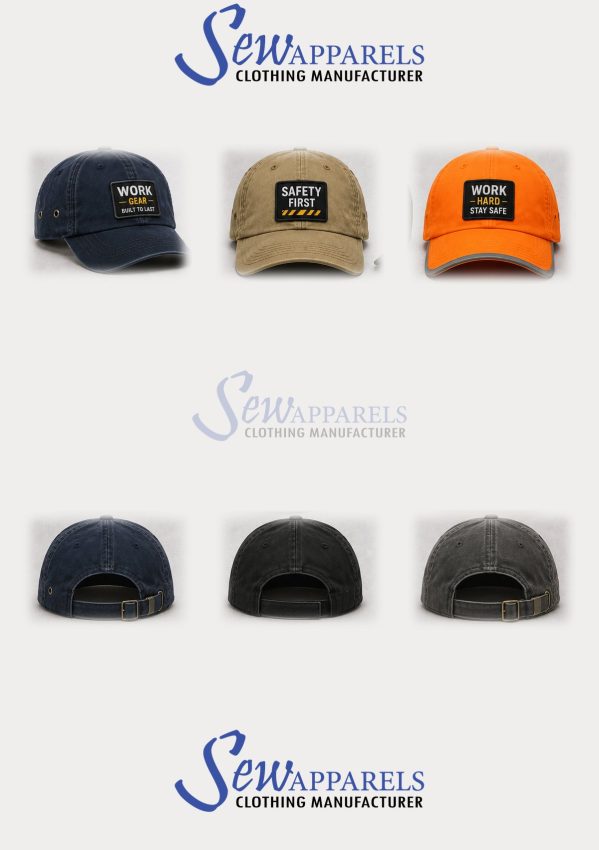
Ordinary textile cap reference from the product page. Pictured colours, closures and printed slogans do not establish an approved specification, stock availability or protective rating; confirm the actual sample and workplace requirements in the buyer brief.
Work Cap Workplace Cap Fit Design: 7 Essential Checks
Review crown depth, back adjustment, sweatband comfort, fabric performance, decoration alignment and wash approval before bulk production. Use the full checklist to record the approved fit and keep repeat orders consistent.
Read the work cap workplace cap fit design guideWork Cap Logo Visibility Planning: 7 Smart Checks
Plan front badge proportions, side embroidery, contrast thread, artwork clear space and sample approval before bulk production. Use the seven checks to keep work cap branding visible, comfortable and repeatable across colourways.
Read the work cap logo visibility planning guideWork Cap Fit Measurement and Sample Approval Checklist
Measure crown depth, head circumference range, front rise and back adjustment on the actual work cap sample. Note the wearer, measurement setting and comfort feedback so every requested change can be checked against the approved workplace uniform fit.
Review the fit checklist on this pageWork Cap Sweatband, Fabric and Branding Review
Review sweatband contact, fabric choice and branding separately. The AATCC TM15 summary concerns textile colourfastness to acid perspiration; it does not assess cap fit, breathability or commercial laundry suitability. Ask the laboratory to identify the appropriate method, specimens and buyer acceptance criteria for the actual risk.
Review material specifications on this page5. Plan department colour allocation
Map department colours and site quantities, compare common colour options, and document replacement rules and approved stock provisions before ordering.
Read department colour allocation guide6. Separate uniform caps from protective headwear
Define intended use, refer workplace hazards to the responsible specialist, and review product evidence before approving headwear claims and procurement scope.
Read headwear procurement scope guide7. Evaluate commercial laundry compatibility
Record the intended laundry process, inspect finished cap trials for shape, component, logo and label changes, and agree on replacement criteria.
Read commercial laundry evaluation guide8. Approve internal employee identification labels
Separate employee references from product batches, review panel usability and care durability, and align cap markings with issue, return and reissue records.
Read employee identification label guideHow to Use These Work Cap Buying Guides
Start with the work cap workplace cap fit design guide to define the wearer, work environment and preferred silhouette. Record crown depth, head circumference range, adjustment setting and front rise from the sample rather than relying on a profile name. A useful work cap buying guide turns visual preferences into measurements that a factory can review, price and reproduce. Keep the approved reference beside the measurement sheet so later comments remain connected to the same cap.
These work cap buying guides treat crown depth, circumference and back adjustment as separate parts of the brief. A cap can have the desired visual height while the fit still needs development. Ask reviewers where the cap sits, how the front panel presents and whether the adjustment range works during movement. Record observations against the actual sample, identify every size or construction reviewed and note which version still requires confirmation before production.
Connect Crown Depth, Adjustment and Branding
A specification prepared from these work cap buying guides should identify crown depth, front-panel support, visor shape, back adjustment, sweatband construction and fabric weight together. Include the intended logo dimensions and position so branding can be reviewed with the approved proportions. Keep fixed design choices separate from details open to supplier suggestions, and record any alternative that changes the comfort, decoration area or visual balance of the finished cap.
Review the artwork on the chosen work cap sample instead of assuming that a logo approved on another profile will transfer unchanged. Mark its position relative to the crown and visor boundaries, inspect front and side views together and check the decoration after washing. Keep logo revisions, decoration method, garment colour and cap changes in one decision record so any new crown or fabric route triggers the correct fit and branding checks.
Create a Repeatable Workplace Fit Review
Prepare a review sheet covering fit, crown appearance, visor position, back adjustment, sweatband contact, fabric hand feel and decoration. Use the same reference points for each work cap sample and identify the adjustment setting and wearer when recording observations. Keep the approved sample identity so production discussions refer to a complete cap rather than an isolated measurement, and label each correction with the location, desired result and next check.
Separate requested corrections from preferences already accepted. For every open issue, describe the location, the desired result and how the revised sample will be checked. Keep material references, artwork files, measurement notes and wash observations with the same style record. If the supplier proposes a different fabric, sweatband, closure or support, ask which fit and appearance checks must be repeated before approving the revision.
Read Work Cap Specifications as Product-Specific References
Manufacturer specifications are useful examples of how work cap details can be described, but they are not universal boundaries. Compare the reference crown depth, bill shape, fabric weight, sweatband and adjustment system with the actual workplace cap you want to develop. Record only the features relevant to your brief, then confirm the final dimensions, materials and decoration against the Sew Apparels sample. Keep external examples separate from the approved style record so a familiar reference does not override the requirements of your team or customer.
When using an external cap as a reference, identify the feature you want to compare: silhouette, crown measurement, visor shape, fabric performance or adjustment. Do not carry unrelated specifications into your own brief without review. A work cap buying guide should clarify the desired result while allowing the manufacturer to assess the requested construction. Confirm final dimensions, materials, decoration and wash performance against the cap developed for your brand.
Low MOQ Work Cap Manufacturer: Clarify the Fabric Route
A buyer comparing a low MOQ work cap manufacturer should confirm the fabric route behind the minimum quantity. Sew Apparels currently presents 576 pieces with matching export-quality stock fabric and 5,184 pieces with custom fabric, per colour and style. Custom-dyed fabric, hardware, sweatband choices or decoration may affect the final offer. Prepare the fit and branding decisions before requesting a quotation, then confirm the fabric route, colour match, applicable minimum and custom component requirements in writing for the proposed work cap.
Support for Startup Brands Developing Work Caps
Sew Apparels supports startup brands developing practical work caps and gives early-stage product discussions a clear route. Share the customer profile, work environment, cap reference, logo, budget range and proposed launch window so the team can review the intended product. These work cap buying guides help a new brand prepare focused questions about fit, fabric, sweatband comfort and decoration. Agree on one first style, identify the sample evidence needed and confirm development charges, minimums and production milestones in the quotation before committing to bulk production.
Turn the Approved Work Cap Fit Into a Clear Product Brief
After using these work cap buying guides, collect the approved cap reference, fit measurements, material choices, wash comments and artwork placement. Keep the decision record with the quotation so the production team can review the exact workplace fit and construction requirements before sampling.
Explore custom Work Cap manufacturing