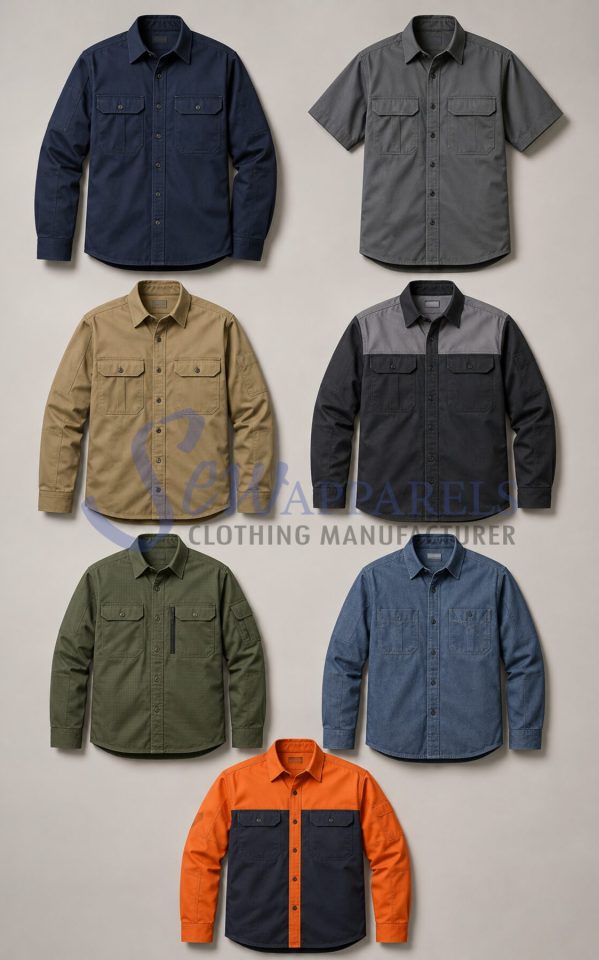
Action-back construction
Plan pleat depth, shoulder reach, back-yoke geometry and repeatable movement checks. Use this route when a shirt needs controlled upper-back expansion without loose fabric at rest. Read the article for construction reasoning, then open the separate buyer guide for measurements, movement trials and sample-approval checks.
Read action-back construction article
Open action-back buyer guide
Cuff fastening options
Plan button spacing, adjustable cuff circumference, sleeve-placket geometry and measurable attachment checks. Use this route when a work shirt needs controlled wrist adjustment and reliable fastening. Read the article for technical causes, then open the separate buyer guide to set the specification and review samples.
Read cuff fastening article
Open cuff fastening buyer guide
Work Shirt Fold Versus Hanger Quotation: Packing Scope, Cartons and Receiving
Compare identified fold and hanger arrangements for the same order. Confirm materials, packed dimensions, freight assumptions and receiving work before approving packing.
Compare fold and hanger packing quotations
Work Shirt Fabric Rubbing Fastness: Dry, Wet and Layering Evidence
Compare identified fabric samples and dry or wet rubbing reports. Keep care states, colourway coverage and jacket-lining observations clear before approving uniform material.
Review rubbing fastness evidence
Work Shirt Recycled Fibre Claim Records: Material Scope and Traceability
Match the proposed claim to identified fabric, production lots and supporting documents. Keep component scope, percentage basis and approved wording clear before releasing labels or product copy.
Review recycled fibre claim records
Work Shirts Seam Puckering After Laundering: Controls, Care and Corrections
Compare identified seams before and after the agreed care route. Review placket, yoke and side-seam changes separately, then document and recheck the correction before approval.
Review post-laundering seam appearance
Choose the work-shirt decision you need to make
The Work Shirts Buying Guides hub connects related posts without mixing them into one long product page. The article explains the technical problem and the buyer guide turns it into a practical brief, sample review and bulk-control sequence. New routes will be added as the work-shirt content group grows.
Explore custom work shirts
How to use the work shirts buying guides
Start with the technical article when you need to understand why a construction succeeds or fails. It explains the relationship between pattern, fabric, sewing and the wearer’s task. Follow the linked buyer guide when preparing a technical pack, sample comment sheet or pre-production approval.
Keep the product page for manufacturing capability, order discussion and commercial enquiry. This structure gives search engines and buyers a clear purpose for every URL while preventing a single product page from becoming crowded with many unrelated links.
Prepare evidence for work shirts buying guides
Name the wearer, task, base layer, fabric, care route and size range. Add finished measurements, tolerances, photographs and the exact movement or inspection method. Compare samples using the same reference points rather than subjective descriptions.
Seal the approved sample, pattern, measurement sheet and conditioned test evidence. Recheck early bulk whenever a fabric, trim or construction variable changes. A repeatable decision record protects fit and performance across colours, production lines and repeat orders.
Keep the hub useful as it grows
The work shirts buying guides keep article analysis, supplier instructions and product enquiry routes distinct. The six article cards answer different questions: reach, wrist adjustment, packing cost scope, colour transfer evidence, recycled fibre claim support and washed seam appearance. Use the construction buyer guides where they fit the sample task; a new article does not automatically require another guide page. Keep later resources within their related topic and record which evidence is relevant to the current order.
Return to this hub when a material, trim, construction, packing or claim changes. Select the relevant route and identify which earlier decision needs reopening. An alternative hanger may require a new packed sample and receiving review; a different dye lot may require appropriate rubbing evidence; a revised fabric claim needs matching records. Do not repeat unrelated checks without a reason, but do not carry an old approval into a changed scope silently. This makes the next review focused and traceable.
Article and guide links have different jobs
The article link opens the long technical explanation. Use it to compare causes, understand terminology and identify the variables that need control. The guide link opens a designed buyer page with the approval sequence, sample checks and a concise route back to the related manufacturing page.
Keeping the two links separate helps a sourcing manager choose the right depth of information. It also prevents supporting content from competing with the core product page. The manufacturing page remains the commercial destination, while each guide route answers a specific development question.
Review before placing a bulk order
Confirm that the approved construction is written into the technical pack and visible on a sealed sample. Check the specified size set, laundering route and movement condition. When production begins, compare early garments with the same measurements and reference photographs before authorizing the complete run.
If the mill, trim, pattern or sewing method changes, repeat the relevant checks rather than relying on the original approval. A short, consistent review protects the appearance and mobility expected from the work-shirt programme.
Use standard methods to compare fabric and care evidence
A work-shirt brief becomes stronger when the buyer states how fabric strength and garment care will be assessed. ISO 13934-1:2013 describes a strip method for maximum force and elongation of textile fabrics, mainly applicable to wovens. It helps the team specify a comparable fabric test; it does not replace a fit or seam assessment on the finished shirt. Ask for the test method, specimen direction, conditioning and acceptance criteria, then relate the laboratory result to the actual fabric used in the approved sample.
For repeat-care checks, ISO 6330:2021 defines domestic washing and drying procedures for textile testing. Select the procedure that reflects the garment care claim, and document the machine, detergent, drying route and cycle count before comparing collar, cuff, action-back and overall dimensions. A different wash or drying route can change the result, so use the same recorded procedure for prototype, sealed sample and early bulk. Keep test evidence beside photographs and the measurement sheet; an attractive single sample alone cannot establish repeatability.
Low MOQ work shirts for startup brands
Discuss low MOQ work shirts manufacturing using one defined fabric, fit and use case. Confirm availability, size splits, decoration requirements and packing materials with the supplier before assuming an order minimum or price. Review representative sizes and retain the technical evidence for later colours and branding. A focused first order can reduce uncontrolled choices, but no universal quantity or free development promise follows from the phrase low MOQ. Record the actual commercial agreement with the approved specification.
Sew Apparels gives startup companies a structured path from product idea to measurable sample approval. Clear decisions reduce uncontrolled revisions, protect the first order and make later growth easier to manage.
Work shirts buying guides for startup workwear brands
Startup brands can work with Sew Apparels on a defined work-shirt brief rather than a broad, untested assortment. Start with one wearer group, one fabric platform and an agreed action-back or cuff solution. Specify the expected movement, laundering route and branding position; then check a size set against the same measurements and photographs. Record changes between prototype, approved sample and early production. This keeps the first order focused while creating reusable technical evidence for later colours, sizes and repeat orders. A clear sample approval is more useful than an unsupported promise about minimum order size.