
A work shirt fold versus hanger quotation should compare two defined packing arrangements for the same garment order. It should not compare a basic folded shirt with an unspecified retail hanger package and call the difference a packing surcharge. Buyers need the presentation, materials, carton configuration, handling and freight assumptions written beside each price.
The useful question is which arrangement fits the receiving channel at an acceptable total cost. A folded pack may suit one distribution process, while a hanger arrangement may suit another. Neither is automatically cheaper after receiving labour, repacking and transport are considered. This guide explains how to request comparable options without inventing a universal saving or treating a sample photograph as a complete packing specification.
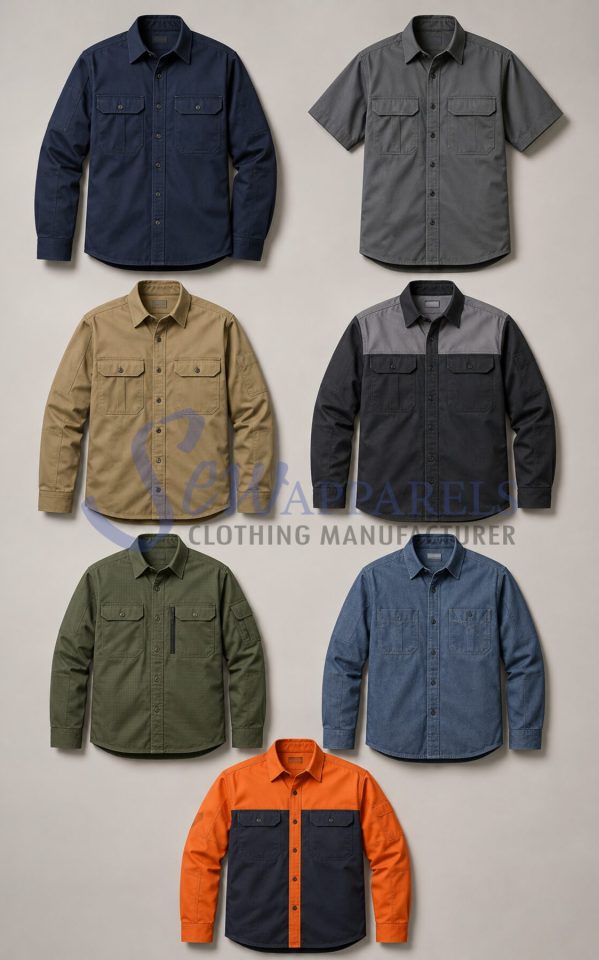
1. Define the work shirt fold versus hanger quotation scope
Start with the same style revision, fabric, colour assortment, size ratio and quantity for both options. Keep the garment construction unchanged unless the buyer deliberately requests a separate variation. If one offer includes decoration or different labelling, isolate that difference before comparing the packing prices.
A work shirt folded hanger quote needs two complete descriptions. For the folded option, specify the folded presentation, protection, label position and carton arrangement. For the hanger option, specify the hanger itself, how the garment is secured and how the packed units enter the shipping carton or other agreed transport format.
Identify the destination channel: retail display, a uniform distributor, direct employee issue or another receiving process. Work shirt retail channel packing should reflect an actual requirement supplied by that channel. Do not request additional presentation materials simply because another brand uses them; every component needs a purpose in the buyer’s own handling and display process.
Keep work shirt fold versus hanger quotation assumptions visible
Record currency, quotation validity, quantity basis, delivery scope and any buyer-supplied materials. A unit packing price and a shipment freight estimate answer different questions. If the offer is provisional pending sample approval, state what will trigger confirmation. This avoids a later disagreement when the approved package differs from the original assumption.
2. Specify presentation and material components
For a work shirt fold versus hanger quotation, a clear material list is more useful than the phrase “standard packing.” Identify every included component and its specification or approved reference. Buyers should be able to match the list to the physical sample rather than infer contents from a supplier’s usual practice.
A folded work shirt packing quotation may include a defined fold, a protective bag or other agreed wrap, a collar support, a backing component and labels where required. These are examples of fields to consider, not a mandatory package. Name which components are included, omitted or supplied by the buyer.
Work shirt packing material charges should separate individual recurring components from any setup or tooling cost. A new printed insert and a stock unprinted insert do not have the same purchasing assumptions. Record artwork responsibility, approval stage and whether unused custom materials will be retained, charged separately or dealt with under another agreed arrangement.
The work shirt hanger specification should identify material, shape, width, hook arrangement and any channel requirement. Approve how the shirt sits on that hanger and how the package is handled. A hanger that looks suitable in isolation still needs checking with the actual shirt size, shoulder shape and receiving process.
Approve the fold as well as the hanger
Uniform shirt fold presentation should record visible front area, sleeve arrangement, collar position and finished pack dimensions. Review whether identification remains readable without unnecessary handling. The aim is a repeatable packing instruction, not a fold that only one sample-room operator can reproduce from memory.
3. Compare carton configuration using packed samples
A work shirt fold versus hanger quotation needs measured package information before the freight comparison becomes meaningful. Nominal shirt dimensions do not describe a closed carton. Confirm the quantity and assortment inside each carton, then record the external dimensions and gross weight of the actual proposed arrangement.
Uniform shirt carton quantity inputs should include the size mix and whether the carton is solid-size, mixed-size or allocated for a particular customer. Larger sizes or a different assortment may change the packing arrangement. Identify the configuration represented by the sample instead of applying one carton quantity to every possible order.
A work shirt packed dimensions quote should distinguish an individual pack from an outer carton. Record units, measuring points and sample revision. If the proposed carton dimensions are still estimates, label them clearly and specify when measurements will be confirmed. Do not present preliminary dimensions as final freight data.
Include gross weight with the packaging in place. A folded garment and a hanger-packed garment can have different material and carton requirements, but the direction and amount of any cost difference must come from the actual configurations. Avoid claiming a percentage reduction without a documented calculation for the buyer’s shipment.
Read the carrier rule for the selected service
DHL’s UK weight and dimensions guidance explains volumetric weight and compares it with actual weight for chargeable weight. It also notes that limits vary by delivery service. Use this as a reason to verify the selected service’s current basis, not as a universal rule for every freight movement.
UPS package preparation guidance includes measuring the package’s length, width and height and retaining those measurements for shipment creation. For the buyer’s route, confirm the applicable carrier requirements and measured packed weight. This article does not calculate an actual shipping tariff or imply that Sew Apparels uses either carrier for every order.
4. Include handling at both ends
A work shirt fold versus hanger quotation can look attractive at the packing stage yet create extra work on receipt. Map the steps after delivery: carton opening, identification, sorting, label checking, removal of temporary materials and final presentation. Ask which operations the quoted arrangement genuinely removes and which operations it leaves to the receiving team.
Uniform shirt hanger packing cost should specify whether garments arrive ready for the intended display or still require inspection, steaming or other preparation. Do not assume a hanger eliminates all appearance work after transport. Check a representative packed sample against the buyer’s presentation requirement before assigning a receiving-time saving.
Work shirt packing handling scope should identify packing, checking, carton marking and any allocation-specific work. If a buyer requires garments sorted by branch or department, include that instruction in both options. Comparing an allocated folded order with an unallocated hanger order would hide a handling difference inside the packing comparison.
A work shirt retail packing comparison should also consider how store staff identify the size and style. Review label visibility and whether opening the package changes its presentation. Keep packaging approval separate from garment quality approval: an attractive pack cannot compensate for an unresolved shirt specification.
Use receiving feedback as evidence
Ask the receiving team to review the sample and list required adjustments. Record observations rather than promising an unmeasured labour saving. If the team needs a timed comparison, define the process and conditions before collecting data. Results from one receiving process should remain attached to that process and its sample arrangement.
5. Build a comparable commercial matrix
Put the work shirt fold versus hanger quotation into a single comparison record with matching columns. A work shirt packing commercial matrix can list garment basis, pack components, recurring packing charge, setup charges, carton quantity, packed dimensions, gross weight, freight basis, receiving operations and unresolved assumptions.
The uniform shirt packaging cost basis must identify the denominator: per garment, per carton or per order. Convert only where the configuration is known. A carton charge divided by an assumed quantity can distort the comparison when the final size ratio changes. Keep a separate field for provisional calculations and their input references.
Work shirt packing quote exclusions should name items such as buyer artwork development, special labels, freight, destination handling or channel-specific requirements whenever they are outside the offer. The actual exclusions depend on the quotation. Never copy a generic exclusion list into an approval record without checking the supplier’s written scope.
For a work shirt fold versus hanger quotation, compare like-for-like totals only after those differences are resolved. If one option meets the retail requirement and the other requires repacking, document the extra step rather than declaring the lower packing price the winner. Equally, do not buy a more elaborate presentation when the receiving channel has no use for it.
6. Seal the sample and change-control record
Approve a work shirt fold versus hanger quotation against an identified work shirt fold hanger sample. Retain photographs, component specifications, packing instructions and the commercial revision together. The sample should demonstrate the agreed presentation and packing arrangement; it should not silently introduce components absent from the price.
For example, option A might specify a folded shirt with an approved wrap and option B an identified hanger arrangement. If the receiving team later requests a different label position, the comparison record must show whether that affects materials, handling or price. This is an illustrative decision example, not an actual Sew Apparels quotation or a cost result.
For custom work shirt manufacturing, send the intended channel, garment specification and packing requirements together. For private label work shirt production, add the approved identification and artwork responsibilities. Startup brands can begin discussions with one defined presentation option and confirm sampling and order feasibility directly, instead of assuming a fixed minimum order or free custom packaging.
Buyer checklist before order approval
Check that both offers use the same garment, quantity and assortment; list the approved materials; identify carton configuration and measured dimensions; confirm freight and receiving assumptions; and record exclusions. Use the work shirt fold versus hanger quotation to select an arrangement that fits the actual channel, with open items resolved before the order is approved.
Bring the packing brief to the custom work shirts manufacturer page when preparing an enquiry. Where packing components contact a dark or strongly coloured shirt, use the work shirt fabric rubbing fastness review to define the separate colour-transfer evidence question. A packing sample alone does not establish rubbing performance. Review the Work Shirts Buying Guides for related garment decisions. A controlled packing specification keeps repeat orders aligned with the approved presentation and makes later changes easier to price accurately.