
Work shirt fabric rubbing fastness is evidence about colour transfer under defined rubbing conditions. For a buyer approving a dark uniform shirt, the important questions are which material was tested, whether the assessment was dry or wet, what treatment preceded the test and how the result relates to the intended clothing layers.
A dark shirt can look correct against its approved shade reference while its colour-transfer evidence still needs review. Appearance approval and rubbing evidence answer different questions. This guide helps purchasing teams request a useful report, compare samples fairly and record a release decision without treating an informal lining mark or a single laboratory grade as a universal performance guarantee.
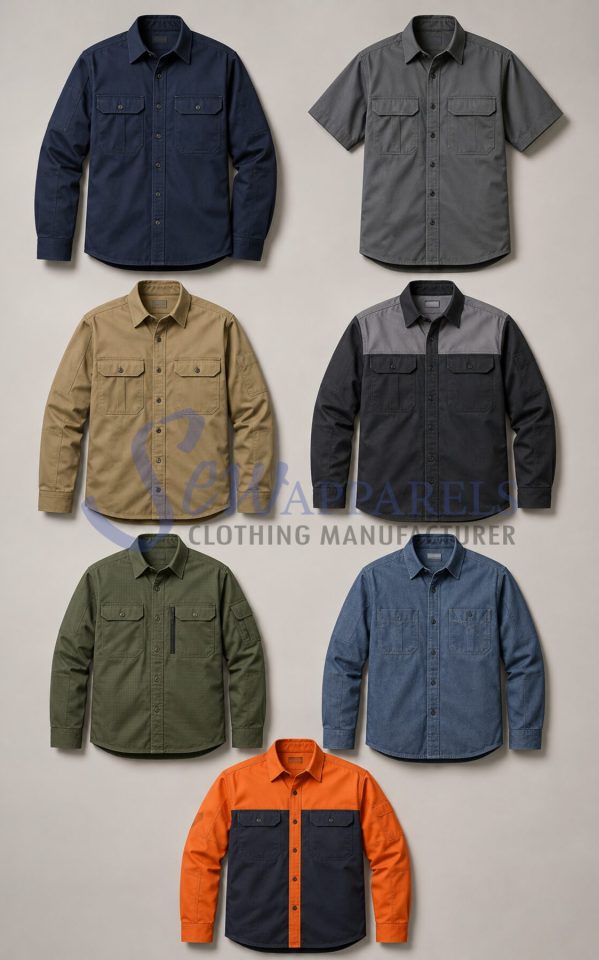
1. Define work shirt fabric rubbing fastness requirements
Start with the style, fabric construction, supplied colour reference and intended use. Record whether the shirt is expected to contact a light jacket lining, another garment or a different surface during normal wear. The product brief should explain the contact situation that matters to the buyer, while the laboratory brief states the agreed test method.
A dark uniform shirt dye transfer test should identify the material actually submitted. A loose fabric swatch, an unwashed finished shirt and a laundered shirt are different sample states. Their results may all be useful, but only when their identities and preparation histories remain visible in the comparison record.
Work shirts light jacket lining contact is a practical use question. Name the intended jacket and lining reference if they are known. Do not assume that a standard laboratory rubbing cloth represents every lining material. The buyer may need both a recognised test report and a separately described garment-layer observation, each with its own limitations.
Agree work shirt fabric rubbing fastness acceptance before reviewing results
Work shirts colour transfer acceptance belongs in a written purchasing requirement. Identify the applicable method, requested conditions, reporting outputs and agreed acceptance criteria. A standard’s name does not automatically establish the buyer’s passing grade. Agree how exceptions will be handled before a result arrives, rather than adjusting the requirement to fit the sample.
2. Identify the rubbing method and reported conditions
For work shirt fabric rubbing fastness, the method and edition are part of the evidence. A report without that information is difficult to compare with another report. Ask the laboratory to identify the relevant procedure, sample preparation and any deviations, and retain the complete report rather than only a cropped result table.
The public abstract of ISO 105-X12:2016 colour fastness to rubbing describes assessment of textile colour rubbing off and staining other materials. It includes dry and wet rubbing-cloth tests. This public scope helps identify a relevant method; it is not the complete operating procedure or an order-specific acceptance specification.
The public summary of AATCC TM8 colourfastness to crocking describes colour transfer by rubbing against white test cloth under controlled conditions, including dry and wet procedures. It notes that treatments such as laundering and finishing may affect transfer, so testing can be organised around the relevant treatment state. Use the complete method through a qualified laboratory rather than improvising its procedure.
A work shirt rubbing fastness report should distinguish the test cloth’s staining assessment from approval of the shirt’s original shade. Confirm which result is being reported and the assessment basis. Two tests with similar names should not be treated as interchangeable merely because both produce a grade.
Keep work shirt fabric rubbing fastness dry and wet results separate
Work shirts dry rubbing sample conditions should remain separate from work shirts wet shirt rubbing report conditions. Record each requested state and the corresponding result. If only one state was assessed, say so. A buyer cannot use an unreported wet result to close an intended wet-contact question simply because the dry result was acceptable.
3. Match fabric identity, shade and treatment state
A work shirt fabric rubbing fastness comparison needs a reliable identity trail. Record fabric reference, supplied colour, sample source, processing state and available lot information. Check that the report belongs to the material proposed for production. A technically complete report for another fabric does not verify this order.
Work shirts dark woven shirt dye lot records should connect the sample to the relevant production material where that information is available. If a development swatch has no confirmed relationship to the bulk lot, describe its role as development evidence. Do not silently upgrade it to bulk verification when the order moves forward.
Work shirts shirt colourway evidence should identify the colour actually assessed. A report for one shade does not automatically cover every shade in a range. Define the colourway evidence plan with the buyer and laboratory, and record the rationale for any grouping rather than assuming that visually similar dark colours behave identically.
For work shirts laundered dark shirt transfer, state the agreed care arrangement and the sample’s treatment history. Record whether the laboratory assessed material before care, after care or in both states. Avoid combining a treated-sample result with an untreated-sample description; the change in sample state can matter to the decision.
Preserve retained comparisons
Keep an identified retained sample and the approved reference with the report. A dark woven work shirt sample comparison should show why the samples are being compared and which differences are known. If the material or finish changes later, reopen the relevant evidence requirement instead of assuming the previous result still applies.
4. Separate lining observations from standard test results
Work shirt fabric rubbing fastness helps frame a transfer question, but a mark seen on a jacket lining needs its own record. Photograph the affected area, identify the garments and note the reported wear and care history. An observed mark is not enough to prove its source, mechanism or relationship to a particular production lot.
Work shirt colour transfer to jacket lining should be recorded as an observation until the investigation supports a conclusion. Preserve relevant garments before further cleaning where practical. Ask what evidence is needed to determine whether the mark relates to the shirt, another exposure or an unresolved cause; do not assign blame from colour similarity alone.
Work shirts layer transfer comparison can use an agreed, documented contact scenario to explore the buyer’s concern. Identify both materials, sample states, contact arrangement and observation method. Such a review complements a recognised method only within its stated purpose. It should not be labelled a standard laboratory test unless the relevant method was actually followed.
Work shirts lining stain observation records should include limitations, such as incomplete care history or a comparison lining from a different jacket. Missing information must remain visible in the decision file. Removing uncertainty from the written record does not remove it from the evidence.
Avoid informal testing claims
Hand-rubbing a shirt against a cloth may prompt further questions, but it does not reproduce controlled laboratory conditions. Do not give an improvised observation a formal grade or claim that it guarantees compatibility with all layers. Use a qualified reviewer to decide what assessment would answer the actual complaint or approval question.
5. Compare reports without mixing unlike evidence
When reviewing work shirt fabric rubbing fastness, build a comparison sheet with one line for each sample and test condition. Include material identity, colour, lot relationship, treatment state, method edition, requested output, report reference and acceptance requirement. This makes mismatches easier to see before the buyer chooses a material.
Work shirts shirt fabric rubbing limitations should be explicit. A rubbing report addresses its tested material and conditions; it does not certify every use, laundering route or contact surface. Keep wider product claims within the evidence available. In particular, avoid translating a report into an absolute “no colour transfer” promise without support for that exact statement.
Work shirts dark shirt shade approval should remain a separate decision field. Record the reference and appearance approval alongside the transfer evidence, but do not use one as a substitute for the other. If either requirement remains unresolved, the approval record should identify the open item and its decision owner.
Illustrative comparison
Suppose sample A has an identified dry rubbing result, while sample B has a wet result after a documented care treatment. Even if the displayed grades look similar, they answer different condition-specific questions. The next step is to request matching evidence for the intended comparison. This is a documentation example, not a laboratory finding or a claim about Sew Apparels fabric.
6. Record a release decision and revision control
Close the work shirt fabric rubbing fastness review with a named decision owner, the evidence used and any conditions attached to approval. Identify the sample, style revision and colourway covered. A release decision should make clear whether the evidence supports development approval, production-material approval or another defined stage.
If the fabric, dyeing arrangement, finishing or care requirement changes, decide which checks need repeating. Record the revision and the reason for accepting any retained evidence. A repeat order should follow the approved specification and documented evidence plan rather than depend on a report whose relationship to the new material is unclear.
For custom work shirt manufacturing, include the intended layering, colour reference, care arrangement and evidence requirements in the product enquiry. For private label work shirt production, connect the approved claims and care communication to the actual style revision. Startup brands can discuss a focused sampling plan and feasible order requirements directly, without assuming a universal minimum quantity or guaranteed test outcome.
Buyer checklist before approval
Confirm sample identity, colourway coverage, method edition, dry and wet conditions where required, treatment history, report completeness and written acceptance criteria. Check that practical lining observations are clearly distinguished from standard results. Keep limitations and unresolved information visible so the final decision can be reviewed and repeated.
Use work shirt fabric rubbing fastness evidence to prepare a precise enquiry through the custom work shirts manufacturer page. For contact arising during packaging or retail presentation, keep the work shirt fold versus hanger quotation alongside the material evidence. Identify wraps, inserts and hanger components in the packed sample instead of assuming the rubbing report covers every packaging surface. Continue with the Work Shirts Buying Guides for related garment decisions. A traceable record helps the buyer approve the right material and keep later production changes aligned with the intended uniform programme.