
WOVEN TOPS • TECHNICAL BUYING GUIDES
Woven Tops Buying Guides
Woven tops succeed when the neckline stays smooth and the sleeve permits movement without distorting the body. These woven tops buying guides gather technical decisions for brands developing shirts, blouses and related woven tops.
The neck-facing article specifies facing width, understitching and support weight for a smooth neckline. The sleeve-ease article adds sleeve-cap shape, armhole balance and bicep room for comfortable movement. Both use an annotated example and a buyer decision table, so a sample comment can become a repeatable instruction. These Woven Tops Buying Guides also connect surplus-fabric purchasing, shared capsule materials, cutwork embroidery and smocking. Use each card for its own approval record and keep the accepted shell and garment references together.
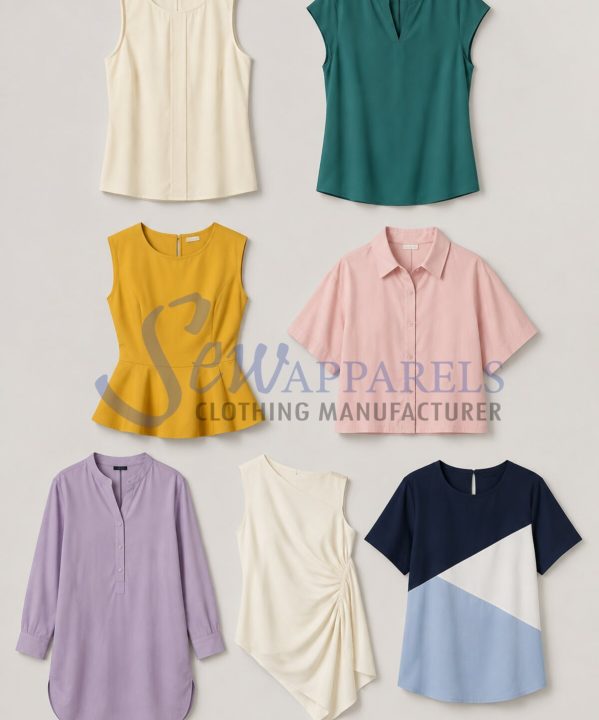
These Woven Tops Buying Guides use existing top style references to support development discussions. The image does not demonstrate verified deadstock provenance, approved neckline support, tested sleeve ease, cutwork strength or smocking recovery.
Woven Tops Neck Facing Stability: 7 Best Checks
Choose facing width, understitch the neckline and match support weight to the shell for a smooth, stable finish after wear and care.
Read the neck-facing guideDeadstock Woven Top Fabric Purchasing: Lot and Continuity
Review a surplus fabric lot before committing your woven-top assortment. Connect identity, usable quantity, condition and sample evidence to purchase terms, claim limits and explicit replenishment assumptions.
Review the deadstock lotWoven Top Seasonal Capsule Material Planning: Shared Materials
Map common shell fabrics, colours and trims while preserving each woven-top design. Confirm supplier commitments, allocate quantities and sequence samples, then record approvals and substitution rules.
Review capsule material planningWoven Top Cutwork Embroidery Approval: Openwork Evidence
Review the actual decorated panel before garment release. Connect motif geometry, fabric support and seam clearance to edge observations, assembled coverage and evidence from the intended care route.
Review cutwork panel approvalWoven Top Smocking Development Brief: Panel Trial Evidence
Name the intended smocking or shirring technique, map panel boundaries and row layout, then compare relaxed and extended dimensions. Record recovery, worn appearance and care evidence for the actual construction.
Review smocked-panel developmentWoven Tops Sleeve Ease Distribution: 7 Best Checks
Set sleeve-cap shape, balance the armhole and check usable bicep room before approving a woven-top fit.
Read the sleeve-ease guideWoven Tops Buying Guides: Neckline Shape and Use Case
Start with the intended neckline: round, V-shaped, square, slit, collared or opened by a placket. Draw the finished edge and identify the points most likely to stretch or roll. A wide opening in a fluid cloth behaves differently from a compact neckline in crisp poplin. Specify whether the facing should remain invisible, whether a small reveal is intentional and how the garment will be laundered. Keep the approved shell swatch and finished sample together so a later supplier does not guess from a drawing alone.
Start with neck facing stability: facing width, the understitching that keeps a facing inside, and the weight of internal support. The published sleeve-ease guide examines sleeve-cap shape, armhole balance and bicep room. Review both guides on the same fabric and fit sample so the finished top looks clean and remains comfortable.
Inspect the neckline on a wearer, not just flat on the table. Ask the model to look down, turn the head and lift an arm. A facing that seems neat when freshly pressed may peek out during motion or after washing. Photograph front, side and back views. Record where the facing ends relative to the shoulder seam and opening. If a size range is planned, check that the neckline still lies close enough in a boundary size without becoming tight.
Read them together on the same woven shell and fit sample: arm movement can tug a neckline that appeared stable at rest. Each article has its own editable card below. The original Woven Tops product page remains the manufacturing and commercial enquiry route; this guide keeps technical decisions organized without changing that established page. Use these Woven Tops Buying Guides to connect movement observations with the retained neckline sample.
Map facing width from the finished edge
A facing is a shaped inner piece cut to the garment edge. The visible garment must not show an unexpected ridge at the facing boundary. Define width from the neckline seamline to the outer facing edge at named points, then show where it changes around corners or plackets. A very narrow facing may flip outward; a heavy wide facing can print through a light shell. The correct width is a sample decision that protects the shape without altering the intended drape.
New Mexico State University’s Facings Made Easy explains shaped facings, grain matching, clipping and understitching methods. Use that guidance as a construction reference, then validate the dimensions on the actual woven top. Mark seam allowances separately from finished facing width. Place close photographs of the inside and outside in the tech pack. When the neckline is asymmetric or has a slit, approve each side independently so symmetry and the finished opening remain controlled.
Understitch for an inward roll
Understitching attaches the seam allowance to the facing so the garment edge can roll slightly toward the inside. Specify which segments receive it and where stitching must stop near a corner or opening. The goal is an invisible outside seam and a facing that stays put during wear. Do not let an operator simply topstitch the visible front if the design calls for a clean edge. Review the finished garment from an oblique angle where a rolled facing or puckered line is easiest to see.
After pressing, lift the facing gently and check that the seam allowances sit where intended. Clip or grade curves as needed without weakening the seam. A sharp V requires a different turn than a broad round neck. The stitching distance and turn method should be fixed from a signed sample. Check after care because a hidden facing that remains stable only until the first wash is not production-ready.
Match the internal support to shell weight
A lightweight shell may need a very soft support to prevent stretching without creating a hard neckline. A firmer shell can tolerate a different interfacing or no separate layer depending on construction. NMSU guidance on selecting interfacings recommends considering garment fabric, weight, desired silhouette and care requirements. Fusible material can feel stiffer after application than a loose swatch suggests. Test a fused or sewn trial before approving bulk material.
Look for adhesive show-through, bubbling, a hard support boundary or changed color on the outside. Compare the neckline before and after washing. If a supplier proposes an equivalent interfacing, ask for a finished sample on the same shell rather than accepting nominal weight alone. Record material codes and application method. The approved combination should prevent distortion while preserving the soft hand and movement that make the top pleasant to wear. These Woven Tops Buying Guides support a comparison of the actual shell and support combination.
Low MOQ woven tops for startup brands
A startup brand with a low minimum order quantity benefits from a focused first sample. Select the intended shell and one or two support options, review facing width and understitching together, and sign off a physical reference before color expansion. Include neckline photographs, inside cross-section, care test and size-chart points in a concise tech pack. A measured specification can save rounds of rework and lets a manufacturer quote realistic sampling steps. Keep the original product page as the commercial route rather than filling it with many article links. Bring the intended quantity and material options to these Woven Tops Buying Guides; confirm actual minimums and startup sampling scope before committing.
Turn the approved sample into a repeatable rule
At final review, confirm that the facing remains inside, the edge is smooth, no support ridge shows through and the neckline retains its intended opening during motion. Record the accepted construction for each shell. Link the signed sample to the pattern version and trim code. When the published sleeve-ease guide raises an armhole or sleeve issue, assess it on the same finished top: pulling at the sleeve can drag the neckline and make a good facing appear unstable. The published sleeve-ease article has its own editable card, so both decisions stay connected. Keep the accepted records alongside these Woven Tops Buying Guides for the next product review.
Turn your development decisions into a product brief
Share the shell swatch, finished neckline sketch, facing pattern and width points, understitching reference, support material code, care result, size chart and signed sample. Photograph the inside and outside before and after wear. These references help a supplier reproduce a clean edge while preserving comfort and drape. Use the original Woven Tops product page for manufacturing, sampling and order-quantity discussions.
Share the shell swatch and care result, finished neckline drawing, facing width points, understitching reference and support code. Add the sleeve-cap pattern, front and back armhole measures, bicep room, movement photos, size chart and signed sample. Together these references help a supplier reproduce a clean neckline and a comfortable sleeve. Use the original Woven Tops product page for manufacturing, sampling and order-quantity discussions. These Woven Tops Buying Guides keep sample decisions and sourcing evidence together before an order is discussed.
Explore custom woven tops