
Woven top seasonal capsule material planning connects several designs to a material programme without treating them as the same garment. A shared shell fabric or colour can simplify a sourcing conversation, but each style still needs its own appearance, construction and sample evidence. The buyer’s task is to identify genuine commonality, preserve important differences and confirm what the supplier can actually offer.
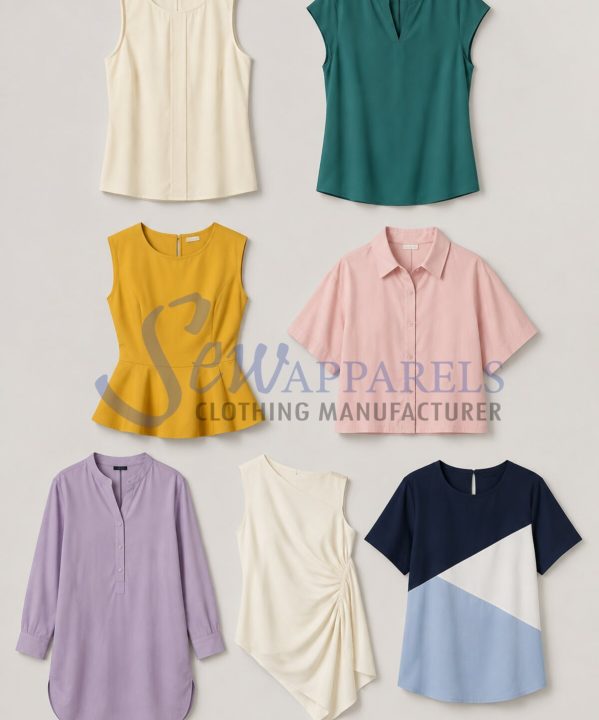
Use woven top seasonal capsule material planning before requesting a consolidated quotation. Map the styles, colours and quantities first, then review the materials and trims that might be shared. This guide does not assume that consolidation reduces cost, that every silhouette suits one fabric or that a quoted minimum applies across all colours. Those decisions need product-specific evidence and supplier-confirmed terms.
Share the proposed capsule through our custom woven top manufacturing page. Include the design references and the questions that remain open. A collection mood board is useful context, but it should be accompanied by a material map that identifies what is common, what is style-specific and which assumptions still need confirmation.
1. Map woven top seasonal capsule material planning requirements
Start with a woven top collection order worksheet that identifies every style, intended colour and size range. Separate planned sales quantities from confirmed purchasing decisions. Record the stage of each design so an early concept is not treated as a finished production brief. The worksheet should let the sourcing team see where quantities might connect and where a design remains too uncertain for a firm commitment.
A woven top style identity brief should explain what makes each design distinct. The difference may be a silhouette, sleeve treatment, opening, neckline or visible detail. Specify the material characteristics needed to achieve that identity rather than describing all styles only as seasonal tops. Shared fabric is useful only when it supports the intended products, not when it erases the reason for having separate designs.
In woven top seasonal capsule material planning, keep the season’s commercial assumptions visible without presenting them as guaranteed demand. Identify which styles are priorities and which quantities are provisional. If the plan changes, update the material allocation instead of allowing an old sales estimate to remain hidden in a sourcing request. This keeps the discussion tied to the actual assortment.
Define the destination, presentation and garment-care expectations that affect the material review. A fabric proposed for several styles needs to meet their relevant requirements, not just their colour concept. Different uses may lead to different questions about coverage, drape or construction. Record those questions as development tasks before confirming that the collection can share one shell.
2. Identify compatible shell requirements
A woven top capsule shared fabric plan should identify the proposed material with a clear reference and supported description. Connect it to each intended style and record the evidence still needed. Avoid grouping fabrics because they have similar trade names or photographs. Actual construction, finish and garment behaviour should inform the sharing decision.
Review woven top style fabric compatibility through representative garment samples. A softly gathered design and a more defined shape may respond differently to the same material. Check the result against each style’s requirements, including construction and the intended care route. Acceptance on one style cannot establish suitability for all the others without reviewing the differences that matter.
The CottonWorks Learning Hub covers weaving, dyeing, finishing, garment construction and quality assurance. It offers useful technical background for material questions. It does not approve a fabric for a particular capsule; use identified garment trials and project criteria to establish whether a proposed shared material suits the actual designs.
Use woven top seasonal capsule material planning to distinguish accepted common material from a candidate awaiting trials. Keep the status next to every style-material connection. If one design needs a different shell, record that exception explicitly. A smaller amount of genuine consolidation is preferable to a broad sharing claim that rests on untested garment assumptions.
For blouse and woven top fabric consolidation, explain exactly which purchasing inputs are being combined. A shared base fabric may still require separate colours, finishing choices or delivery commitments. For a one-off surplus option, review deadstock woven top fabric purchasing before assuming the whole capsule can use the available lot. Ask the supplier how those differences affect the offer. Do not describe the entire collection as one material order simply because its styles belong to the same product family.
3. Separate common trims from design details
Assess woven top capsule trim commonality with component references, not generic labels such as button or interfacing. Identify the proposed size, appearance and application for each trim. A component that fits one opening or neckline may be unsuitable for another. Review its role in the assembled garment before accepting it as a common item.
A woven top common trim matrix can list each style against the actual proposed components. Mark shared items, separate variants and undecided details. Identify the party responsible for sourcing each item and the evidence required for acceptance. Keep the matrix connected to drawings and sample versions so a change in one style does not silently alter a supposedly common trim.
Woven top seasonal capsule material planning should preserve style-specific details where they affect the product. A design may share a shell with another style while retaining different closures, facing treatment or visible finishing. Record those differences in the quotation brief. Material commonality does not remove the need for independent construction instructions or a separate finished-sample approval.
Review any proposed trim substitution across the affected styles. A substitute that looks acceptable on a trim card may interact differently with a garment’s layers, opening or care route. Identify which applications need another trial and who authorises the change. Do not let a purchasing convenience become an unreviewed design revision.
4. Confirm colour and purchasing commitments
Plan woven top colour assortment sourcing with named colour references and provisional quantities by style. Distinguish visual colour coordination from a confirmed material commitment. The supplier needs to know which styles are expected to use each colour and what evidence the buyer will review. Keep colour development, acceptance and order placement as separate decisions.
A woven top shared colour commitment should describe the actual supplier terms. Ask whether quantities can be combined across styles using the same material and colour, and identify any limits. A shared colour name does not prove identical material, compatible finishing or a common purchasing basis. Record the confirmed reference, quantity basis and relevant delivery conditions.
Use a woven top material minimum enquiry to ask about the real offer rather than introducing an assumed minimum. Clarify whether any condition applies by base material, colour, finishing route, trim or garment order. Record the supplier’s response with its date and scope. If the assortment changes, confirm whether the previous response still applies.
The CottonWorks sourcing and manufacturing resources provide background across textile production, quality assurance and traceability. They help frame questions about a material programme, but they do not establish a supplier’s price, minimums or availability. Those commercial facts must come from the actual quotation and agreed project terms.
Keep supplier-confirmed facts distinct from open assumptions in woven top seasonal capsule material planning. A quotation for one candidate may not cover another finish or revised colour quantity. Identify the changes requiring a refreshed offer, and give the buyer a clear decision record. This avoids treating an early estimate as a commitment for the final collection.
5. Allocate quantities and sequence samples
Document woven top capsule quantity allocation by style and colour, linked to the accepted material references. Keep garment-unit planning separate from fabric procurement quantities. Actual consumption depends on the styles, size mix, material dimensions and cutting assessment. Ask the production team to confirm those inputs instead of converting a total garment count into an unsupported material order.
Set a woven top shared material sample sequence that answers the most important unresolved questions first. Select representative styles for initial review, then assess the other applications that have meaningful differences. A successful first sample may establish useful evidence about one design, but it does not approve the whole capsule. Record which decisions each sample has actually resolved.
Woven top seasonal capsule material planning should account for material issued to sampling and other evaluations. Confirm who controls those issues and how they are recorded against the procurement plan. Keep a retained material reference connected to the accepted garment samples. This helps later decisions use the same material identity rather than an unlabelled substitute.
For private label woven top production, include the shared and separate requirements in one clear quotation request. Explain the style quantities, colour allocation, component ownership and sampling priorities. Confirm the actual sourcing and production scope with the supplier. Do not promise a cost reduction or a shorter timeline solely because several styles share a proposed material.
6. Agree substitution and approval rules
A woven top fabric substitution rule should state which changes need buyer review and which evidence must accompany the proposal. Identify the affected styles and their relevant requirements. A similar composition or colour is not complete proof of equivalent garment behaviour. Review the actual alternative through the appropriate samples before changing the accepted material map.
Use woven top seasonal capsule material planning to define who can approve shared changes. A replacement shell may affect several designs at once, while a local trim revision affects only one. Record the decision scope and the current drawing or sample versions. Keep purchasing instructions aligned with those approvals so an older material entry does not survive after the design has changed.
Prepare the capsule sourcing record
A woven top collection purchasing table should link every style to its shell, colours, trims, planned quantities and current approval status. Add supplier-confirmed commitment terms, open actions and the owner of each decision. The table is most useful when it shows exceptions clearly. Do not hide a separate material requirement inside a note that appears to approve all styles together.
Gather woven top capsule RFQ inputs from that record: design references, material candidates, colour quantities, shared-component proposals, sample priorities and unresolved questions. For example, an illustrative capsule of three styles might share a candidate shell while one style requires a separate closure. That hypothetical arrangement shows how a map works; it is not a Sew Apparels offer, minimum or confirmed production programme.
Approve the final woven top seasonal capsule material planning record only for the decisions supported by evidence and confirmed terms. Retain the material map with sample references and the dated substitution rules. For related construction decisions, use our woven tops buying guides. Share the proposed capsule and colour quantities early so sourcing can support a coherent collection without losing each style’s identity.