
SEW APPARELS · DEVELOPMENT RESOURCES
Kids Hoodie Buying Guides
These kids hoodie buying guides help childrenswear brands turn a style idea into a clear development brief. Start with the intended age range, garment type and use, then coordinate the hood, fleece, neckline, pockets and rib trims. The technical articles focus on individual decisions while this page keeps the wider buying sequence together. Use the guidance to organise sample questions, material references and approval comments before discussing the next production stage.
Choose the relevant completed article below, then review the six planning sections for the complete hoodie program. Keep accepted details separate from open questions and attach the current drawings and measurement table to each revision. Further relevant articles can be linked here as they are completed, allowing the resource to grow without crowding the main product page with a long list of posts.
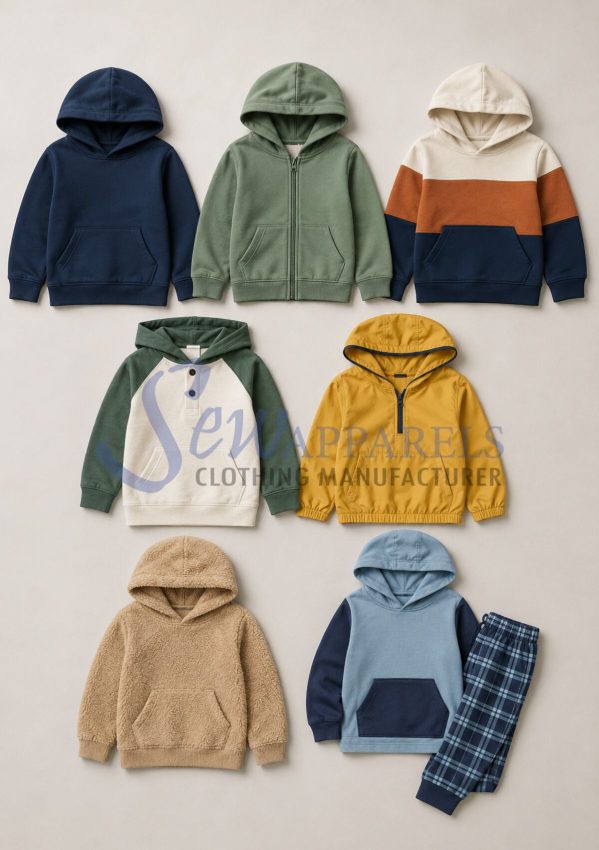
Existing Sew Apparels product-page illustration reused for kids hoodie buying guides. It shows style options for discussion; it does not establish the current fabric specification, child-safety compliance, test results or availability for a particular order.
Hood fit without drawcords: seven buyer checks
Coordinate hood depth, face opening and neckline overlap. Use a labelled construction example and decision table to prepare a child-specific sample review.
Read the no-drawcord hood checklistColourway MOQ planning: five buying checks
Separate supplier minimums, check approved fleece sharing and compare buyer-entered colour-size demand before selecting the assortment and quotation version.
Read the colourway MOQ planning checklistFleece lint shedding: five evidence checks
Identify loose fibre observations, pair retained fabric with garments, document handling and care, and request an appropriate comparison before approving the corrected version.
Read the fleece lint review checklistPilling comparison: five surface evidence checks
Compare identified fabric surfaces, intended texture, laboratory preparation and garment care history before recording the selected appearance reference.
Read the pilling comparison checklistZipper length grading: five size-set checks
Map garment endpoints to supplier zipper references, review the proposed size set and reconcile the selected trim chart with the current product specification.
Read the zipper length grading checklist1. Define the hoodie style and intended use
Use these kids hoodie buying guides to identify the garment before selecting materials. A pullover school layer, zip-front travel hoodie and relaxed graphic style may require different opening, underlayer and construction decisions. Record the age and size range, body silhouette, sleeves, pockets and hood arrangement. Add front and back drawings with the main features labelled. Keep appearance references alongside the technical brief, while recording which dimensions and construction details still require sample review.
Sew Apparels describes pullover and zip-up kids hoodie development on its product page. Confirm the feasibility and grading requirements for relaxed and oversized silhouettes with the specific program. Select the configuration relevant to the collection and coordinate it with the intended underlayer. A reference garment may help explain the preferred appearance, but its measurements should not be assumed to suit a different age range or fabric. Keep a revision identifier on each brief and consolidate comments before requesting another sample so the team works from one current set of decisions.
2. Coordinate fleece, hood lining and rib trims
These kids hoodie buying guides connect fabric selection with the assembled garment. Ask Sew Apparels to confirm availability and suitability when considering brushed cotton fleece, cotton-poly fleece, French terry, organic cotton fleece, loopback jersey or cotton-elastane knits for a particular program. Compare the proposed fabric references for the intended season, silhouette and decoration method. Material names alone do not establish weight, stretch or shrinkage behaviour. Record the actual outer fabric, hood lining and rib together so the sample review represents the planned construction.
A lining or rib substitution can change how the hoodie sits even when the outer pattern remains the same. Identify the approved material pairing and sample preparation conditions before comparing revisions. Jalie's Laurent pattern is a useful published example of a hood option linked to a named knit recommendation and size range. These kids hoodie buying guides use such references for context; each custom style still needs its own material specification, pattern development and sample approval.
3. Plan child-specific hood and neckline fit
Use these kids hoodie buying guides to review the hood and body neckline as connected parts. Define hood depth, height, face opening and attachment points with drawings that show the measuring method. Record the selected size, fabric and finished-edge construction alongside each value. Review the complete sample in the intended wearing position rather than approving the hood from a flat measurement alone. Keep fit observations and visual preferences separate so the revision request explains the actual issue.
For no-drawcord development, use the detailed article above to coordinate the opening finish and front overlap. The CPSC rule on children's upper-outerwear drawstrings identifies neck or hood drawstrings in covered US sizes 2T–12 as substantial product hazards. These kids hoodie buying guides support a clear design brief; removing a cord does not establish complete product compliance. Confirm the applicable destination-market requirements and keep that review with the sample approval record.
4. Organise pockets, graphics and sample approval
These kids hoodie buying guides help organise the details beyond the hood. Record pocket type and position, zipper arrangement where relevant, rib openings, labels and graphic placement. The product page describes custom graphics and private labels. Confirm screen printing, embroidery, appliqué, puff graphics and private-label finishing against the artwork, fabric and specific order. Review the actual artwork scale against the graded garment rather than assuming one placement will look the same across all ages. Keep material, artwork and construction references linked to the sample so later comments identify the correct version. For zip-front styles, use our kids hoodie zip guard construction checklist to review chin guards, backing and pull coverage.
Prepare a sample review sheet covering measurements, hood appearance, neckline, pockets, decoration and packing details. Mark accepted items separately from requested changes, then identify the person responsible for final approval. Keep these kids hoodie buying guides alongside the technical brief as a planning resource. The approved sample and current specification should remain the production references. If fabric, lining, rib or decoration changes later, review the affected details and document whether another sample or measurement check is needed.
5. Low MOQ kids hoodie manufacturer planning
For buyers comparing a low MOQ kids hoodie manufacturer, Sew Apparels displays a starting quantity of 500 pieces per design and colour on its product page. The same page lists school hoodie orders at 1,000 pieces per design and colour and states that kids hoodies use customised fabric rather than stock fabric for knit orders. Confirm the current order requirements and material minimums with the quotation. Use these kids hoodie buying guides to prepare the style, colour and size breakdown before requesting a quotation. Confirm the applicable quantity after reviewing fabric, hood construction, trims, graphics and packing requirements. Check the current kids hoodie manufacturing details with the complete brief.
6. Development support for startup brands
Startup brands can use these kids hoodie buying guides to organise a focused first collection and discuss the options described by Sew Apparels. Begin with a clearly defined hoodie, intended customer, size range and decoration plan, then assemble drawings, measurements and material preferences. The product page lists sampling at 10–15 days and production at the applicable MOQ at 15–30 days after PP sample approval. Confirm the actual schedule for customised fabrics, trims and order quantity. Keep quotation assumptions, sample revisions and approval dates together so the launch plan follows the agreed development sequence.
Turn your hoodie decisions into a development brief
Use these kids hoodie buying guides to organise the age range, silhouette, fabric pairing, hood construction, graphics and quantities for your next sample discussion. Share the current drawings, measurement table and open questions with Sew Apparels. Keep all accepted revisions in one brief so quotation, sampling and production planning refer to the same hoodie specification.
Discuss your kids hoodie project