
Kids hoodie zipper length grading connects each garment size with an identified closure length and supplier reference. A body measurement chart does not automatically specify the zipper to order. Buyers need the intended endpoints, the supplier’s length designation and the size-set sample response in one record before approving the trim assortment.
This guide covers five checks for a hoodie-specific mapping table. It addresses length grading and supply identity rather than zip-guard construction or hood fit. Proposed configurations need supplier confirmation and sample review. No standard length increment, tolerance, minimum order, price or turnaround is asserted for an unknown garment or zipper range.
1. Define kids hoodie zipper length grading endpoints
Start kids hoodie zipper length grading with the current garment drawing and size chart. Identify the intended upper and lower endpoints in terms that the garment team and zipper supplier can interpret consistently. Keep the drawing revision beside the request. A note that simply says “full length” can leave the reference points unclear.
The kids hoodie zipper endpoint specification should identify the actual configuration being reviewed. Ask the technical team to confirm how the requested closure corresponds to the garment opening. If an endpoint description is incomplete, resolve it before ordering a trim length. Do not let a supplier’s length name substitute for the buyer’s garment specification.
For kids hoodie zipper length by size, create a separate entry for every size in the proposed range. Record which entries have been physically reviewed and which remain planned. A size chart can describe an intended range without proving that each zipper and garment combination has been approved. Keep that distinction visible in the mapping table.
A children hoodie zip grading chart can retain the garment size, endpoint reference, requested zipper designation and sample status together. Use the same names across the drawing, material list and quotation request. If two documents use different size labels, reconcile them before comparing lengths. The chart should remove identity ambiguity rather than introduce another set of labels.
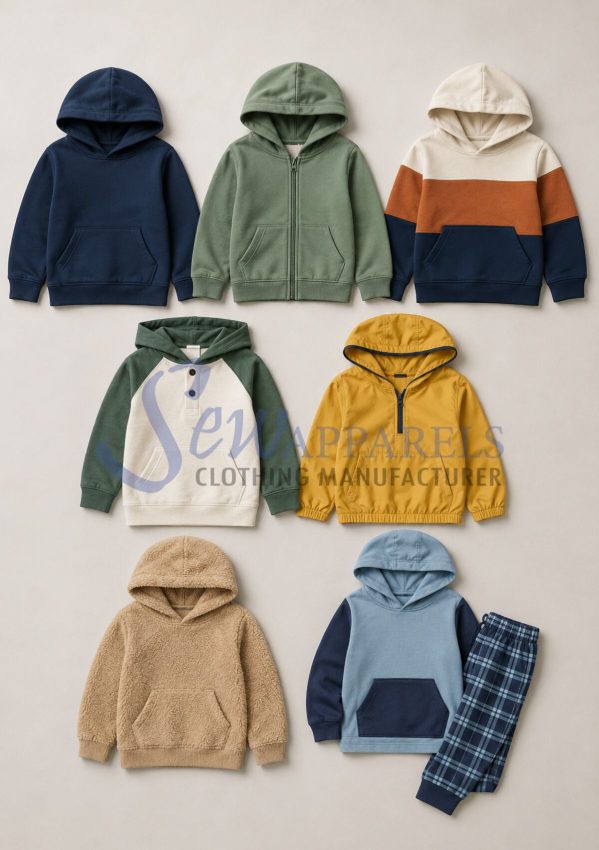
Include the current sample code where one exists. An identified drawing or image reference may help the team locate the endpoint discussion; the illustration above supplies product context rather than a measurement reference. The observation should still be understandable through the identified specification. Do not rely on a photograph alone to establish a supplier’s measurement convention.
2. Separate Body Grading from Trim Length Supply
Kids hoodie zipper length grading should distinguish the graded garment measurements from the zipper references available for sourcing. Record the relationship that the technical team proposes for the actual construction. Do not assume that a change in garment body length must produce an identical change in the zipper designation without checking the intended endpoints.
A kids hoodie body zipper relationship review asks how the closure sits within each current garment size. The buyer can provide the approved drawing and measurement chart. The garment team should explain which dimensions govern the requested trim and which need confirmation. An arithmetic difference between two chart entries is not, by itself, a complete trim specification.
For kids hoodie front zipper grading, retain the proposed size-to-length mapping as a versioned technical record. If more than one size uses a proposed supply length, name those sizes explicitly and request review of the actual configuration. Do not present shared lengths as universally suitable or automatically available from the supplier.
The kids hoodie trim length size map should keep each garment size identifiable even where a shared reference is proposed. Ask whether the mapped combination represents the current sample, a supplier option or an unconfirmed request. A single table can contain all three statuses, but the buyer must be able to distinguish them before approving an order.
When the body pattern or endpoint specification changes, revisit the affected trim entries. Show the revised drawing and the earlier reference in the development history. Do not carry forward an old length merely because it appears in a previous quotation. The selected mapping must represent the current product brief.
3. Ask the Zipper Supplier About Available Lengths
The kids hoodie zipper length grading request needs a supplier response for the specific proposed zipper. Ask for the relevant product designation, available lengths and measurement basis. Record any conditions that affect the requested supply. This article does not claim that an optional configuration is currently offered or that every length can be supplied on the same terms.
For children hoodie zipper supply lengths, preserve the supplier’s units and designations. If the buyer’s request uses another convention, ask both parties to reconcile it in writing. Do not make an unconfirmed conversion between garment opening dimensions and a supplier’s product length. The response should identify what the quotation actually covers.
A kids hoodie zip length supplier code should identify the proposed trim alongside its length designation. Keep it connected to the relevant quotation or supplier response. A general zipper description can omit details needed to distinguish two supply references. Ask for clarification where the reference does not identify the requested item adequately.
Record kids hoodie zipper length tolerance only when the relevant supplier or technical party has supplied an applicable specification. Show the basis and reference of that answer. Do not invent an acceptable variation or import a number from an unrelated component. If the tolerance is still awaiting confirmation, keep it as an open question in the request.
Track changes to the proposed component identity as well as changes to length. The CPSC material-change testing guidance is relevant when assessing changes to U.S. children’s products that may affect compliance. Ask a qualified reviewer to assess the actual change and evidence implications. A grading chart does not establish product compliance or replace that review.
4. Review the Shortest and Longest Garment Sizes
Kids hoodie zipper length grading needs sample evidence appropriate to the selected size range. The technical team should identify which size-set reviews are required. Looking at the shortest and longest proposed garment sizes can frame useful questions, but it should not be described as automatic approval of every intermediate size.
A kids hoodie smallest size zipper review should confirm the actual garment and trim references shown. Record the intended endpoints, presentation and technical response. Do not approve the combination using only the smallest number in the supplier’s list. The sample needs to represent the proposed size and current garment configuration.
For a kids hoodie largest size zip review, keep the same identity discipline. Ask whether the submitted length and installation match the current drawing and mapping entry. If the sample uses a temporary trim, identify it and state what remains to be reviewed. A temporary component should not silently become the approved order reference.
Document a kids hoodie zipper size mismatch as a specific discrepancy between identified references. Name which chart, drawing, sample or supplier response disagrees. Ask the responsible team to reconcile the difference before selecting the corrected combination. Avoid labelling the issue as a confirmed manufacturing cause when the evidence establishes only a specification mismatch.
The kids hoodie size set zipper approval can record the samples reviewed and decisions received. Keep unreviewed combinations visible where the technical plan requires further assessment. An approval should match its evidence scope, including any stated qualifications. Do not broaden a decision on one sample to the complete range without the relevant confirmation.
5. Approve a Size-to-Zipper Reference Chart
Complete kids hoodie zipper length grading with a selected mapping version that the buyer, garment team and supplier can trace. Reconcile the garment sizes, endpoint specification, zipper references and quotation basis. The approved table should identify the exact combination intended for each order entry rather than rely on verbal agreement.
A children zip hoodie trim assortment should distinguish selected references from alternatives and superseded versions. Keep quantities in the order allocation rather than confusing them with length specifications. If the buyer changes the size range, review whether the selected assortment still covers the request. A chart approved for an earlier range may require an update.
The kids hoodie graded zip reference should appear consistently in the relevant material list and sample record. If a supply reference changes before ordering, ask whether the prior sample decision still applies to the replacement. Retain the response with the current mapping instead of assuming that an apparently similar trim is interchangeable.
Keep the broader product information current as well. The FTC textile labeling guidance explains U.S. disclosure requirements relating to fibre content, origin and responsible business identity. Confirm the actual product and market information when preparing the garment brief. This guidance does not define zipper lengths or a garment grading rule.
Assign an owner to every remaining clarification in the handoff. A missing supplier designation, measurement basis or sample response should stay visible until answered. The record may be ready to send for review before final approval, but its status must be explicit. A request awaiting confirmation is not an approved purchasing instruction.
Kids Hoodie Zipper Length Grading Mapping Table
The fields below organise the size-set discussion. They are information prompts, not prescribed lengths or technical tolerance limits. Populate each selected size with actual references and supplier responses, and keep the approval status separate from the requested configuration.
| Mapping field | Information to retain | Review question |
|---|---|---|
| Garment size | Current size label and chart version | Does it match the proposed range? |
| Endpoints | Drawing reference and technical description | Is the intended closure position clear? |
| Requested trim | Zipper designation and length basis | Can the supplier identify the request? |
| Supply response | Available reference and applicable conditions | Which entries remain unconfirmed? |
| Sample review | Garment and trim codes with response | What combination was assessed? |
| Selected version | Approved mapping and order references | Does the handoff use the current decision? |
Use the table to resolve identity and measurement questions before an order assortment is selected. Repeating a requested length without its reference points adds little clarity. A written supplier response and an identified sample decision provide a more useful handoff than an unsupported assumption that the zipper will scale with the garment.
Kids Hoodie Zipper Length Grading: Prepare the Brief
For custom kids hoodie manufacturing, send the garment chart, endpoint drawing and supply questions to the kids hoodie manufacturing page as part of the product enquiry. The supplier needs the actual proposed configuration before assessing feasibility. This guide gives no minimum order, price, lead time or automatic supply promise.
For private label kids hoodie production, use the kids hoodie buying guides to connect trim selection with the wider garment specification. A kids hoodie zipper length grading record is ready for its stated handoff when garment sizes, endpoint references, supplier designations and sample decisions can be traced together. Preserve unresolved questions as named actions rather than treating them as approvals.