
Kids hoodie colourway MOQ planning connects a proposed colour assortment with supplier-confirmed quantity requirements and buyer-entered demand. The starting point is not a universal minimum. It is a written account of what each quoted minimum applies to, which materials can be shared and how the buyer wants to divide the order across sizes and colours.
This guide covers five decisions for a hoodie-specific allocation brief. It does not repeat zipper-guard construction or a general factory comparison. No quantity, price break or production schedule in this article is a Sew Apparels offer. A proposed configuration remains subject to supplier feasibility and confirmation. The aim is to compare scenarios using the same information before selecting an order assortment.
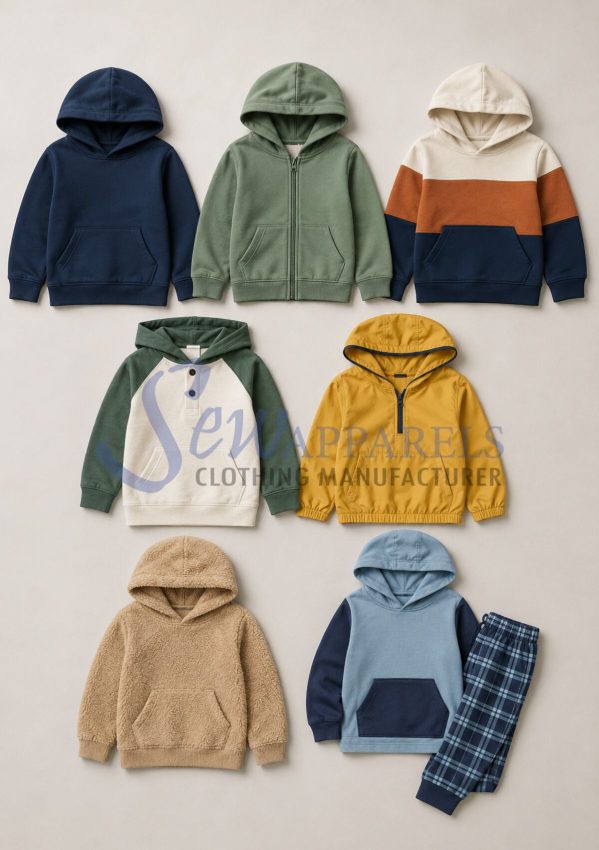
1. Define kids hoodie colourway MOQ planning minimums
Begin kids hoodie colourway MOQ planning with the exact basis of the supplier’s quotation. Ask whether a stated quantity applies per style, colour, material, dye lot, trim reference or another defined unit. Record the answer in the quotation brief. A minimum expressed in garment pieces should not be assumed to settle a separate material requirement expressed on another basis.
The kids hoodies garment versus material minimums distinction matters when evaluating an extra colour. Ask the supplier to identify which requirements belong to the complete garment and which arise from the proposed components. Keep the original units visible. Converting a fabric quantity to garment pieces needs agreed consumption and other relevant inputs, not a guessed conversion.
For kids hoodie dye lot minimum planning, identify the requested fabric, colour reference and process proposed by the supplier. Ask which quantity needs confirmation and whether it applies independently to that colour. Do not infer a dyeing minimum from another fabric or an earlier order. The current requested specification should be named beside the supplied answer.
Record kids hoodies hoodie trim colour minimums separately where relevant to the proposed configuration. A trim reference may need its own source confirmation. Distinguish a shared approved component from a colour-specific request. The supplier should explain whether the extra colour changes the component sourcing basis; the buyer should not assume every trim is interchangeable across the range.
The useful outcome is a kids hoodies supplier confirmed minimum basis record. Give each confirmed answer a quotation reference and date, and mark unresolved quantities as awaiting confirmation. A planning sheet can contain an incomplete scenario, but its status must remain clear. An unanswered quantity is not an approved minimum and should not silently become a purchasing commitment.
2. Map Approved Fabric Sharing Across Styles
Kids hoodie colourway MOQ planning can test material-sharing scenarios when the proposed specifications genuinely align. List each style using the suggested fleece and name the material references. Ask the supplier whether the specifications and sourcing arrangement permit consolidation. Similar colour names or a common fabric description are not sufficient evidence that material can be combined.
A kids hoodie shared fabric order scenario should show which requirements remain identical and which differ. Record the buyer’s approved specification before calculating a shared quantity. The supplier must confirm the relevant basis. Do not aggregate unrelated materials merely to make a planning total appear to reach a minimum.
For a kids hoodies fleece sharing order scenario, keep the garment styles identifiable even if a material quantity may be consolidated. Retain a size and colour allocation, with kids hoodie hood-fit requirements linked to each style. Shared material does not automatically remove separate garment, trim or other sourcing requirements. Ask the supplier which specific requirement is affected by the proposed sharing arrangement.
When considering kids hoodies fleece quantity consolidation, retain the material designation, colour reference and proposed style usage. Ask how the supplier will account for the allocation in its quotation. If specifications change later, revisit the scenario rather than carrying forward the earlier quantity assumption. Consolidation is a supplier-confirmed sourcing decision, not an automatic saving.
Material identity also belongs in the label and product information review. The FTC textile labeling guidance explains U.S. requirements relating to fibre content, origin and responsible business identity. Confirm the applicable disclosures for the actual product and market. This reference does not set supplier minimums or justify treating different fabrics as one specification.
3. Use Buyer-Entered Demand by Colour and Size
A kids hoodie colourway MOQ planning matrix needs demand inputs owned by the buyer. Record the source, period and assumptions behind those inputs. If the range is new and evidence is limited, identify the figures as estimates. Do not present a planning forecast as validated sales demand or use an invented percentage split to imply market certainty.
The kids hoodies colour size demand matrix should preserve separate size and colour rows. An order total can hide a shallow allocation in a particular combination. Let the buyer enter the proposed quantities, then compare those inputs with the confirmed quotation basis. Any change made to satisfy a requirement should remain visible beside the original demand assumption.
For children hoodie colour assortment quantity, identify the intended range and size labels before evaluating the allocation. Keep an unselected colour as a scenario rather than mixing it into the approved order. The buyer should be able to see which combinations are requested, which are alternatives and which still need a decision.
A kids hoodie first order colour allocation record should also distinguish a first-order choice from a later replenishment idea. Do not assume a future repeat order will be available on the same terms. If that possibility matters to the decision, ask the supplier to confirm the relevant conditions. Keep the current order decision based on the information actually supplied.
Retain product identity alongside the assortment. The GS1 GTIN Management Standard supports consistent decisions about unique trade-item identification in open supply chains. Buyers using that system should review the relevant identification requirements for the proposed items. A product code or GTIN does not establish demand, set an MOQ or prove that colour quantities may be pooled.
4. Compare Colour Depth with Assortment Width
Kids hoodie colourway MOQ planning should compare alternative assortments using the same buyer inputs and supplier-confirmed requirements. One scenario may retain fewer colours with more quantity in each selected combination; another may propose a wider range. The better choice depends on the buyer’s evidence, constraints and confirmed supply options, not a universal recommendation.
For kids hoodies first order colour depth, show the allocation per selected colour and size rather than relying on the overall order total. Ask the buyer to identify combinations that are particularly uncertain. A deeper colour allocation may simplify one part of the scenario while increasing exposure in a combination with weak demand evidence.
Assess kids hoodies additional colour stock exposure as a buyer decision. Record the quantity added by the proposed extra colour and the uncertainty attached to its forecast. Where confirmed costs are unavailable, leave the financial comparison incomplete rather than estimating an unsupported amount. The sheet should distinguish a known quantity implication from an unpriced commercial question.
Kids hoodies custom dyeing minimum quantity should remain a confirmed input for the exact proposed material and colour. If it has not been supplied, show the missing answer in both scenarios. Do not present one assortment as compliant with supplier requirements while its material basis is unknown. A comparison becomes useful when its limitations are visible.
Ask whether a scenario changes only the allocation or also the specification. A new component, material or finish may require a separate review and quotation response. Keep those differences named so the buyer compares complete alternatives. An apparent quantity saving should not hide a product change that has never been approved.
5. Record the Quantities Awaiting Confirmation
Complete kids hoodie colourway MOQ planning with a decision record that names the selected scenario and any unresolved supplier answers. Show the quotation version used for the comparison. If the buyer changes the size split, colours or material arrangement, ask whether the earlier confirmation still applies to the revised request.
The kids hoodies hoodie assortment quotation inputs should include style references, proposed colours, size quantities, material designations and the minimum basis supplied. Add the buyer’s forecast assumptions and scenario choice. Information that belongs to another style or quotation should remain outside the current selected specification unless its relevance has been confirmed.
A kids hoodies hoodie colourway buying decision should state why the buyer selected the scenario using its own evidence and constraints. It can identify an unanswered question that prevents final commitment. Avoid treating an attractive assortment illustration as an approved order. The decision should connect the proposed quantities to the current supplier response.
Before handoff, reconcile the totals and verify that each selected combination has an identifiable product reference. If two versions use different colour names for the same proposed item, ask the team to resolve the naming before ordering. A clear identity map makes the allocation review easier without supplying a promise about stock, supply continuity or replenishment timing.
Kids Hoodie Colourway MOQ Planning Scenario Table
The following structure uses information prompts instead of fabricated quantities. Buyers can populate it with their own forecasts and written supplier responses. Keep a scenario in review until the relevant inputs are complete and the selected specification is confirmed.
| Scenario field | Buyer or supplier input | Decision check |
|---|---|---|
| Selected colours and sizes | Buyer-entered allocation | Are the combinations and totals clear? |
| Demand basis | Buyer source and assumptions | Which quantities remain uncertain? |
| Garment minimum | Supplier-confirmed basis | Does it apply to this exact scenario? |
| Material sharing | Approved references and supplier response | Which quantities may be consolidated? |
| Colour-specific trims | Source requirements awaiting or receiving confirmation | Does the extra colour add another requirement? |
| Stock exposure | Buyer assessment with confirmed inputs | What changes between the alternatives? |
| Selected version | Buyer decision and quotation reference | Which actions remain before commitment? |
Kids Hoodie Colourway MOQ Planning: Prepare the Brief
For custom kids hoodie manufacturing, send the proposed colour and size matrix to the kids hoodie manufacturing page with the material references and questions awaiting confirmation. This supplies a reviewable request without asserting a current minimum, price break or lead time. The supplier can assess the actual proposed configuration.
For private label kids hoodie production, use the kids hoodie buying guides to connect allocation with the wider product specification. Kids hoodie colourway MOQ planning is ready for its stated handoff when the selected assortment, demand assumptions, confirmed quantity basis and quotation version agree. Keep an unresolved quantity visible as an action until its owner supplies the answer.