
SEW APPARELS · DEVELOPMENT RESOURCES
Sports Jersey Buying Guides
Sports jersey buying guides help teams and apparel brands coordinate fabric, fit and graphics before the first sample is approved. A jersey is more than a shirt with a crest: panel shape, sleeve movement, ventilation and player information all affect the final brief.
Use these sports jersey buying guides to compare print processes, artwork bleed, mesh placement, blank-stock personalisation, small-order setup costs, replacement colour matching and peeling-number investigations. Read the relevant article before approving a sample or release file. Startup teamwear brands can use the same records to define a focused opening collection, resolve quotation assumptions and keep later roster or supplier changes traceable.
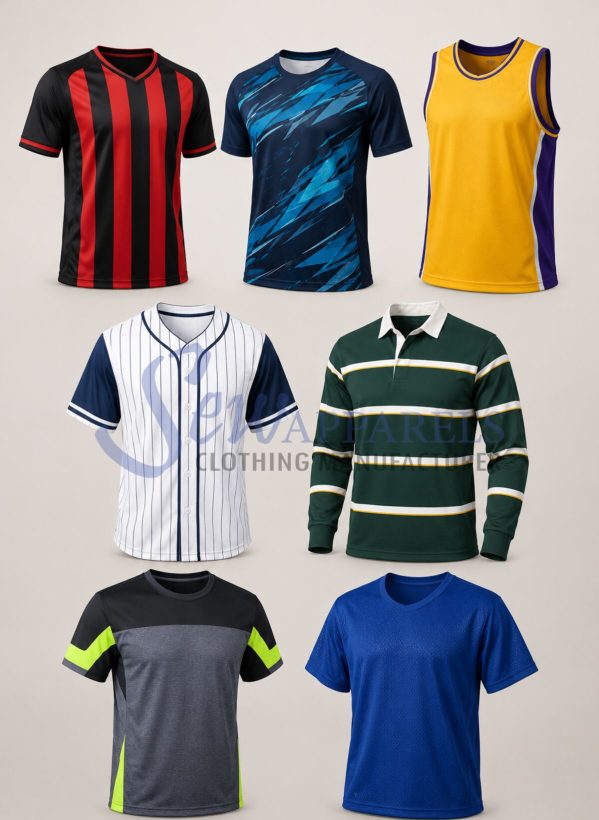
Existing sports jersey product reference showing varied finished styles. Use it to discuss silhouette and design direction; it does not confirm blank-stock availability, decoration compatibility or tested performance.
1. Compare sublimation and surface transfers
Review polyester compatibility, base shade, dye migration, stretch and graphic hand feel. The detailed comparison also covers panel artwork, player personalization and the retained sample needed for repeat orders.
Read the jersey printing comparison2. Review sublimation artwork bleed
Set controlled artwork bleed beyond panel cutting and seam boundaries so production variation does not expose unprinted fabric. Review registration marks, seam-crossing graphics and the approved printed size set before bulk release.
Read the sublimation artwork bleed guide3. Plan mesh-zone placement
Place breathable mesh where the jersey needs ventilation while controlling opacity, seam strength, panel stretch and artwork boundaries. Review underarm, side and back zones on a worn sample and confirm the grading and wash results before bulk production.
Read the mesh-zone placement guide4. Plan blank stock and late personalisation
Compare blank and finished orders through size inventory, decoration compatibility, roster release controls and the complete two-stage cost.
Read blank stock personalisation guide5. Compare small-order artwork setup costs
Separate shared preparation, personalisation, revisions, proofs and strike-offs, then confirm repeat-order charges and production-file access.
Read artwork setup costing guide6. Match replacement jersey batch colours
Protect the original colour standard, assess aged kit separately and agree fabric, lighting and replacement-lot approval records.
Read replacement colour matching guide7. Investigate peeling jersey numbers
Trace the transfer and application records, review care history and approve a corrective sample before releasing repaired jerseys.
Read transfer number peeling guideHow to Use These Sports Jersey Buying Guides
Define whether the jersey is for competition, training, club merchandise or a retail collection. State the intended fit, age range and size assortment rather than relying on one reference shirt for every wearer. Identify neckline, sleeve and hem preferences early. Keep any competition-specific artwork requirements in the buyer brief, with responsibility for checking them assigned before the design is approved. Start with the sport, target wearer and use, then document the construction and decoration decisions together.
Start the sports-jersey brief with the intended activity, team identity, wearer range, fabric route and care routine. Record the finished body, sleeve and neckline measurements on the current sample, then review movement, coverage, artwork placement and seam comfort together. Identify which details are fixed for the collection and which remain open to supplier development. Keeping the size chart, artwork version and approval comments in one file helps the team assess a revised fabric or panel before approving the next jersey sample.
Sports jersey buying guides work best when the review separates garment decisions from artwork decisions while keeping their relationship visible. Label the sample version, fabric reference and current pattern. Then identify which graphics are fixed across the order and which change by player. A comment about an uneven sponsor mark should specify whether the issue is the artwork position, panel shape or sewing alignment. Keep the approved fabric, artwork revision, size chart and player roster in one controlled record. This makes it easier to review a sample, identify the source of a mismatch and prepare replacement jerseys without losing the original design references.
Match Fabric, Fit and Decoration Route
Select the knit structure, weight, stretch and base color for the intended jersey. Assess opacity and movement on the finished sample, particularly across the shoulder and underarm. Mesh and denser interlock can produce different print surfaces and coverage, so a fabric substitution should trigger a relevant sample review. Keep the tested material attached to the approval record rather than describing it only as performance polyester.
Use sports jersey buying guides to name the actual print process in the quotation. Epson’s textile-printing primer describes sublimation as a heat-transfer process that colors suitable polyester, with white or light substrates highlighted for selection. Surface-applied transfer graphics are a different route. State the chosen system for each graphic so the sample team does not interpret the same general printing term in different ways.
Control Color, Migration and Graphic Feel
Review team colors against an agreed physical reference under consistent lighting. A screen preview helps communicate layout but does not establish the finished shade. Confirm how light lettering, white areas and sponsor marks will appear on the selected background. For large graphics, assess the finished jersey during the intended movement and after release, recording any stiffness, distortion or edge issue by location.
These sports jersey buying guides also address dye migration when a lighter surface graphic is applied over polyester. STAHLS’ dye migration handbook explains how heat can allow fabric color to contaminate the decoration. Use a compatible system and retain a dated sample on the actual background. Application temperature, pressure and timing should follow the selected material instructions and the decorator’s validated process, rather than a universal setting.
Approve Panel Artwork and the Player Roster
Map all-over artwork to the actual pattern pieces, showing seam boundaries and where alignment matters. Give local logos a finished-garment reference point and approved dimensions. Review the smallest and largest ordered sizes so a base-size layout does not create an awkward sponsor position elsewhere. Keep any acceptable break in a seam-crossing stripe visible on the approval drawing before production begins.
Sports jersey buying guides should produce a clear personalization record. Use one approved roster with player name, number, size and quantity, and identify who signs off spelling and changes. Keep the final artwork files linked to that version. After the agreed care review, retain the accepted sample, material references and decoration record so a later replacement order can be compared with the original standard.
Low MOQ Sports Jersey Manufacturer: Plan the Opening Order
When assessing a low MOQ sports jersey manufacturer, define the order by design, color and size assortment before requesting a quotation. Sew Apparels currently displays 500 pieces per design and color for sports jerseys; confirm the applicable arrangement for the actual fabric, artwork and personalization requirements. These sports jersey buying guides help buyers distinguish sample development, graphic preparation and production quantities. A complex roster or custom material may need additional planning even when the jersey silhouette is straightforward.
Development Support for Startup Sportswear Brands
Sew Apparels welcomes startup sportswear brands and prioritizes clear early development discussions. Share the target team or customer, reference jersey, artwork package, budget and launch window. Use these sports jersey buying guides to organize open questions before requesting samples. Begin with a focused style range and keep late sponsor or roster changes traceable. Confirm development charges, revision scope, approval deadlines and packing requirements in writing so the first collection moves forward with a shared understanding of the deliverables.
Turn your jersey design into a product brief
Bring the fabric reference, fit chart, panel artwork and confirmed roster together before requesting development support. Our sports jersey manufacturing team can review the product-specific options with you. Keep these sports jersey buying guides beside the approved sample so subsequent artwork, size and replacement-order decisions follow the same documented reference.
Explore sports jersey manufacturing