
A sports jersey blank stock personalisation strategy holds suitable jerseys without player names until the roster is confirmed. It can preserve options for late additions and replacements, but it also creates stock, handling and decoration responsibilities. Buyers should compare the complete two-stage workflow with a finished order rather than assuming undecorated stock is automatically cheaper.
For startup teamwear brands, clubs and distributors, the useful question is which decisions can remain open without compromising the garment or delivery date. This guide explains six inventory decisions, a practical release record and a cost comparison. It does not promise a particular saving, stock availability or turnaround time; these depend on the agreed product and supplier arrangement.
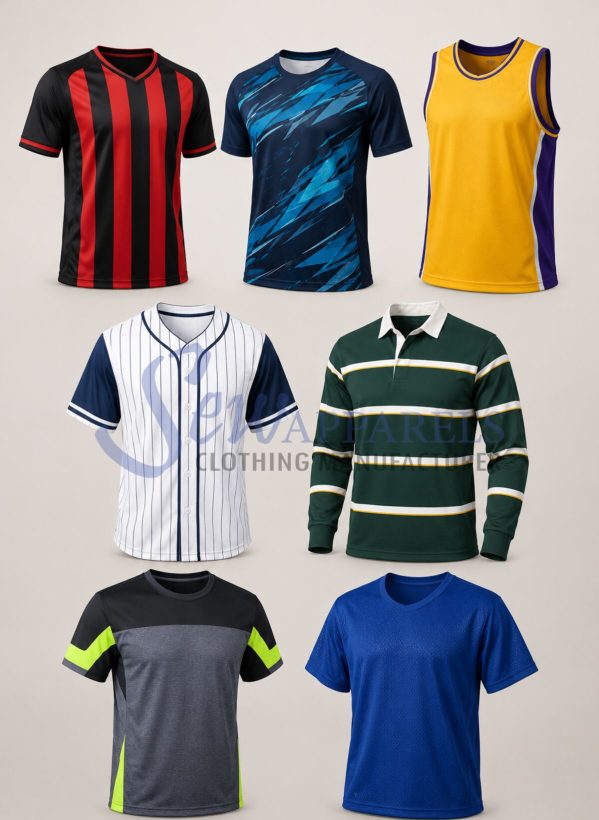
1. Define what “blank” means for this order
Begin a sports jersey blank stock personalisation strategy by specifying which details are already fixed. A jersey may be free of names while still carrying a club crest, sponsor graphic or permanent base pattern. Such stock is reusable within a narrower programme than a completely undecorated garment.
Record the style, fabric, colours, size range, neckline and any existing decoration. Identify the intended later name, number or logo locations and check that those areas remain accessible for the chosen process. Do not describe a club-specific garment as general stock if its permanent identity prevents use elsewhere.
Compare blank versus finished orders
A jersey blank versus finished order comparison should show what is included at each delivery stage. A finished order may arrive individually named and packed. A blank order may still need roster matching, decoration, inspection and repacking. These different scopes make a simple unit-price comparison misleading.
Keep the jersey undecorated stock strategy product-specific. A garment designed for later transfer application is not necessarily compatible with every print route. Some artwork belongs in the fabric or panel stage, while later names require a separate approved method. Confirm the actual construction and access before committing inventory. Compare sublimation versus heat transfer jerseys when defining which decoration decisions can be postponed.
2. Commit stock by size and usable demand
A sports jersey blank stock personalisation strategy needs a size-based forecast rather than one total quantity. Start with confirmed team requirements, likely additions and replacement demand, and identify which assumptions are uncertain. Review the expected use period so remaining stock is not treated as valuable indefinitely.
Blank jersey stock commitment should distinguish owned stock, supplier-held stock and reserved stock. Record who pays, where garments are held, how long the arrangement lasts and whether reservation guarantees availability. A discussion about holding garments is not an inventory commitment until the terms are confirmed.
Understand obsolescence risk
Named jersey obsolete stock risk is reduced only where postponing names genuinely preserves reuse. A later change to sponsor, club colours, fit or competition requirements can still make blanks unsuitable. Include those programme risks in the stock decision instead of focusing solely on player names.
Reusable blank jersey inventory should have an identified use case. List the teams, season or product programme it can serve and which details must remain compatible. A jersey personalisation stock model that assumes all unsold sizes can be sold elsewhere should explain that channel and its constraints.
Reserve additions without hiding them
Jersey stock held for additions needs its own balance, owner and release rule. Avoid counting the same units as both general available inventory and a protected team reserve. Review the reserve after the agreed period and document whether it remains held, becomes available or needs a new decision.
Record stock condition as well as quantity. Damaged, unverified or decoration-test units are not the same as saleable blanks. Keep them out of the available balance until their status is resolved. This prevents a late roster request from being accepted against garments that cannot actually be supplied.
3. Confirm late decoration feasibility
A sports jersey blank stock personalisation strategy works only if later decoration is technically feasible. Approve the intended name and number process on the actual garment combination. Confirm artwork area, seams, stretch, fabric finish and any existing print that could affect the application.
Late roster decoration feasibility includes access for the equipment and repeatable placement. A seam or layered detail can affect how a garment sits during application. Inspect the sample for visible marks, distortion, adhesion and acceptable appearance under the agreed assessment rather than approving from a digital mock-up alone.
Test the material combination
STAHLS’ heat-printing guidance (updated October 2020) highlights polyester dye migration, material compatibility, application instructions and sample testing. Use the current instructions for the selected transfer and garment combination. Do not lower temperature informally or copy one product’s settings to every jersey; adequate adhesion and appearance must both be established.
Keep a decorated reference and the process identity with the order. The approval should cover the transfer type, artwork, garment reference and relevant care evaluation. A plain fabric swatch may help early screening but cannot always represent access, seams or placement on a finished jersey.
Plan postponed name printing around a real deadline
Teamwear postponed name printing still needs a roster cutoff and an achievable production slot. Confirm the time required for artwork preparation, decoration, inspection, packing and transport. A late roster does not remove these steps, and a supplier’s general lead time may not describe your exact second-stage order.
For a late player name purchase scenario, identify the size already available, the approved name spelling and number, the applicable charge and the required arrival date. If the stock or slot is unavailable, present the revised options rather than promising delivery based on a blank-stock idea alone.
4. Compare the complete two-stage cost
Evaluate a sports jersey blank stock personalisation strategy using comparable deliverables. Include blank garment cost, storage or holding terms, second-stage printing, handling, inspection, packaging and any additional transport. Also identify minimum decoration charges or setup charges that affect small later releases.
Team jersey second stage printing cost may differ from the initial decoration quotation because release quantities, names or artwork preparation differ. Ask which charges apply per unit, per batch or per artwork version. Keep confirmed prices separate from planning allowances so the comparison remains transparent.
Make handling visible
A jersey two stage handling charge can cover picking sizes, matching units to roster lines, unpacking, preparing garments and repacking. Confirm the exact scope rather than assuming it duplicates the print price. Clarify whether individually labelled bags and team-by-team cartons are included.
Compare total expected programme cost, not only the first invoice. A hypothetical worksheet might show 100 purchased blanks, 80 initial personalised releases and 20 retained units. Those 20 units remain committed inventory, not an automatic saving. Record their cost and expected use separately; no supplier price or guaranteed demand is implied by this example.
Use a decision rule
Choose the blank-stock route where its retained flexibility has a supported operational value and the decoration workflow is confirmed. A finished order may be preferable when the roster is stable, second-stage logistics are difficult or unused stock is likely. Neither route is inherently best for every teamwear programme.
For private label sports jersey production, request quotations against the same style, sizes, decoration scope and delivery responsibilities. Our custom sports jersey manufacturing team can review a defined programme brief, including which personalisation decisions remain open and which must be approved before garment production.
5. Control personalisation release and unit identity
A sports jersey blank stock personalisation strategy requires a controlled release file. The late personalisation inventory plan should connect that release to the size-based stock balance. Use a unique roster line for each garment, with size, name spelling, number, artwork version and approval status. Identify who may approve changes and when an approved row becomes a decoration instruction.
Personalisation release control should prevent conflicting spreadsheets from reaching the decorator. Preserve the approved version, mark superseded files and confirm receipt. A late correction needs an identifiable change record so staff can distinguish an updated name from an accidental duplicate order.
Keep stock identity distinct from the player assignment
A blank’s product identity and its later player assignment serve different purposes. Track the style, size and available quantity first, then connect the released garment with its approved roster line. GS1’s barcode overview explains how standardised identification can be encoded for scanning. A barcode supports identification; it does not create an inventory forecast or verify the accuracy of a roster.
Use the identification system appropriate to the programme and trading partners. Do not imply that every internally held jersey requires the same external identifier arrangement. Whatever system is selected, confirm that the physical label and release record resolve to the intended garment and size.
Inspect before dispatch
Compare the personalised garment with the approved row and artwork reference. Check spelling, number, size, placement and visible decoration condition before packing. Record missing or incorrect units as exceptions rather than treating the completed print count as proof that the order is correct.
6. Plan reorders and review the remaining stock
Review a sports jersey blank stock personalisation strategy after each release. Update received, reserved, released, damaged and available balances by size. Record the remaining stock age and the programme decisions that could affect its reuse. This makes the next addition request a traceable stock decision.
Blank jersey reorder compatibility should compare fabric, shade, fit, dimensions and decoration behaviour with the approved reference. A replacement style with the same colour name may differ visibly or technically. Keep any substitution decision with the reorder so a later batch is not silently mixed into the original programme.
A sports jersey blank stock personalisation strategy worksheet
- Product: style, revision, colour, size and approved decoration route.
- Commitment: ownership, location, holding period and confirmed stock terms.
- Balance: received, reserved, released, exception and available quantities.
- Roster: unique line, approved name, number, size and file version.
- Cost: garment, printing, handling, storage, packaging and transport scope.
- Review: release deadline, remaining demand, reorder compatibility and owner.
Sports jersey blank stock personalisation strategy: buyer questions
Can unused named jerseys become blanks again?
Do not assume decoration can be removed without damage or a visible mark. Confirm any rework option on the actual garment before treating it as recoverable stock. Preventing premature name application is different from guaranteeing reversibility after printing.
What should a startup brand decide first?
Define the stable garment specification, likely size demand, roster cutoff and second-stage process. Use our Sports Jersey Buying Guides to connect stock planning with construction and artwork decisions. Commit inventory only when the intended reuse, release controls and complete delivery responsibilities are clear.