
SEW APPARELS · DEVELOPMENT RESOURCES
Work Trousers Buying Guides
Work trousers buying guides connect fabric choices with fit, movement and everyday storage. Start with the wearer’s role, working conditions, climate, layers and care route. Record the waistband, rise, leg shape, closures, pocket capacity and reinforcement positions using clear measurement locations and size-specific tolerances. Review bending, seated comfort, storage access and inside finish on the actual sample; a fabric swatch cannot demonstrate finished-garment performance. Keep fabric identity, pattern revision, labels and sample comments together. Agree how seam strength, laundering changes and key measurements will be assessed. Use the same controlled brief to review proposed material or construction changes before production and repeat orders.
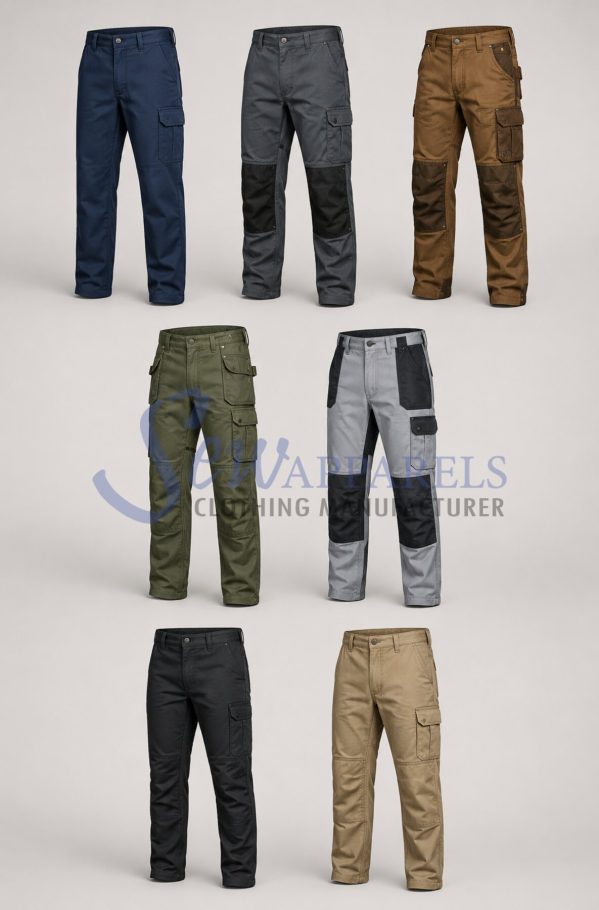
Use these work trousers buying guides with the detailed ripstop and canvas comparison below. Keep material references, pattern revisions and sample comments together so the chosen fabric remains connected to the approved construction. A documented brief supports clearer quotations and replenishment review. The product image below illustrates work trouser styles; it is not evidence of dimensional tolerance, abrasion performance or an approved production sample.
1. Compare ripstop and canvas work trousers
Evaluate weave, finished weight, flexibility, abrasion, tear behaviour and laundering using actual fabric candidates. The detailed comparison explains which observations belong in the fabric record and which need to be assessed on a finished trouser sample.
Read the ripstop and canvas comparison2. Specify double-knee reinforcement
Plan knee panel shape, reinforcement fabric and seam location around the intended work movements. The double-knee construction checklist explains how to document coverage, compare a sewn material pair and review representative sizes before approving the finished work trousers.
Read the double-knee construction checklist3. Reinforce the seat seam without excess bulk
Compare seat ease, center-back seam type, thread and crotch-junction bulk on the actual trouser sample. This seven-check guide shows how to specify reinforcement, inspect inside construction and document a repeatable approval test.
Read the seat-seam reinforcement checklistWork Trouser Measurements: Tolerances and Quotation Scope
Agree measurement methods, prioritize critical dimensions, and compare supplier evidence and inspection scope before accepting a trouser quotation.
Read the measurement tolerance costing guideWork Trouser Seams: Needle Damage and Correction Evidence
Map seam holes, distinguish fabric damage from stitch failure, and review controlled correction trials before approving the next production decision.
Read the needle damage diagnosis guideWork Trouser Seam Failure: Test Reports and Approval Evidence
Separate yarn slippage, thread breakage and fabric rupture, then compare relevant reports and record the correction and acceptance decision.
Read the seam failure evidence guideWork Trousers Abrasion: Report Methods and Comparison Limits
Match fabric identity, assessment method, sample condition and endpoint before comparing abrasion cycles or approving a workwear material.
Read the abrasion report comparison guideWork Trouser Knee Repairs: Materials, Comfort and Approval
Assess knee damage, compare compatible patch materials, and review comfort, aftercare and repair authorization before approving a replacement patch.
Read the replacement knee patch repair guideWork Trouser Sizing: Labels, Body Waist and Garment Measurements
Distinguish nominal size labels from body and waistband measurements, then review ease, measurement methods and the correct discrepancy resolution.
Read the size label and measured waist guideHow to Use These Work Trousers Buying Guides
Define the job before selecting the trouser silhouette. Record typical sitting, walking, bending and reaching movements, the tools or personal items carried and the expected uniform appearance. Separate everyday work clothing from any protective performance requirement that needs its own specification and evidence. A robust-looking fabric or reinforced knee does not establish that a garment meets a particular protective standard.
These work trousers buying guides provide a structure for the development discussion. List mandatory requirements separately from preferences, identify the target size range and specify which sample will be used for approval. Agree who can authorise changes to fabric, pattern or trims. This keeps a small revision to pocket depth from becoming an undocumented change across the whole order.
Compare Workwear Fabrics Beyond Their Names
Fabric selection should record composition, construction reference, finished weight, shade and finish. Carhartt’s work pants guide describes ripstop as a reinforced construction intended to limit the spread of tears. That helps explain the weave, but it does not prove how an untested fabric will perform against abrasion, repeated washing or a different material of similar weight.
Use the work trousers buying guides to keep performance evidence separate from fabric appearance. CottonWorks’ TOUGH COTTON technology overview illustrates how a finishing treatment can affect abrasion performance. This is a research example, not a claim that Sew Apparels uses that finish in every trouser. Compare the nominated fabrics under agreed conditions and request evidence for any specific performance claim before approving the material.
Coordinate Fit, Waist Construction and Movement
A work trouser fit review should examine waist, rise, seat, thigh and leg shape together. Confirm the measuring points and the intended ease before comparing samples. A comfortable standing fit may still pull during sitting or bending. Review the waistband and closure in their normal wearing position, with the belt or base layers intended for the garment.
These work trousers buying guides also support decisions about shaped knees, gussets and stretch panels where the brief calls for them. Each construction change should have a purpose and a sample check. Review whether the change improves movement without creating unwanted bulk or pressure. Record the approved pattern revision and assess representative sizes instead of assuming one base-size trial covers the complete workforce range.
Approve Pockets, Reinforcement and Care Performance
Plan pocket opening angle, usable depth and position around the items people need to carry. Check access while standing and seated, and inspect whether the loaded pocket distorts the side seam. Confirm pocket-bag material, stress-point stitching, belt-loop attachment and fly function. A heavier shell fabric does not compensate for a weak pocket bag or an unsuitable construction detail.
Keep these work trousers buying guides beside the sample inspection record. Review the garment after the agreed care routine and measure relevant points again, including waist and inseam. Note changes in shade, surface, stiffness and pocket shape. Retain the approved sample, trim references and packing instructions so the production team can distinguish a permitted tolerance from an unapproved material or construction change.
Low MOQ Work Trousers Manufacturer Planning
Buyers looking for a low MOQ work trousers manufacturer should confirm fabric availability before fixing the initial range. Our work trousers manufacturing team currently lists 500 pieces with matching export-quality stock fabric and 2,000 pieces with custom fabric per colour and style. Use these work trousers buying guides to compare suitable available fabrics against the actual brief, then confirm colour count, size assortment, trims and final minimums in the quotation. A small launch still needs clear sampling costs and an agreed approval process.
Development Support for Startup Workwear Brands
Sew Apparels welcomes startup workwear brands and uniform businesses that need practical help organising their first trouser programme. Share the target wearer, fit reference, fabric priorities, pocket map, budget and launch timing. These work trousers buying guides help turn those inputs into a focused sample request. Begin with essential styles and record feedback consistently. Confirm development scope, revision costs and production quantities before committing to the range, and keep the approved references available for later repeat orders.
Turn your work trouser decisions into a product brief
Bring the fabric candidates, measurement chart, pocket layout and care requirements together before requesting development support. Keep the work trousers buying guides with the approved sample so material, pattern and construction decisions remain connected through quotation, production and replenishment.
Explore work trousers manufacturing