
Work trouser needle damage diagnosis begins with evidence about the fabric, seam and history of the garment. A row of small holes beside stitching can look like a simple needle problem, but appearances alone cannot establish the cause. Cut fabric yarns, displaced yarns, broken sewing thread, abrasion and contact with a damaged machine surface can require different responses. Preserve the sample before trying to repair it or changing the production specification.
For custom work trousers manufacturing, the useful outcome is a repeatable correction supported by a comparison, rather than a quick explanation attached to a photograph. Record the affected operation, material reference, size, batch and discovery stage. Separate what the inspection shows from what the team suspects. This guide explains how buyers can organize the investigation and request suitable resampling without assuming every seam-adjacent opening has the same origin.
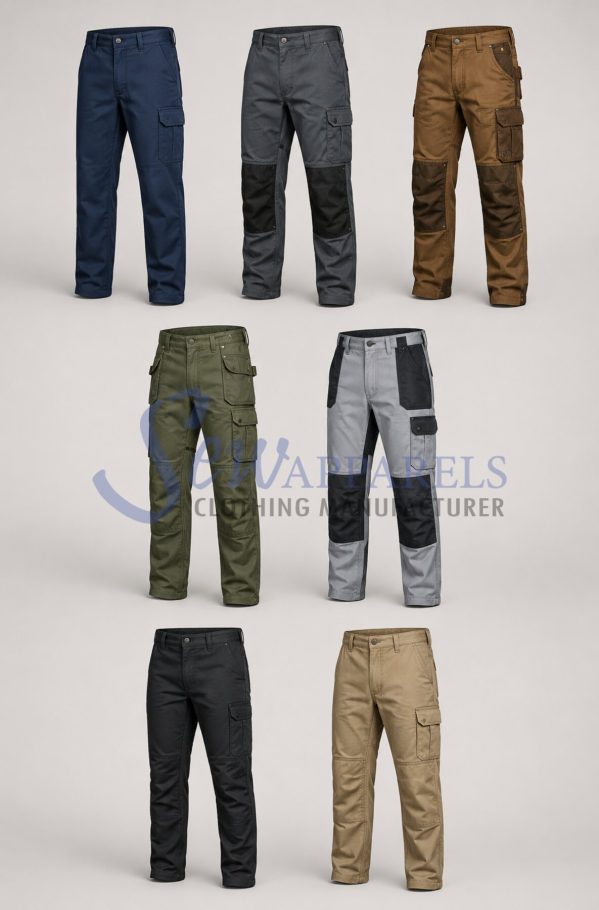
1. Start work trouser needle damage diagnosis with a mapped sample
A work trouser hole complaint evidence record should identify the garment and show the entire affected seam before documenting the individual opening. Note whether the problem appears at the seat, inseam, side seam, knee reinforcement, pocket attachment or waistband. Record its distance from the stitch line and whether it follows repeated needle penetration points. Photograph the inside and outside with a scale, retaining the original sample for examination.
Work trouser seam hole mapping should include unaffected areas on the same garment. Compare straight sections, seam junctions, backtacking and changes in thickness. Note whether damage appears on one fabric ply or both, and whether it occurs along only one sewing operation. These observations help the technician choose which machine, handling stage or material interaction to examine first; they do not establish blame on their own.
Keep a work trouser needle damage sample in its received condition. Do not remove stitching, stretch the defect repeatedly or wash the garment before documenting the initial observations. If closer examination requires opening the seam, agree who will do it and retain the removed thread and fabric pieces where useful. Label any altered specimen separately from the unaltered reference so later comparisons remain meaningful.
2. Distinguish cut yarns, displaced yarns and broken stitching
Work trouser needle damage diagnosis needs a work trouser puncture versus stitch failure comparison. A broken sewing thread can release the seam while the fabric yarns remain intact. An opening in the fabric beside intact stitching suggests a different question. Yarn movement away from the seam, a repeated puncture pattern and a localized abrasion mark should be recorded separately rather than combined under one defect label.
A work trouser cut yarn diagnosis may require magnification and examination by a competent textile or sewing specialist. Identify whether yarn ends appear severed, whether yarns have moved without breaking, or whether several possible mechanisms coexist. A photograph can support location and severity, but may not show enough detail to distinguish cutting from abrasion or material separation. State that uncertainty in the report.
Coats’ sewing FAQs discuss needle holes and machine-surface checks, including situations where apparent cuts are concentrated on one fabric ply. That supports inspecting contact surfaces alongside the needle. It does not diagnose a particular work trouser complaint or prove that one component caused the reported damage.
Do not solve every opening by using stronger thread. If the shell fabric has been damaged, stronger stitches alone do not restore the yarns. Likewise, changing the fabric before examining seam construction can conceal an operation-specific problem. Keep the observed failure mechanism, proposed cause and corrective action as separate fields in the investigation record.
3. Review the needle, material and operation together
A work trouser sewing needle review should record the machine’s needle system, needle size, point style, condition and thread compatibility. Add stitch type, seam construction, fabric layers and the operation being assessed. A specification suitable for a simple side seam may need separate validation at a thick reinforced junction. Ask the responsible technician to check installation and component condition using the machine manufacturer’s procedures.
Work trouser measurement charts do not describe sewability. The work trouser fabric sewing interaction also depends on construction, finish and any stretch component. Stretch work trouser needle holes should therefore be investigated on the actual nominated fabric, rather than a generic material with the same composition. Include fabric lot and finishing references when comparing the affected sample with retained material.
Groz-Beckert’s needle selection guidance identifies machine system, suitable needle and thread sizes, and point style as important selection considerations. Its discussion supports application trials rather than choosing a needle from fabric weight alone. Recommendations still need validation for the specific trouser construction; they are not evidence that Sew Apparels uses a particular needle or has achieved a stated defect rate.
Work trouser needle damage diagnosis should also consider damaged contact surfaces, feeding and handling, with qualified technicians performing machine inspection. If heat-related damage is suspected, investigate the operation and material response rather than assuming it from a hole’s appearance. Keep any proposed adjustment within the equipment and material suppliers’ guidance, and test the resulting seam before accepting the change.
4. Compare retained fabric and record care history
A work trouser retained fabric comparison should use identifiable material from the relevant order where available. Compare unsewn fabric, an unaffected seam and the affected sample. State whether each specimen has been finished, washed, worn or altered. A new laboratory swatch and a heavily used garment do not provide an equivalent comparison merely because their product descriptions match.
Work trouser needle damage diagnosis needs a work trouser seam care history when openings are first reported after laundering or use. Record the known washing and drying route, repairs, wear location and any relevant exposure. Avoid inventing missing details or treating an unknown history as proof of misuse. The report should distinguish confirmed information from the wearer’s recollection and information that remains unavailable.
Work trouser seam adjacent damage may become easier to see after movement or care, but the point of discovery is not necessarily the point at which damage originated. Inspect retained unworn garments from the same batch where available. A stretch trouser seam damage investigation should compare representative seam constructions under agreed conditions without repeatedly loading the only complaint sample until its original condition is lost.
If a buyer requests laboratory work, define the question first: identify broken yarns, compare material condition or assess a seam property. Agree the method and limits with a competent laboratory. The seam-failure evidence review explains why strength results alone may not establish the cause of small holes, and a visual observation alone does not establish the remaining service life of every garment in the order.
5. Resample one correction at a time
Work trouser needle damage diagnosis should lead to a controlled trial with traceable settings. Keep the baseline seam and identify each proposed change. Where practical, change one factor at a time so the team can see whether the intervention actually addresses the observed failure. When several changes are necessary together, state that the trial validates the combined process rather than proving a single cause.
For work trouser needle damage diagnosis, a work trouser sewing process correction record should include material reference, operation, needle specification, thread, seam construction and relevant machine settings. Preserve before-and-after specimens. Ask for inspection at the agreed stage and, where applicable, after an agreed care or movement assessment. Confirm that the correction does not introduce skipped stitches, seam opening, puckering or another unacceptable result.
The work trouser seam hole resample should include the affected construction, not only an easy straight seam. Review representative layer thicknesses, seam junctions and relevant sizes. If the proposed solution changes the fabric, seam allowance or appearance, the buyer should approve those product changes separately. An improved trial is useful evidence, but it does not automatically release all previously produced units.
For private label work trousers production, retain the approved correction with the product version and production instructions. Define the affected stock review, any permitted repair and the responsibility for inspection records. Decisions about holding, reworking or releasing goods should refer to the agreed evidence and buyer disposition rather than an unsupported statement that the problem has disappeared.
6. Close the investigation with a clear evidence file
The final work trouser needle selection evidence should connect the original complaint, examination findings, trial conditions and approved production instruction. Identify who reviewed the outcome and what remains uncertain. If the investigation supports a likely cause rather than a definitive one, use that wording and keep the limitations visible. A clear report is more useful than a confident explanation that the samples cannot support.
Work trouser needle damage diagnosis is complete only when the correction and acceptance decision are recorded. Include sample identities, comparison photographs, inspection results and relevant material or operation changes. Agree monitoring for the next production run, with responsibilities for checking that the approved settings and materials remain in use. Avoid promising that no future defect can occur.
Evidence checklist before approving a correction
- Identify the garment, batch, operation and affected location.
- Preserve the original sample and distinguish altered specimens.
- Separate fabric yarn damage from sewing-thread failure.
- Record needle, thread, machine and material references.
- Compare equivalent retained material and documented care states.
- Keep traceable trials and a written acceptance decision.
Bring the evidence to the work trousers manufacturing team and use the Work Trousers Buying Guides for related construction reviews. Work trouser needle damage diagnosis should produce an actionable investigation record that supports the next sample and production decision.
Frequently asked questions
Does every hole beside stitching prove a damaged needle? No. Record fabric yarn condition, stitching and ply location, then investigate the relevant operation. Machine contact, material behavior and wear history may require examination alongside the needle.
Can the supplier simply change to a smaller needle? A different size may be a trial option, but it must remain suitable for the machine, thread, material and operation. Check the complete seam result before approving it.
What should the buyer request first? Work trouser needle damage diagnosis starts with identified samples, mapped defects and the available production and care history. Request a documented comparison and controlled correction trial before agreeing a release decision.