
FLEECE JACKET DEVELOPMENT LIBRARY
Fleece Jacket Buying Guides
Fleece jackets look simple from a distance, but their hand feel and appearance depend on the fabric base and the way its surface is raised and finished. These Fleece Jacket Buying Guides help a brand choose the pile character before a sample is approved. Compare finished fabric panels, not only a supplier swatch: the jacket must look consistent across body, sleeve, collar, pockets and seam edges. Define the intended season, layering fit and care method so that the surface specification supports the actual garment rather than a vague request for “soft fleece.”
These Fleece Jacket Buying Guides connect six development decisions: pile construction, zipper-edge stabilisation, lined versus unlined quotation scope, anti-static claim evidence, compression packing trials and embroidery pile approval. Begin with the intended garment and its material references, then use the relevant article to define samples, evaluation conditions and release records. Compare actual assemblies rather than assuming that a softer surface, extra layer or marketing description guarantees a particular result. Keep fabric panels, component identities, approved samples and care observations together so each decision follows the same product brief.
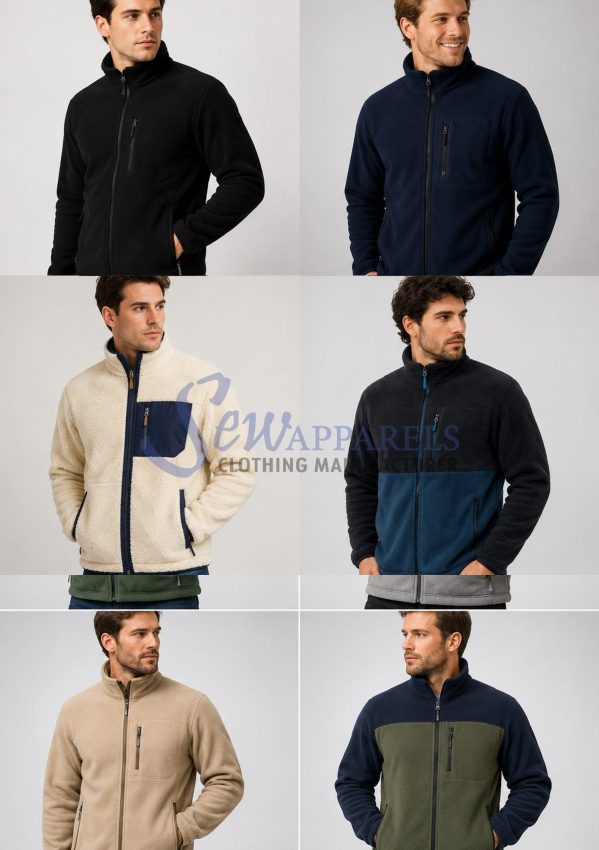
These Fleece Jacket Buying Guides use existing jacket style references to support development discussions. The design image does not prove a fabric specification, lining coverage, thermal result, certification or approved production sample.
Fleece jacket fleece pile construction
Compare pile height, double-sided brushing and surface density against the target jacket use. The article turns a soft-hand request into an approval checklist.
Read the fleece pile guideLined vs Unlined Fleece Jacket Quotation: Coverage and Complete Scope
Compare full, partial and unlined constructions using one outer garment specification. Connect inner seam finishes, material allowances, trims, sample behaviour and relevant evidence before accepting a price.
Review lined and unlined quotation scopeFleece Jacket Anti Static Claim Testing: Specimens, Care and Wording
Connect a proposed static-related claim to identifiable fabric, conditioning, laboratory scope and care history. Separate measured material properties from ESD application requirements before approving marketing wording.
Review anti static claim evidenceFleece Jacket Compression Packing Trial: Pile and Receiving Approval
Review a reproducible fold, bag and carton configuration against the jacket appearance reference. Separate package resistance from pile flattening, fold marks and documented unpacking recovery before approving the pack.
Review compression packing trialsFleece Jacket Embroidery Pile Approval: Lettering and Finished Sewouts
Approve the logo on actual fleece after topping removal and agreed care. Compare lettering, stitch support, surrounding pile and wearer-facing feel using a traceable finished sewout.
Review embroidery pile approvalFleece jacket zipper edge stabilisation
Plan zip tape support, prevent a wavy front edge and approve a clean collar finish with a practical sample checklist.
Read the zipper-edge guideFleece Jacket Buying Guides: Define the Jacket Use
Begin with the wearer and use case. A lightweight active layer may need easier moisture and heat release, while a casual cold-weather jacket may prioritize a fuller hand and insulation. The pile should support that decision without adding needless bulk at the collar, cuffs and pockets. Put the intended season, wearing layers, fit ease and target weight into the fabric brief. Compare finished fabric with the intended lining, binding and zipper, because those components alter the feel and silhouette of a complete jacket.
A raised surface can trap air, but appearance alone does not establish warmth, durability or breathability. Polartec describes how knit fleece is turned into a raised pile and how that pile helps create insulating air spaces. That is a useful construction principle, not a performance claim for an untested fabric from another supplier. Request actual finished samples and, where the product brief requires it, independent performance evidence for the selected cloth. Keep marketing claims tied to that specific material and test method.
Specify pile height as a finished result
Pile height influences the jacket’s visual depth, hand feel, packing bulk and the way a surface changes at seams. Record the approved face and back appearance under consistent light, and identify where the pile should be shorter or more compact. Instead of specifying “high pile” alone, provide a physical sample and an agreed measurement or comparison method after finishing. Check the body and sleeve panels side by side; different lots can look inconsistent even when a supplier assigns them the same general fleece name.
When using these Fleece Jacket Buying Guides to compare options, inspect the pile after handling and the intended care cycle. A tall surface that looks luxurious on a fresh swatch may flatten at a pocket opening or under a backpack strap. A lower pile may appear cleaner at seams but provide a different hand. Set acceptance limits for visible striping, crushed zones, uneven nap direction and excessive fuzz. Document which side is the public face and how all panels should be cut so that brushing direction stays visually coherent on the completed jacket.
Decide when double-sided brushing helps
In these Fleece Jacket Buying Guides, double-sided brushing can make the inside and outside feel soft, but it may alter thickness, drape and how easily layers slide over the jacket. Decide whether a raised interior is actually needed for the wearer. If the jacket is intended to go over another garment, assess friction at the sleeve and body during dressing. If a lining will cover the inner face, brushing that side may add cost without useful benefit. Ask the mill for finished alternatives with one-sided and two-sided surface treatments on the same base fabric.
Compare thickness, weight, hand and visual regularity after finishing rather than assuming that extra brushing is automatically better. Inspect seam allowances and zipper areas, where thick pile can become bulky or catch. Check whether the reverse surface sheds visible fibers onto a contrasting base layer. If the brand chooses double-sided brushing, record the approved appearance and care result for each side. A supplier should not substitute a single-sided finish merely because the face looks similar in a quick photograph.
Assess surface density and visual coverage
Surface density describes how full the raised pile looks and feels across a panel. A sparse area can expose the knit base or create a streaky appearance, while an excessively dense surface can change drape and drying feel. Compare panels at normal viewing distance and close up in the intended color. Dark and light shades can reveal uneven coverage differently. State where the pile must look uniform and where texture variation is acceptable. Include collars and pocket facings, not just the largest body panel.
These Fleece Jacket Buying Guides distinguish fabric mass per area from visible pile density. Two fabrics of similar weight can have different surface coverage because their knit construction and finishing differ. Request finished weight, thickness and an approved surface reference separately. For a jacket made with panels from different dye or finish lots, confirm lot matching before cutting. Document the fabric face and nap direction in the marker and sampling notes so the final garment does not show one sleeve appearing lighter merely from reversed pile direction.
Test matting, pilling and care appearance
These Fleece Jacket Buying Guides focus care-appearance checks on rub-prone zones such as cuffs, underarms, pocket entries and seat contact, which can change faster than a hanging swatch. Inspect them after representative wear or relevant tests and after the planned care cycle. ISO 12945-4 describes a visual assessment method for pilling, fuzzing and matting that includes napped fabrics such as fleeces. It is an assessment framework, not a pass grade for every jacket. Set a product-specific acceptance level with the supplier and keep before-and-after photos from the same fabric lot.
Plan low MOQ fleece jackets for startup brands
A startup brand can reduce sample rounds by approving one jacket silhouette and a short list of finished fleece options before choosing several colors. Low MOQ planning should state the target quantity, size range, fabric source, finish, trims and delivery window. Sew Apparels can discuss sampling and feasible production using the original product page, but no universal minimum should be assumed here because material and color commitments vary. Retain the approved fabric panel and garment sample so a later reorder uses the same surface reference.
For lined and unlined alternatives, map body and sleeve coverage, pocket materials, exposed seam treatments and attachment details separately. Request a complete quotation for each version on the same outer-garment basis. Include embroidery sewouts after topping removal, any proposed static-related claim and its evidence scope, and a recorded packing trial where surface compression could affect receiving approval. Confirm material availability, proposed substitutions and outstanding sample revisions before release.
Turn your fleece jacket decisions into a product brief
Share the target jacket use, layering fit, finished fabric weight and thickness, pile-height reference, brushing choice, surface-coverage standard, color range and care expectations. Include zipper support, lining coverage, exposed inner finishes and photographs of the approved garment at the collar, cuff, pocket and body. Identify embroidery artwork and finished sewout requirements, any static-related claim needing review, and the fold, bag and carton configuration to evaluate. Connect each proposed material and construction to its sample reference, quoted scope and open questions. A clear brief helps the team assess feasibility and build a sample against a defined jacket specification.
Explore Fleece Jacket manufacturing