
Fleece jacket embroidery pile approval should establish whether a logo remains readable on the actual garment after temporary topping has been removed and the agreed care process has been completed. A sharp photograph taken immediately after stitching is useful, but it cannot replace a finished sample that shows the surrounding fleece, the reverse of the embroidery and the small details in the artwork.
For buyers, the practical question is not simply whether embroidery can be applied. It is whether the proposed decoration gives the intended appearance without an unacceptable stiff patch, flattened halo or lost lettering. This guide explains six checks that connect artwork, fabric, sewout development and written approval before a bulk order is released.
Use the custom fleece jacket manufacturing page for the wider product enquiry. Keep the embroidery decision tied to the specific fleece quality, garment construction and brand artwork being quoted, rather than assuming that a result on one sample will transfer unchanged to every jacket.
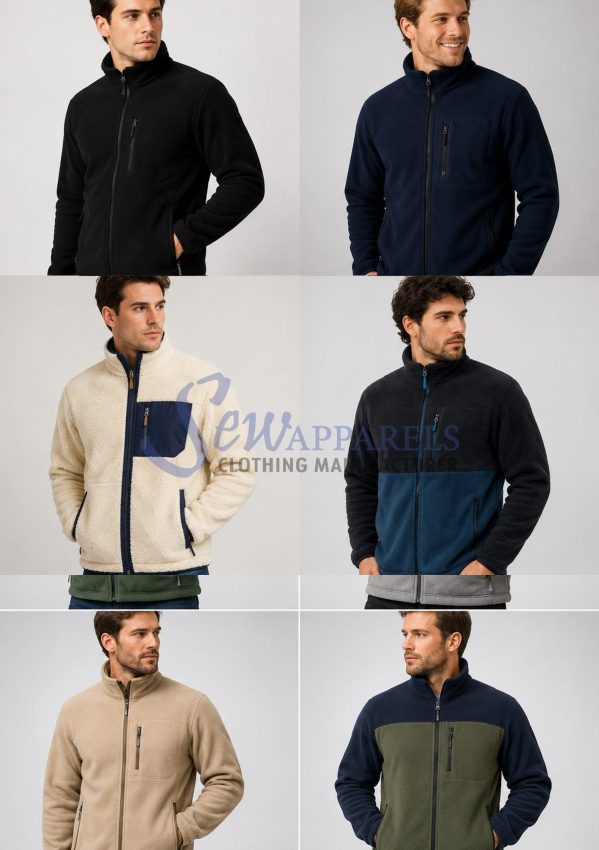
1. Define fleece jacket embroidery pile approval around the real surface
Begin with the fabric identity. Record its reference, composition information, weight specification, colour and the face that will carry the logo. Add the pile description and any finishing treatment relevant to the proposed sample. A fabric swatch from a different quality may show that an idea is possible, but it does not approve the material selected for production.
Discuss fleece jacket embroidery sinking as an appearance issue with clear examples. Which strokes disappear into the surface? Does the fabric obscure an outline, or does the thread merely sit lower than the buyer expected? Observations should distinguish missing detail from intentional texture so that the decorator knows what must change.
Include fleece jacket textured surface decoration in the sample brief, with the logo position and viewing conditions. Examine the sample laid flat and on the garment form used for review. Keep lighting and viewing distance consistent between options. A close-up can identify a fault, while a normal viewing distance helps judge whether the complete logo communicates clearly.
2. Compare the artwork at the intended finished size
Fleece jacket embroidery artwork scale needs a dimensioned reference, not a design file that can be resized freely during sampling. Identify the approved overall width and height, lettering, outline and any negative spaces. If a proposed size change improves readability, show the buyer how it changes placement and brand presentation before treating it as approved.
A fleece jacket fine lettering sewout should use the same fabric and intended thread combination as the garment. Include the smallest important characters, not just a large emblem that avoids the difficult detail. Compare the result with the artwork and identify whether counters inside letters, short strokes and spacing remain recognisable.
For fleece jacket small text embroidery, a revised lettering treatment may be more practical than repeatedly adding stitches. Ask the decorator to document the change and retain the original reference. The buyer can then decide whether a simplified version preserves the brand identity. Record that choice in the fleece jacket embroidery pile approval brief. There is no universal minimum letter size that guarantees success across all fleece surfaces and embroidery systems.
At this stage, fleece jacket embroidery pile approval should separate acceptance of the logo geometry from acceptance of the finished stitched surface. Both decisions matter, and neither should be inferred from an unlabelled photograph of an intermediate trial.
3. Record the topping, underlay and backing as different decisions
Temporary topping, programmed underlay and reverse-side backing serve different roles. Madeira’s embroidery topping guidance explains that water-soluble films help prevent fine design details from sinking into nap or pile, including fleece. Buyers should request the actual topping reference and the supplier’s applicable removal instructions rather than approving a generic description of “film.”
A pile fleece logo underlay trial compares the proposed stitch foundation on the selected fabric. Record the trial file revision and the decorator’s settings so that a successful option can be reproduced. Do not assume that one topping product makes every underlay approach unnecessary, or that a method developed for a different pile will work without another sewout.
Discuss fleece jacket embroidery base stitches in terms of their visible result and the hand of the finished area. Inspect outlines, coverage and the transition into undecorated fabric. More stitches are not automatically a better solution when they also change stiffness or appearance. The decorator should propose adjustments, and the buyer should approve the resulting garment evidence.
Madeira’s cut-away backing guidance describes permanent stabilisers that remain with the embroidery and should be selected for the fabric, design and intended use. Inspect the retained backing, trimmed edges and wearer-facing feel. These references explain development choices; they do not establish which materials a particular factory uses.
4. Inspect after topping removal and recovery
Fleece jacket embroidery topping removal belongs in the sample route. State who removes it, how the selected product is handled and when the garment is ready for evaluation. Follow instructions compatible with the fleece, thread and garment care requirements. Avoid imposing a universal heat, moisture or handling recipe on materials that have not been assessed together.
A fleece jacket topping residue inspection should cover the outlines, spaces between letters and nearby fabric. Record visible remnants or changes in feel without confusing temporary residue with a permanent embroidery fault. If removal is incomplete, identify the sample as an intermediate condition and finish the process before approval.
Check embroidered fleece pile recovery around the design after the agreed handling period. Record any preparation used before viewing, so that one sample is not brushed or otherwise treated differently from another without disclosure. The surrounding surface should be judged against an undecorated area from the same material.
Fleece jacket logo surrounding flattening can create a conspicuous border even when the lettering is clear. Photograph the whole decoration and surrounding area under consistent conditions, then examine the physical sample. Fleece jacket embroidery pile approval should address that border explicitly, with an accepted reference or a request for another trial.
5. Compare appearance before and after agreed care
A fleece jacket logo care comparison needs an identified care route and a clear record of which sample received it. State the procedure, number of cycles agreed for the review and the sample’s condition when inspected. Do not describe an informal sample wash as certification or assume it represents every possible customer laundering practice.
Compare fleece jacket logo pile coverage before and after care alongside the outline, lettering and garment surface. Note whether fleece fibres obscure details that were previously visible, whether the fabric distorts around the decoration and whether the reverse remains acceptable. Use the same viewing conditions for both assessments.
If a change is observed, preserve the sample and ask the decorator to explain the proposed correction. A revised file, different support material or adjusted artwork needs a new identified comparison. The aim is to learn which combination produces an acceptable outcome, rather than accumulating attractive samples whose settings cannot be traced.
Keep fleece jacket embroidery pile approval specific to the conditions actually reviewed. If additional colours, fabric qualities or care requirements are outside that evidence, identify them as open decisions. A satisfactory result in one colour is a useful reference, but it should not silently approve a different surface or decoration combination.
6. Release a traceable reference for production
Use the fleece jacket compression packing trial guide to include the approved embroidered area in pressure-point and unpacking observations before accepting the final pack.
The fleece jacket embroidered sample reference should connect the physical garment to the artwork revision, digitised file reference, fabric, thread and support materials. Add the logo position and finished dimensions. Keep an approval date, reviewer and photographs that show both the full placement and important close details.
Use a fleece jacket logo visibility signoff to state the accepted appearance in plain language. Include readable lettering, outline definition, surface coverage, surrounding pile and wearer-facing feel. Record any accepted variation and any issue that still requires action. A response such as “looks good” leaves too much room for interpretation when several samples have been exchanged.
Before release, fleece jacket embroidery pile approval should also identify what triggers another sample. Changes to fabric quality, artwork size, colour combination, embroidery file or support material may affect the result. Have the production team confirm that the approved reference and current order specification describe the same combination.
For custom fleece jacket manufacturing, include this embroidery record with the garment specification and quotation request. For private label fleece jacket production, align logo approval with labels, packaging and the complete presentation requirement. Startup brands can use the same concise record even when their opening range is small; actual order quantities and sampling terms still need confirmation in the enquiry.
A practical approval record for buyers
Keep the fleece jacket embroidery pile approval record short enough for the team to use, but complete enough to distinguish trials. A useful entry contains the sample ID, fabric reference, artwork revision, logo size and position, stitch-file revision, topping and backing references, removal status, care route, appearance observations and the approval decision.
- Accept: identify the reference that can proceed and the conditions it covers.
- Revise: list the specific appearance or comfort issue and the next trial requested.
- Await evidence: identify missing removal, care or material information before release.
For example, a buyer might accept the main emblem but request clearer small lettering after topping removal. That is a partial development decision, not permission to start bulk embroidery with the current file. Name the revised element and require the replacement sewout to carry a new sample identity.
The fleece jacket buying guides connect this decoration decision with wider fabric, construction and packing choices. Use the linked hub to keep product development questions together while maintaining a separate, traceable embroidery approval record.
Frequently asked questions
Can a photograph approve embroidery on fleece?
It can document appearance and help compare trials. A physical sample remains useful for assessing texture, backing, stiffness and surrounding pile. Identify when the photograph was taken, especially whether topping removal and care were complete.
Does adding stitch density always solve sinking?
No. Evaluate artwork, surface, underlay, topping and backing together. A denser design may change feel or distortion without resolving every detail. Approve a new sewout rather than treating an adjustment as a guaranteed correction.
When is the final decision ready?
Fleece jacket embroidery pile approval is ready when the identified finished sample meets the agreed appearance and handling criteria, the record states its scope and the production specification matches it. Any unresolved revision should stay visible until the replacement evidence is accepted.