
FOOTBALL UNIFORMS DEVELOPMENT LIBRARY
Football Uniforms Buying Guides
Use these football uniforms buying guides to turn a teamwear concept into a controlled product brief. The library connects jersey neckline construction, shell stretch, seam comfort, panel balance, grading, care and bulk inspection. Each topic helps clubs, academies, distributors and startup brands compare samples with measurable evidence while the main manufacturing page stays focused on enquiries. Keep drawings, measurements, fabric and trim codes, fit notes, care results and approved revisions together so pattern, sewing and quality teams work from the same production standard.
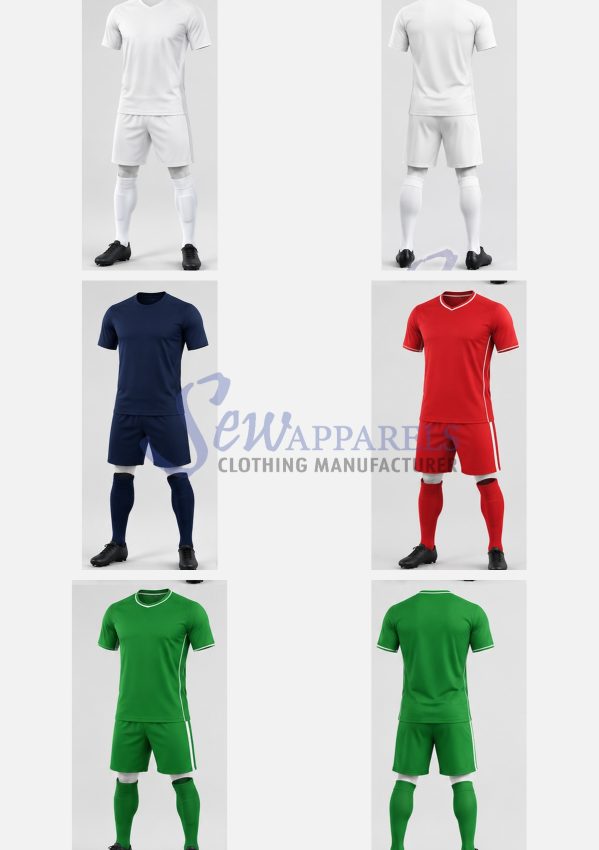
Existing blank football kit reference showing garment shape and potential artwork areas. It does not establish sponsor approval, rework feasibility, a quoted charge or a confirmed production schedule.
GUIDE 01
Jersey Neckline Construction: Football Uniforms
Compare opening dimensions, V-point symmetry, binding recovery and wearer comfort before approving a football jersey neckline. Use a sewn sample and graded measurements so the final neck shape remains controlled after care.
Read the jersey neckline guideGUIDE 02
Sponsor Artwork Positioning: Football Uniforms
Control sponsor artwork placement, panel balance, print scale, seam clearance, stretch distortion, colour approval and bulk inspection with measurable evidence.
Read the sponsor artwork guideGUIDE 03
Football Kit Sponsor Changes: Cost and Approval
Reconcile inventory, revised artwork, rules, rework evidence, quotations and authorisation before changing an approved kit order.
Read the sponsor change cost guideGUIDE 04
Football Kit Colours: Clash Approval
Review complete kit combinations, goalkeeper colours, underlayers, competition approvals and a practical clash contingency.
Read the kit colour clash guideGUIDE 05
Football Competition Badges: Variant Control
Connect authorised badges, artwork versions, player allocations, packing codes and reconciled quantities for each competition kit.
Read the badge variant control guideGUIDE 06
Football Shirt Numbers: Readability Review
Review numeral fonts, background contrast, actual-size proofs, worn views and organiser evidence before releasing number artwork.
Read the shirt number readability guideFootball Uniforms Buying Guides for Controlled Product Development
Start with player profile, competition use, climate, size range, jersey and short lengths, target quantity and delivery market. Define shell fabric, neckline, panels, seams, labels, decoration, packaging and care. Record fibre composition, knit structure, weight, stretch direction, recovery, opacity, colour and dimensional change. Add finished measurements, tolerances, stitch details, sample stages and approval evidence. Mark each feature on a technical drawing instead of relying on a visual mock-up. A controlled brief prevents pattern, cutting, sewing, finishing and quality teams from approving different interpretations of the same football uniform. The football uniforms buying guides library helps purchasing teams connect these specifications with the detailed article for each decision.
Engineer the Jersey Neckline and V-Point
Approve the neckline as a sewn assembly rather than a flat pattern shape. Specify the finished opening circumference, front drop, shoulder position, collar width, binding method and seam allowance on the technical drawing. For a V-neck, mark the centre-front point and describe how the two binding ends meet so the point stays symmetrical after stretch and washing. Check that the opening passes over the head without permanent distortion, lies flat during running and does not expose a rough seam allowance against the neck. Test the base size and graded sizes with the intended jersey fabric, thread and decoration. Record any change to the collar construction as a new sample revision.
Control Fabric Stretch, Recovery and Opacity
Approve the production-intent shell in both principal directions because a football jersey loads differently across chest, shoulder and neckline. Record conditioned measurements, agreed extension, recovery interval, growth and opacity at representative strain. Compare colour and decoration behaviour under stretch. Review the sewn assembly as well as the fabric because seam construction and collar binding can limit usable extension. Any substitute yarn, finish, weight, supplier or dye lot should reopen affected fit and care approvals. Link the material report to the exact sample, pattern version and cutting direction used for approval. Compare material results with the fit and construction records linked from football uniforms buying guides so a fabric change does not silently reopen approved dimensions.
Develop Panels, Seams and Comfort
Use panel lines to support movement, visual balance and decoration without creating unnecessary intersections at the shoulder, underarm or side seam. Define each seam type, allowance, stitch density, thread and joining sequence on the technical drawing. Check seam placement against arm movement and contact zones. Inspect flatness, elasticity, skipped stitches, tunnelling, grin and thread breakage while the jersey is stretched and during movement trials. Where seams meet the neckline, use a section drawing to control layer order and bulk. Approve more than one size because grading can move a seam into a comfort-sensitive area.
Validate Fit, Grading and Player Movement
Specify chest, hem, shoulder, sleeve opening, body length, neckline, armhole and short measurements from defined landmarks. Review the base size on a representative player, then check selected small, middle and large sizes in standing, running and arm-raised positions. Observe neckline recovery, shoulder balance, armhole comfort, body ride-up, panel strain and seam placement. Grade the shell, neckline, decoration and labels as one system. Record player profile, garment size, sample version and observations so later changes remain traceable. Fit approval should state intended use and avoid unsupported medical or injury-prevention claims.
Low MOQ Football Uniforms Manufacturer for Startup Brands
A startup brand, academy or club can use football uniforms buying guides to prepare a focused first enquiry. Request small-order feasibility for the actual fabric, decoration, size ratios and launch programme rather than assuming a universal minimum. Limit unnecessary variants and set a clear sampling sequence. Ask Sew Apparels to review your target quantity, branding and delivery market; final minimums, charges and timing require a reviewed quotation. A disciplined brief gives a new teamwear label practical support without promising priority capacity or a confirmed production slot.
Validate Care and Bulk Quality
Confirm washing temperature, detergent, drying method, cycle count and recovery interval before approving the football uniform. Measure jersey chest, body length, neckline, sleeve opening, short waist, inseam and leg opening at marked points before and after care. Inspect shell recovery, colour, opacity, sponsor artwork adhesion, seam security, elastic response and label legibility. Repeat a player movement review after care because shrinkage can change neckline comfort, jersey ride-up and short coverage. In bulk, inspect size and colour distribution, fabric lots, print placement, seam strength and finished measurements across cutting bundles and production lines. Trace each defect to its material, pattern version, decoration process or machine setting so the team can correct the cause before more uniforms are completed.
Prepare a Decision-Ready Football Uniforms Brief
Your enquiry should identify player profile, intended use, style reference, size range, target quantity, delivery market, fabric, colours, neckline, panels, seams, decoration, branding, labels, packaging and required testing. Attach front, back and inside drawings, measurement chart, component placement map, tolerances and care route. Mark fixed requirements and areas where the manufacturer may propose alternatives. Include the approval sequence, responsible decision makers and physical samples that govern production. Maintain a concise change log for every accepted revision so costing, sampling, pattern, cutting, sewing, finishing and quality teams work from one version. Use football uniforms buying guides to select the relevant development evidence before submitting your enquiry.
Control Team Variants and Sponsor Changes
Use football uniforms buying guides to keep the approved jersey, shorts, sponsor artwork and player roster connected. Record a signed sample version, size ratio, colourway and decoration file for each team. If a sponsor or competition badge changes, identify committed material and decorated quantities before agreeing rework or remake. Keep unused components, rejected units and accepted replacements separate in the reconciliation. A buyer-controlled change log is a planning tool, not a test standard or a guarantee that every decoration can be removed.
Technical References
ASTM D2594/D2594M-21 addresses low-power knit stretch and growth; it is not recommended as the sole acceptance test for commercial shipments because interlaboratory precision is poor. ISO 13935-2:2026 describes a straight-seam grab test, primarily for woven fabrics; ask the laboratory to confirm suitability for the selected knit assembly. Neither reference approves a curved neckline, sponsor artwork or complete football kit. Agree specimen preparation and acceptance criteria, then keep sewn-sample movement and care evidence in the football uniforms buying guides approval file.
Turn Your Football Uniforms Decisions into a Product Brief
Bring fabric, fit, neckline, panel, seam, decoration, care and quality decisions together before sampling. One controlled brief gives development and production teams the same measurable target and keeps every later revision traceable.
Review Football Uniforms Manufacturing