
Football kit competition badge variant control keeps similar shirts from being treated as interchangeable stock. A club can order the same design, size and player number for two competitions while requiring a different sleeve badge on each version. If the distinction exists only in an email, cutting, decoration, packing and matchday allocation can all lose the information.
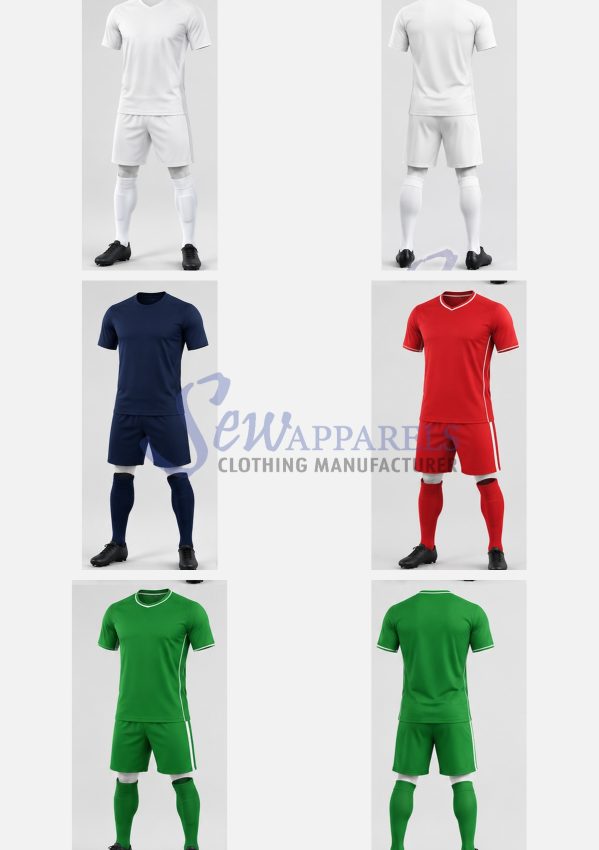
For custom football uniform manufacturing, the useful control is a clear variant record connected to artwork, permission, quantities and release decisions. This guide gives buyers six practical checks for multi-competition orders. It does not grant permission to reproduce competition marks or assume that every badge can be changed after application.
Why Football Kit Competition Badge Variant Control Matters
League cup shirt badge versions may share most of their bill of materials, but the differences still need explicit ownership. A matching size label does not identify the competition variant. Likewise, a carton marked with the club name can contain several valid shirts that belong to different events. The order needs a readable distinction at each stage.
Use football kit competition badge variant control to connect the approved version to the physical unit. The record should answer which badge belongs on which shirt, which player receives it and which competition release it supports. Keep the garment specification and the operational allocation linked without confusing either record with official competition acceptance.
1. Confirm the Badge Permission and Competition Context
Start with a competition badge permission reference supplied or confirmed through the club and relevant authority. Identify the competition, season, applicable equipment instructions, authorised artwork source and any supply restrictions. Ask who is responsible for obtaining the badge or arranging its approved application. Do not treat a downloaded image as permission to manufacture the mark.
The 2026 UEFA Equipment Regulations, Article 37 provide a specific example of controlled competition-badge placement when the badge is supplied by UEFA. Buyers should obtain the rules for their actual event rather than apply that UEFA provision to every league or cup. Confirm the current instructions before approving a placement drawing.
Separate the permission decision from the factory sample approval. A supplier can inspect position and application against a specification, but that inspection does not establish rights to use the mark. Keep the approval reference accessible to the responsible buyer, with any restriction clearly summarised in the production brief.
2. Build One Badge Version Master
Football badge artwork version control should identify the exact file used for each variant. Record the filename, revision, dimensions, colour references, orientation and approved source. Link the badge to a sleeve placement drawing that also shows other marks and relevant seams. A cropped photograph may explain intent, but it should not silently replace controlled artwork.
The football badge version master should list both shared and different requirements. Mark which shirt specification remains common and which decoration fields change by competition. Distinguish the badge itself from a sponsor, campaign mark or other sleeve element. Ask the buyer to resolve overlapping or conflicting instructions before sampling.
For football kit competition badge variant control, retain a clear superseded-file record. An older file should remain identifiable for traceability while being excluded from current production instructions. If the buyer revises a mark after approval, record whether the sample, placement drawing and application specification also require new acceptance.
3. Map Players, Sizes and Competition Variants
Football player kit variant mapping should start from the buyer’s controlled roster. Connect each required unit to the player or allocation group, shirt size, name, number, competition version and quantity. Keep goalkeeper styles and spare shirts distinguishable. Do not assume that a player receiving two shirts needs two identical badge versions.
A football same size different badge comparison becomes manageable when each variant has its own internal order code. Use a readable convention agreed between buyer and supplier. For example, a league and a cup suffix can distinguish two medium shirts with otherwise matching artwork. This is an internal planning convention, not a prescribed competition identifier or a GS1 barcode.
League versus cup kit allocation should include reserve and replacement stock. Decide whether spares are already competition-specific or held undecorated until a controlled release. State the allowed route explicitly. Do not leave production to infer that an unallocated shirt can receive whichever badge happens to be available at the workstation.
A football kit competition badge variant control sheet should also identify who can change the roster. When a name, number, size or event allocation changes, revise the affected record and reconcile quantities. Preserve the accepted version so the decoration team can distinguish a new instruction from an informal request that has not been approved.
4. Keep Decoration and Packing Codes Connected
The competition sleeve badge order needs a release list that matches the version master. Separate badges by their approved identity and associate work bundles with the correct shirt variant. Record which sample governs application, including position and material instructions. Inspect the first approved assembly before continuing the agreed production quantity.
A kit competition packing code should remain connected to the variant after decoration. Use the buyer-approved label format and carton allocation, with readable identifiers for the competition version. If scanning is used, check that the scanned record returns the intended variant. A barcode that points only to the base shirt leaves the badge distinction unresolved.
GS1 US apparel guidance explains the role of consistent product identification and variant information in inventory operations. Its principles help frame a buyer’s data discussion. Internal kit codes and GS1 identifiers are different systems; where retail or trading partners require GS1 identification, follow the relevant allocation rules with the responsible identifier owner rather than inventing numbers.
Competition shirt packing approval should verify both the visible garment and its record. Confirm the badge, name, number, size and variant code against the approved packing list. A correct carton total is insufficient when units are assigned to the wrong competition. Keep any discrepancy isolated until the responsible reviewer records its resolution.
5. Reconcile Every Variant Quantity
Badge variant quantity reconciliation should compare ordered, sampled, decorated, accepted, rejected and packed units. Include replacement production and retained samples as separate entries where applicable. State the point in time represented by each count. Do not merge rejected units into accepted stock simply to make a purchase-order total appear balanced.
For football kit competition badge variant control, reconcile by variant before aggregating the whole order. A league surplus and a cup shortage can cancel numerically while leaving the buyer with an unusable allocation. The total order should balance, but so should the player, size and competition quantities needed for delivery.
A Simple Allocation Example
Consider an illustrative order for 24 players, each receiving one league shirt and one cup shirt. The required delivery is 48 shirts, divided into 24 units of each competition version. If the agreed spare order adds four league shirts and two cup shirts, the delivery plan becomes 28 league and 26 cup units, or 54 shirts total. These numbers are an example, not a Sew Apparels order commitment.
If one cup unit fails inspection, record the rejected piece separately and obtain a controlled replacement. Do not substitute an extra league shirt because the size matches. Check the replacement’s player details or spare allocation as well as the badge. This keeps the variant requirement visible even when the team is trying to close a short shipment quickly.
Maintain a multi competition kit stock record after delivery if the club wants traceable replenishment. Track which approved variant has been issued, retained or requested again. Use the previous approval references for context, then check whether the season, badge source or specification has changed before accepting a repeat order.
6. Authorise Event Release and Later Badge Changes
A football event kit release should identify the competition version being issued and the approved allocation list. The club’s kit manager needs a readable packing reference, not a guess based on a sleeve photograph. Agree who checks the delivery against the event requirement and who handles a discrepancy before the garments enter match stock.
Wrong competition shirt prevention depends on a final comparison between the physical unit, variant master and event list. The review can use scanning, visual checks or a combination appropriate to the order. Whichever route is chosen, define what is checked and retain the result. Do not describe an untested scan process as an error-proof guarantee.
Football badge change authorisation should state the affected units, revised reference, approved remedy and commercial implications. Ask a qualified decoration specialist to assess whether a change is feasible on the actual garment. Permission to use a new badge does not prove that the old application can be removed without damage or that rework will meet the required appearance.
Close football kit competition badge variant control with a dated release record. Identify accepted quantities, unresolved items and any separate replacement plan. A responsible release should not conceal a shortage or wrong variant under a general “order complete” status. Resolve the discrepancy or document the buyer’s agreed decision before final dispatch.
Football Kit Competition Badge Variant Control: Buyer Questions
Can one sample approve every badge version?
Only if the buyer’s documented approval explicitly covers the relevant differences. Otherwise, show the variants and obtain acceptance of each affected field. Shared construction can remain under one base specification, while badge identity and placement require a clear record. Avoid assuming that a base-shirt approval covers artwork never shown to the reviewer.
Do similar-looking badges need separate records?
Yes, when they represent different approved variants or sources. Record their identities even if the visual difference is small. A seasonal update, competition distinction or changed placement can matter to the buyer. Keep the instructions readable so the production team does not need to interpret subtle design differences from memory.
Should every variant have a retail barcode?
Determine the requirement with the buyer and trading partners. An internal team-order code may be adequate for a controlled club allocation, while retail channels can have formal identification requirements. Keep those decisions separate. Do not present a local packing code as a licensed GS1 identifier or assume that one universal rule covers every sales route.
Prepare a Traceable Football Uniform Brief
For football kit competition badge variant control, supply the base garment specification, competition references, badge master, roster, variant quantities and packing requirements together. Name the artwork and commercial approval contacts. For private label football uniform production, clarify whether the buyer supplies authorised badges or expects a confirmed sourcing arrangement before costing.
Use the football uniforms manufacturing page to prepare an enquiry, and the Football Uniforms Buying Guides to connect the badge plan with construction and artwork decisions. One controlled package keeps the operational distinction visible from sampling to packing.
The final football kit competition badge variant control record should make each delivered shirt identifiable and its approval traceable. Buyers gain a practical way to reconcile similar garments without treating them as interchangeable. Update the master when a competition, season, artwork or allocation changes, and carry that revision through every affected release record.
Assess any late badge revision through the kit artwork change review, with affected quantities, feasible remedies and agreed charges identified separately.