
A football kit late sponsor change cost impact review should begin with the actual production stage, not a flat surcharge. Changing a logo before artwork approval is different from replacing it on finished, numbered shirts. Buyers need to know what has been committed, what can still be changed and which quantities require a new route before they authorise further work.
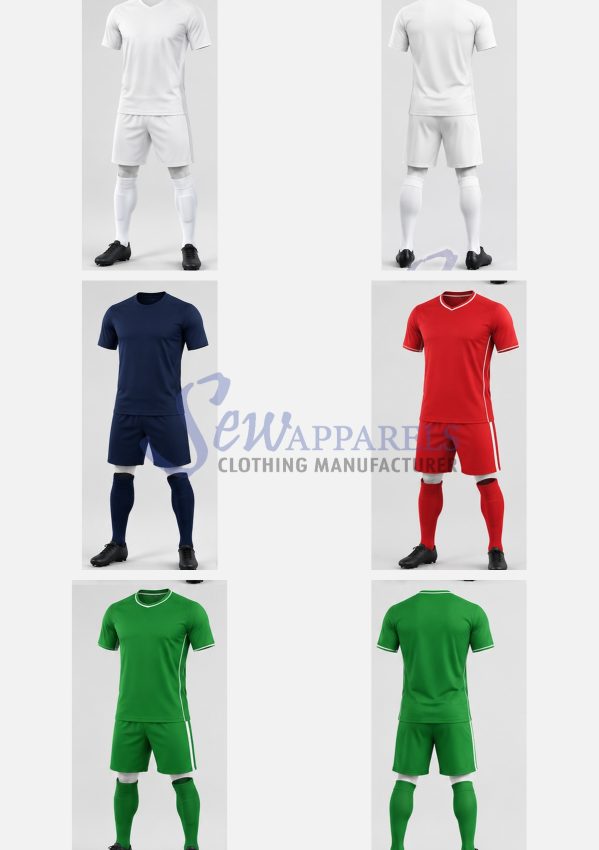
For custom football uniform manufacturing, a controlled change order protects the launch plan as well as the budget. This guide gives clubs, distributors and private labels six checks for a late sponsor revision. It explains how to compare options without assuming every print can be removed, every garment can be saved or every urgent request can retain its original delivery date.
Why Football Kit Late Sponsor Change Cost Impact Varies
The same new sponsor file can create very different work across one order. Some material may remain uncut, some panels may already carry the old artwork, and some finished kits may be packed. A revised commercial decision must follow these stages separately. An average price per shirt can conceal costs assigned to units that have never received the old decoration.
Use football kit late sponsor change cost impact as a documented comparison between continuing the approved version, changing eligible units and remaking affected units. Each route needs quantities, assumptions and approval owners. Do not interpret a preliminary estimate as a binding price until the supplier has verified inventory, artwork, process feasibility and the revised schedule.
1. Reconcile Committed Material and Production Quantities
Start with a dated inventory snapshot. Record fabric ordered, received and allocated; panels cut or printed; garments sewn; units decorated; and kits packed or dispatched. Separate the committed material inventory from material that can still be redirected. Identify size, colour, style and player-number differences so the team can trace the affected units.
The already decorated jersey quantity should be a verified count rather than an estimate from the original purchase order. Include samples, spare shirts, goalkeeper styles and replacement pieces where relevant. Mark whether each unit carries only the sponsor or also names, numbers and other badges. These details influence which components a remake would have to reproduce.
A football kit late sponsor change cost impact calculation should explain the cutoff time behind its inventory figures. If production continues while the change is discussed, the affected quantity can grow. Agree which work is paused, who authorised the pause and when the next count will be issued. Avoid an indefinite stop that creates a second unrecorded commercial decision.
2. Create One Revised Artwork Approval Master
For a football kit artwork change after approval, retrieve the editable master rather than editing a compressed preview. Identify the file version, sponsor mark, colour references, dimensions, placement and garment-size treatment. Keep the old approval visible in the record, clearly superseded, so the printer cannot mistake it for the current production instruction.
Editable artwork revision may involve layout work, separation, transfer preparation or a revised sublimation panel file. Ask the decoration specialist to identify the actual tasks. A sponsor rectangle that looks similar on a screen may still alter scale, colours, placement or surrounding design. Confirm whether the new artwork requires a sample and whether the sample uses the production-intent material.
Make the new sponsor approval master a controlled package: approved file, marked placement drawing, colour reference, sample decision and revision date. Record who can approve brand use and who can approve garment appearance. A purchasing contact’s acceptance of the extra charge should not silently replace sponsor artwork authorisation or the club’s kit approval.
3. Review the Applicable Advertising Rules
A revised artwork rule review should precede bulk changes. Identify the competition, age group, intended season and relevant organiser. Check the applicable advertising rules and approval procedure with that authority. Do not assume that a logo accepted for training or retail use will automatically be accepted on match clothing.
IFAB Law 4 on players’ equipment places permitted advertising within the applicable competition or football-authority regulations. This is a useful starting reference, not a universal sponsor-size approval for every league. Obtain the rules that govern the actual order and confirm whether the revised design needs fresh acceptance.
For football kit late sponsor change cost impact, keep rule review separate from production costing. A feasible transfer application does not establish that the artwork is permitted. Likewise, permission to use a sponsor logo does not prove that its proposed location complies. Resolve these questions before purchasing replacement decoration or releasing revised panels.
4. Establish Rework Feasibility Before Quoting Savings
The football kit remake versus rework decision needs evidence from the actual construction and decoration. Identify whether the existing sponsor is sublimated into the panel, screen printed, transferred or attached by another route. Ask a qualified decorator to assess realistic options. Do not describe integrated artwork as removable merely because an added transfer can sometimes be altered.
Rework feasibility evidence should include a representative trial and agreed inspection criteria. Review visible residue, shadowing, fabric distortion, surface damage, colour change and the appearance of any replacement decoration. Where applicable, assess adhesion, flexibility and care behaviour using a procedure appropriate to the material. Record rejected options as well as the accepted route.
The STAHLS performance-wear handbook discusses application instructions, heat-sensitive fabrics and dye migration, and recommends testing before completing a job. Its 2018 guidance supports a cautious trial approach; it does not guarantee safe removal of an existing sponsor. Obtain current instructions for the exact materials rather than copying a temperature from a general publication.
A football kit late sponsor change cost impact comparison should count failed trials and rejected reworked units realistically. Clarify who bears these costs under the agreed change order. Do not deduct speculative salvage savings from the budget until the route is approved and the supplier has defined the quantity it can deliver to the accepted standard.
5. Compare Itemised Rework and Remake Quotations
Request football jersey sponsor revision costs by work package. Separate artwork, sampling, decoration setup, unit work, inspection, replacement garments and additional packing or freight. Identify which original costs remain payable, which charges are new and which unused materials or cancelled operations receive an agreed credit. Avoid charging the same original commitment twice.
A jersey remake quotation should state precisely what is being replaced. A new shirt may require fabric, panels, sewing, sponsor, badges, names, numbers, labels and packaging. If shorts or socks remain unchanged, keep them outside the remake quantity unless there is a documented reason to replace them. Reconcile complete kits against individual pieces before comparing totals.
Use a change order charge schedule with clear units and assumptions. For example, distinguish a one-time artwork fee from a per-jersey decoration charge and an estimated delivery adjustment. State currency, quotation validity, applicable taxes or freight basis and any unconfirmed items. These are negotiation inputs, not standard Sew Apparels rates or automatic contractual entitlements.
A Worked Comparison Without Invented Prices
Suppose an illustrative order contains 300 shirts: 120 already decorated, 100 assembled without the sponsor and 80 not yet cut. The counts total 300. A buyer should obtain separate costs for the decorated group’s approved remedy, the undecorated group’s new sponsor application and the remaining group’s revised artwork route. The example is a planning scenario, not a factory inventory statement.
If only 120 shirts require remake, do not price 300 remakes unless the buyer intentionally chooses a full replacement route. Add verified setup and sampling costs, then account for agreed credits separately. Names and numbers on replacement shirts must match the approved roster. A lower initial option can become more expensive when rejection, repeated sampling or extra freight is omitted.
6. Authorise the Change and Reset the Timeline
A football kit late sponsor change cost impact review is incomplete without commercial change authorisation. Record the selected route, affected quantities, accepted charges, approved artwork and responsible signatories. State what happens to superseded units and materials. Any storage, return, disposal or alternative use should follow the buyer’s documented decision rather than an informal production assumption.
Late change timeline assumptions need a revised sequence: final artwork, rule confirmation, representative trial, sample approval, material readiness, production, inspection and dispatch. Ask the supplier which dates depend on buyer response or external availability. Separate an estimated factory completion date from the carrier’s delivery estimate and the club’s required match date.
Finish the football shirt sponsor change order record with revised kit quantity reconciliation. Confirm that accepted original units, changed units and remade units add up to the authorised delivery plan. Mark rejected or superseded pieces separately. A short written reconciliation prevents a sponsor correction from introducing missing sizes, duplicate numbers or an incorrect final invoice.
Questions Buyers Should Settle Early
Can the old sponsor simply be covered?
Only an approved trial can justify that route for the exact garment. Appearance, flexibility, durability and applicable kit rules still need review. A larger patch or transfer may create a new design issue. Do not select coverage solely because it appears cheaper than remake on a preliminary quotation.
Who pays for the sponsor change?
Refer to the order terms and written agreement between the parties. A buyer-requested revision, an artwork approval error and a manufacturing nonconformity are different situations. Record the facts and seek appropriate commercial or legal advice for a dispute. This guide does not assign liability or override contractual rights.
Can an urgent change keep the original delivery date?
Ask for an updated critical path. Rework trials, approvals and replacement materials may add steps that were absent from the original order. Approve any split shipment only after confirming quantities, costs and arrival assumptions. An urgent request does not by itself create a confirmed production slot or guaranteed carrier service.
Send a Decision-Ready Football Kit Brief
For football kit late sponsor change cost impact, share the original purchase order, approved artwork, requested revision, inventory snapshot, roster and required delivery window. Include the competition context and named approval contacts. For private label football uniform production, keep the change decision linked to the original specification so the remaining construction requirements stay traceable.
Use the football uniforms manufacturing page to prepare an enquiry, and the Football Uniforms Buying Guides to connect artwork, construction and sourcing decisions. Request a reviewed quotation for the actual order instead of assuming a universal sponsor-change surcharge.
Close the football kit late sponsor change cost impact review with one approved change package and a reconciled delivery plan. The useful result is a clear decision: which units change, how they change, what the agreed cost includes and which dates remain conditional. That record gives purchasing, decoration, quality and dispatch teams the same instruction.
Keep the revised placement aligned with the sponsor artwork positioning brief, including the actual shirt sizes and approval revision.