
Gym Shorts Buying Guides
These gym shorts buying guides help activewear buyers connect liner construction, pocket movement, equipment-contact materials, drawcord care, key carrying and fabric stretch choices. These decisions affect fit, comfort, sampling and the final costed specification. Use the guides to create measurable instructions rather than approving a sketch or a flat-lay image. The right answer depends on the wearer, activity, fabric and care route, so record the intended use before comparing constructions.
Sew Apparels develops custom gym shorts for fitness brands, gyms, training programs and importers, with buyer-specified woven or knit fabrics, stretch, waistbands, pockets, branding and packaging. Read the liner guide for coverage and movement, and the pocket guide for load stability. Use the equipment-contact article for abrasion, snagging and print wear; the drawcord article for adjustment after washing; and the key-carrying article for pocket puncture concerns. Compare mechanical stretch with elastane when extension and recovery are unresolved. Then visit the original product page to discuss sampling and a current quotation.
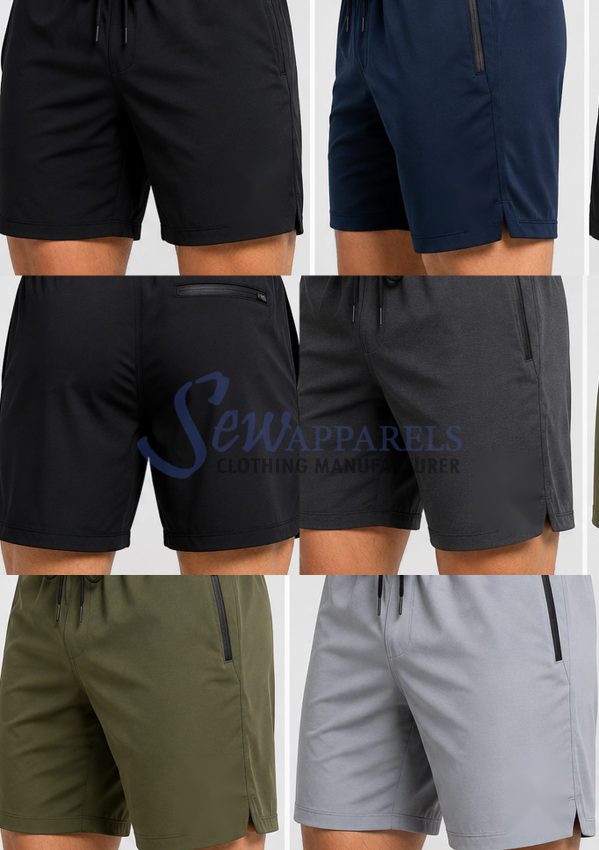
Liner Versus Unlined Gym Shorts
Compare coverage, support, drying behaviour and movement. Specify liner length, attachment and fit through a wear trial instead of requesting a vague “built-in liner.”
Read the liner design guideGym Shorts Pocket Bounce Reduction
Set phone pocket position, bag depth and opening method around a measured load. Test the occupied pocket while running and squatting, not just on a hanger.
Read the pocket bounce guideGym Shorts Barbell Contact: Material Comparison
Compare defined equipment contact zones, abrasion, snagging, print wear and material evidence before approving a gym shorts fabric.
Read the barbell contact material guideGym Shorts Drawcords: Retention After Washing
Review cord migration, comparable care trials, internal anchors, end condition and post-wash access before approving an adult gym shorts drawcord.
Read the drawcord retention guideGym Shorts Pockets: Key Puncture Assessment
Define the actual key, contact route, seam and fabric failure, reinforcement and evidence before approving an adult gym shorts pocket.
Read the key puncture pocket guideGym Shorts Materials: Mechanical Stretch Versus Elastane
Compare composition, stretch direction, growth, recovery, after-care behaviour and garment feedback before selecting the gym shorts material.
Read the stretch material comparison guideCustom Gym Shorts Manufacturing
Review the original product page for fabric, waistband, pocket, branding and packaging options, then confirm MOQ, sampling and production terms for your brief.
Explore gym shorts manufacturingHow to Use These Gym Shorts Buying Guides
Start with the primary activity. A running short needs a different balance of pocket stability, airflow and leg movement than a relaxed training short. A liner can help coverage and support but may add heat or twist if its attachment conflicts with the outer shell. A pocket can contain a phone but will bounce if its load, position and support are not tested with the complete garment. Choose the guide that corresponds to your main wearer complaint, then cross-check the other feature before signing off the sample.
Write each decision as a testable instruction. For a liner, name the fabric, finished length, attachment points and expected coverage during a squat or lunge. For a pocket, state the intended object, dimensions, opening direction and acceptable movement during a run. Keep both decisions on the same sample checklist, because the pocket bag can touch or pull the liner. Photograph the approved construction and record the size tested. This helps the pattern, sewing and quality teams use the same target in later sizes and repeat orders.
Define the Wearer, Activity and Size Brief
Describe who will wear the shorts and where: indoor gym, outdoor running, team warm-up, studio training or multi-purpose use. Include typical climate, expected workout intensity, preferred coverage, waistband rise and target inseam. Decide whether the wearer uses underwear with the short and whether an integrated liner is essential. State the objects the pockets must carry. A product designed for light strength work may prioritize a relaxed shell, while a distance-running short may need a carefully controlled pocket load and a different inner layer. The activity brief should guide the design before fabric or trim selection. Use gym shorts buying guides to connect this wearer brief with liner and pocket decisions.
Build a measurement chart with named landmarks for waist, hip, rise, thigh, leg opening, inseam, outseam and any liner length. Define whether measurements are relaxed or stretched, and agree a tolerance for each. Test the base size and both ends of the size range, since pocket position and liner coverage can shift as patterns are graded. During fitting, ask wearers to walk, run, squat, lunge and sit. Record ride-up, pressure, exposure and hem twist. A standing mirror check alone cannot establish that a gym short works during training.
Coordinate Liner, Shell, Waistband and Pocket
The liner versus unlined guide explains how layer choice changes coverage, movement, drying and attachment. If you choose a liner, identify exactly where it joins the waistband, crotch and side seams. Check that the liner and shell can extend differently without pulling each other. If you choose an unlined short, test fabric opacity and comfort in the intended movements. Do not describe either option as universally better; the approval criterion is whether it meets the wearer brief and survives the specified care route.
The pocket bounce guide converts a vague “secure phone pocket” request into dimensions, position, bag shape and closure details. Test with the maximum intended object, including its case, and check whether the bag pulls the side seam, shell or liner. A heavier zip alone will not fix an unstable pocket location. Map pocket and liner together on a section drawing so the layers do not compete for space. Confirm the waistband remains stable when the pocket is loaded and that access is practical during the intended activity.
Fabric Care, Technical References and Sample Approval
Agree how fabric and construction will be evaluated after care. ISO 6330:2021 describes domestic washing and drying procedures for textile testing. ISO 12947-2:2016 addresses specimen breakdown in Martindale abrasion testing and excludes coated and laminated fabrics. Neither reference establishes that a gym short is certified or has passed. Ask the laboratory to confirm method suitability, preparation and acceptance criteria for the exact material. Keep abrasion evidence separate from snagging, print adhesion and complete-garment wear claims.
Use gym shorts buying guides to approve the pre-production sample as a complete short. Check waistband recovery, stitch security, liner attachment or unlined opacity, pocket operation, seam appearance, branding placement and measurement tolerances. Repeat the key wearer movements with the pocket empty and loaded. Compare the sample before and after the agreed care cycles for shrinkage, twisting, rough edges and changes in pocket or liner behaviour. Consolidate feedback from design, fit and quality teams into one marked sample and one revision list. Keep the final approved sample as a physical reference for bulk inspection and later reorders.
Low MOQ Gym Shorts Manufacturing: Plan a Focused Run
The original gym shorts product page states an MOQ of 500 pieces per design and colour. Buyers seeking a low MOQ gym shorts manufacturer should use that figure as the current published starting point, then request a quotation for their exact fabric, trims, sizes and colour split. A focused first run can reduce unnecessary complexity: limit speculative variants, decide liner construction early, and use one well-defined pocket layout. Sampling is a development step, not a promise that every quantity or material choice is available. Confirm sample charges, fabric minimums and production terms before committing. Use gym shorts buying guides to settle the construction route before requesting the final quantity split.
Support for Startup Fitness Brands
These gym shorts buying guides help a new fitness label prepare a clear product brief before approaching a manufacturer. Identify the target activity, wearer profile, size mix, branding position, performance priorities and intended launch quantity. Explain which feature is essential and which can change after costing. For example, a stable phone pocket may matter more than a second decorative zip. Seek feedback from real wearers on the sample, then lock the construction before bulk production. Startup support means a practical development conversation within confirmed MOQ and commercial terms, not a guarantee of a lower minimum.
Turn Gym Shorts Decisions Into a Product Brief
Combine the decisions from these gym shorts buying guides into one specification: shell and liner fabrics, waistband construction, rise and inseam, liner length or unlined coverage, pocket dimensions and load, branding, size chart, care method and sample approval comments. Attach the final drawing and photos from the wear trial. Record the intended quantity by design and colour, then visit the custom gym shorts manufacturing page to discuss product options, sampling, pricing and delivery timing with Sew Apparels. A complete brief reduces ambiguity and makes the first development discussion more useful.
Explore gym shorts manufacturing