
A gym shorts barbell contact material comparison should begin with the contact conditions the buyer wants to evaluate. A fabric that performs well in one laboratory screen does not automatically resist every knurled bar, bench surface or exposed fastener. The useful decision connects the exact material, contact zone, observed damage and intended use without promising that a garment is indestructible.
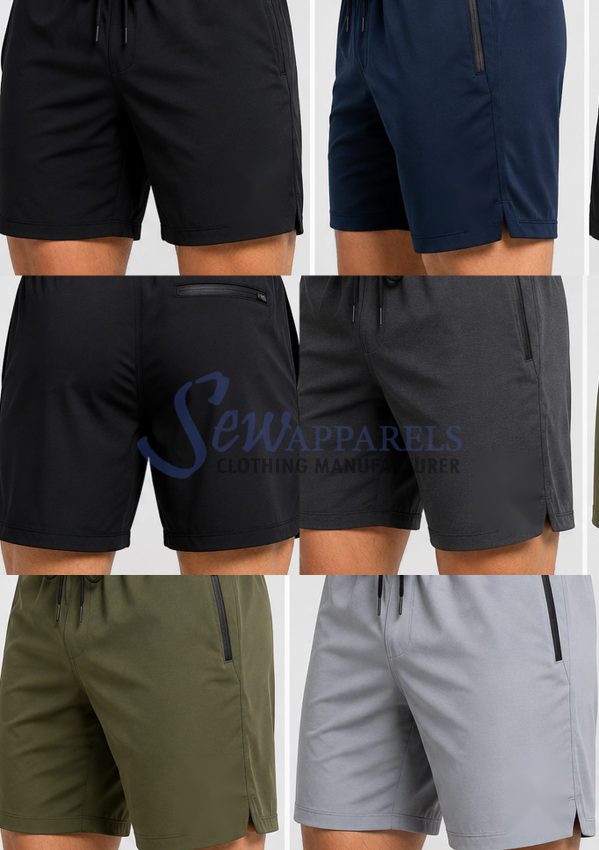
For custom gym shorts manufacturing, compare production-intent candidates through an agreed evidence plan. This guide gives sourcing teams six checks for fabric, print and assembly decisions. It does not prescribe an unsafe exercise trial, convert laboratory cycles into training sessions or claim that Sew Apparels has certified a particular material for all equipment contact.
Why Gym Shorts Barbell Contact Material Comparison Needs Defined Conditions
Equipment contact can involve repeated rubbing, a local catch or a visible change to decoration. These concerns should not be merged into one general durability score. A training shorts surface snag comparison may reveal a different weakness from fabric abrasion screening. Record the observation first, then ask the qualified technical reviewer which evidence addresses that failure mechanism.
Use this material comparison to clarify a sourcing decision, not to select a fabric from a single unexplained number. The review should identify what was tested, what was observed and which conditions remain outside the evidence. A transparent limitation makes the result more useful to a buyer than an unrestricted wear guarantee.
1. Map the Equipment and Garment Contact Zones
Bar contact zone mapping should identify the part of the short associated with the buyer’s concern. Record the garment style, size, panel and relevant seam or print location. Describe the equipment surface supplied for review, including the condition of the contact area. Avoid treating all gym shorts barbell knurling wear as the same exposure.
Keep bench surface friction separate from bar contact. A seated or supported contact area can involve a different surface, direction and garment state. Include these differences in the review brief rather than combining observations from unrelated activities. The responsible specialist should decide whether the proposed comparison represents the intended use.
For gym shorts barbell contact material comparison, document hook fastener damage risk when exposed hook components are part of the reported contact environment. Identify the source and contact location. Do not intentionally expose a wearer to damaged equipment or introduce a garment snag into a loaded exercise. Material screening should follow an appropriately controlled, safe procedure.
2. Distinguish Abrasion from Snag Failure
Abrasion versus snag failure is a key distinction in gym short fabric equipment abrasion reviews. Record whether the observed concern is surface rubbing, yarn displacement, protrusion, a hole or another visible change. Do not assume the cause from appearance alone. Retain the sample and contact record for qualified assessment.
The ISO 12947-2:2016 scope concerns specimen breakdown in a Martindale abrasion procedure. It excludes coated and laminated fabrics from that scope. The buyer and laboratory should confirm applicability to the candidate material; a Martindale result is not itself a barbell-contact certification or a complete prediction of gym-short service life.
A gym shorts barbell contact material comparison should therefore give abrasion screening and snag assessment separate fields. A favourable result in one field cannot automatically close the other. Ask the reviewer to identify the relevant test route and reporting limitations, especially when the actual contact includes a rough, pointed or catching surface.
3. Screen Equivalent Fabric Candidates
Equivalent fabric screening needs a clear comparison basis. Identify each candidate’s supplier, code, construction, composition, weight, finish, colour and lot. Record which characteristics are intentionally similar and which differ. Do not describe two materials as equivalent simply because their marketing names or quoted weights look alike.
Use the same agreed preparation and relevant test conditions when comparing candidates. State fabric direction, sample identity and any care history in the laboratory brief. Where methods or conditions differ, have the laboratory explain whether the results can be compared. Do not rank materials by numbers copied from unrelated reports.
The ASTM D3939/D3939M-26 public scope describes Mace snagging assessment for suitable fabrics, with exclusions including open constructions, unsuitable stiff or heavy fabrics and tufted or nonwoven materials. Its published guidance also cautions against using the method for commercial-shipment acceptance because of between-laboratory precision. Obtain specialist advice on the appropriate comparison and release evidence.
For gym shorts barbell contact material comparison, a laboratory snag screen is one input rather than proof for every equipment surface. Keep the test identity and limitations beside the result. Confirm whether a different method or supplemental assessment is needed for the actual material and proposed contact question.
4. Review Prints, Seams and Contact-Zone Appearance
Contact zone print wear should be evaluated on the intended decorated assembly, not inferred from a plain fabric result. Record the decoration route, artwork, placement and material reference. Inspect the relevant area for visible change using agreed criteria. Keep fabric damage and print appearance as separate observations when they occur together.
Gym shorts contact zone durability also includes the construction present at the reviewed location. Identify seams, pocket edges, trims and panel intersections that belong to the sample. Ask the technical reviewer whether the assessment needs an assembly specimen rather than an isolated swatch. Do not let an unrelated fabric report stand in for the actual garment configuration.
Define equipment wear appearance limits before comparing the candidates. Decide how observations will be described and which conditions are unacceptable for the intended specification. Use retained samples or agreed reference images in the internal file where useful. Avoid a universal pass threshold when the buyer’s use and accepted appearance have not been defined.
A gym shorts barbell contact material comparison should record when an appearance change occurs, how it is inspected and whether the observation remains after the agreed recovery or care route. Keep the conditions reproducible. A casual comment such as “looks tougher” is not an adequate basis for releasing a revised material.
5. Collect Controlled Use Feedback Without Overclaiming
Controlled use feedback can help identify concerns that deserve further investigation. Record the sample, participant reference, garment size, relevant activity, equipment identity and observation period. Use a professionally planned route appropriate to the task. Do not ask a wearer to reproduce damage under a loaded bar or continue using compromised equipment.
Compare the reviewed contact zones before and after the agreed observation period. Record care, other clothing layers and any event that could explain a difference between samples. Separate reported comfort from visible material change. A wearer’s preference is valuable feedback, but it does not establish a laboratory rating or an unrestricted durability claim.
For gym shorts barbell contact material comparison, do not convert laboratory cycles into workout counts unless a defensible relationship has been established for that specific context. Likewise, a short use review cannot establish lifetime performance. Describe the actual evidence and retain unanswered questions in the decision file.
Review whether fresh and prepared samples answer different questions for the intended brief. Ask the specialist which care conditions are relevant, then keep those sample identities distinct. If a candidate is retested after a material or finish change, identify the revision clearly rather than combining the new observations with an old result.
6. Record the Material Decision and Its Scope
Surface durability report scope should identify the candidate, tested conditions, observed endpoints and limitations. Ask for clarification when a report lacks the material code, preparation route or comparison basis. Keep laboratory evidence distinct from internal use feedback. The final material decision should explain how each source informed the selected route.
Fabric contact suitability is an intended-use decision, not a universal label. State the garment configuration and contact concerns addressed by the review. Name conditions outside the evidence where relevant. Avoid phrases such as barbell-proof or damage-proof that imply performance beyond the documented comparison.
Close gym shorts barbell contact material comparison with material decision evidence: the approved candidate, specimen references, accepted assembly, appearance criteria and reassessment triggers. Record the responsible buyer or technical reviewer. A supplier substitution, revised finish, decoration change or different contact concern should prompt review of the affected evidence before release.
A Buyer Comparison File That Can Be Reviewed
Build one concise file that another team member can follow. Connect the contact map, candidate specifications, laboratory request, reports and internal observations. State which decision each document supports. A report folder without a comparison explanation leaves purchasing and production to infer the intended material choice.
- Contact definition: equipment identity, surface condition and garment zone.
- Material identity: supplier, construction, finish, colour and lot.
- Screening: method suitability, preparation and comparable conditions.
- Assembly: seams, print, trims and the exact sample configuration.
- Observations: failure description, appearance references and limitations.
- Approval: selected route, unresolved questions and change triggers.
Example: Compare Two Candidates Without a Universal Winner
Consider an illustrative buyer reviewing two fabrics for a short with decoration near a reported contact zone. One candidate has a favourable abrasion screen, while the other produces fewer concerning observations in a separately defined snag assessment. The team should identify which concern matters to the intended specification rather than declare one fabric superior in every use.
Review the exact decorated assemblies and any relevant use feedback, then request clarification on the different report scopes. If neither file answers the print-wear question, keep that question open and obtain the appropriate evidence. This example describes a decision process, not a claimed test result for a Sew Apparels product.
Questions Before a Material Approval
Does a high abrasion result prove resistance to knurling?
No. Read the method and specimen conditions, then assess how they relate to the actual contact concern. Different mechanisms may require different evidence. A favourable laboratory result should be reported accurately without being renamed as an equipment-specific certification.
Should thicker fabric always be selected?
Do not make that assumption. Compare the actual candidates against the intended garment requirements and agreed evidence. Weight is one specification field, not a complete explanation of contact behaviour, mobility or appearance. Record tradeoffs instead of treating a single material characteristic as a universal answer.
Can a plain swatch approve the printed garment?
Only for the question the swatch actually addresses. Decoration and construction can require additional assessment on the intended assembly. Keep the approval scope clear, and ask the relevant specialist which evidence is needed before releasing the complete garment specification.
Prepare a Clear Gym Shorts Manufacturing Brief
For gym shorts barbell contact material comparison, share the intended use, reported equipment contact, garment drawings, candidate materials, decoration and required quantities. Include the evidence questions and approval contacts. For private label gym shorts production, agree the sampling and testing responsibilities before costing rather than assuming that every assessment is included in the order price.
Use the gym shorts manufacturing page to prepare an enquiry, and the Gym Shorts Buying Guides to connect material selection with liner, pocket and construction decisions. Keep one controlled specification for development and production.
The completed gym shorts barbell contact material comparison should show why the selected candidate fits the defined brief and where the evidence stops. That record gives the buyer a traceable sourcing decision without an invented durability promise. Reopen the affected review when the material, contact conditions or garment assembly changes.
Include the intended liner or unlined construction in the sample identity; changing the assembly can alter the comparison.