1. Embroidered logo stabilisation
Plan the backing choice, stitch density and placket clearance that keep a chest logo flat, readable and comfortable on pique or jersey. This topic explains how knit movement, hooping, underlay, thread buildup and placement interact. It also identifies mistakes that cause puckering, hard embroidery, missed registration or a distorted front opening.
Read the technical article to understand the seven main decisions and cause-based corrections. Open the buying guide when preparing the supplier brief, comparing backing trials, checking the size set or recording final approval after laundering. Use the embroidered logo stabilisation buying checklist to record the embroidery-sample approval.
Read the embroidered logo article
2. Collar shape after laundering
Define collar knit recovery, neck seam support and placket stability so a work polo keeps a balanced neckline after repeated care cycles. This topic explains how yarn, rib structure, collar dimensions, seam handling and wet processing interact. It also identifies mistakes that create curling, spreading, asymmetric points, neckline stretching or a twisted front opening.
Read the technical article for the seven main control points and practical corrections. Open the buying guide when writing the sample brief, approving the collar and neck seam, comparing wash-test evidence or recording the sealed standard for bulk production. Use the collar shape after laundering buying checklist to record the washed-sample approval.
Read the collar shape article
Work Polo Drying Claim Comparison: Methods, Endpoints and Evidence Scope
Match specimen identity, methods, water exposure, environments and drying endpoints. Keep fabric results separate from finished polo observations before approving quick dry claim wording.
Read the drying claim comparison guide
Work Polo ID Badge Attachment Review: Holder Fit, Access and Garment Support
Review the identified badge, holder and fastener with the finished polo. Compare fabric support, placket access, care arrangements and sample limits before approving the attachment specification.
Read the ID badge attachment guide
Work Polo Shirts Garment Size Consistency: Measurements, Labels and Lot Decisions
Align specification revisions, measurement points, sample states and labelled sizes. Keep lot deviations and agreed inspection scope traceable before authorizing shipment dimensions.
Read the garment size consistency guide
Work Polo Shirts Underarm Colour Change: Complaint Evidence and Care History
Record underarm appearance, care and contact history, retained samples and the relevant laboratory question before deciding how to resolve a colour complaint.
Review underarm colour complaint evidence
Plan custom work polo manufacturing
Use the manufacturing page for the overall work polo product discussion after the technical decisions are recorded. Prepare fabric identity, size range, branding location, collar construction, badge requirements and care expectations together. Identify any unresolved drying claim or colour complaint question, rather than treating a quotation as proof of performance. Confirm development scope, order quantities and acceptance criteria with the supplier before approval.
Explore work polo manufacturing
Work Polo Shirts Buying Guides: Specification Planning
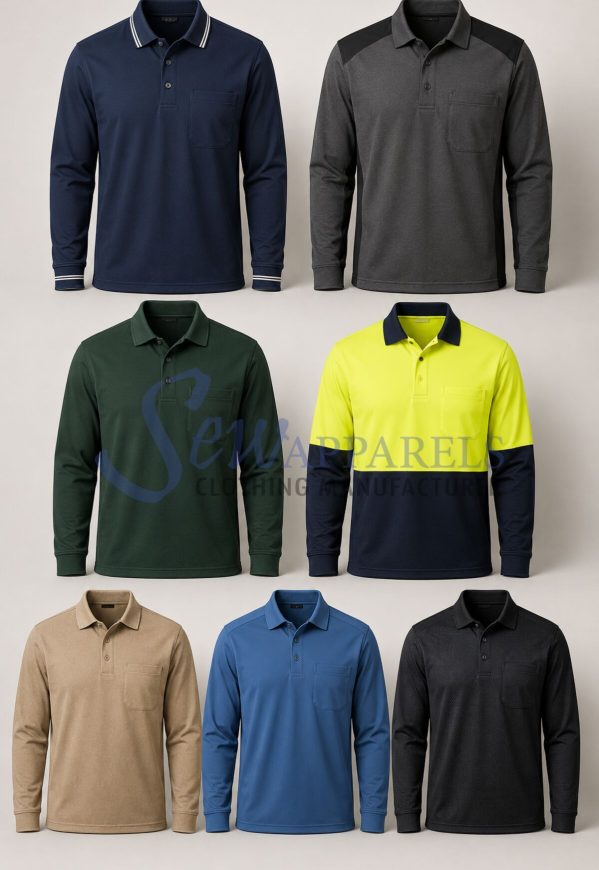
Work polo shirts must combine wearer comfort, professional appearance and durable branding. Buyers need to coordinate knit structure, garment fit, collar recovery, neck seam control, placket construction, logo backing, stitch density and placement across every size. This guide hub keeps each technical topic connected to the custom work polo shirts manufacturer page while providing direct routes to the detailed article and its practical buying guide.
Begin with the issue that creates the greatest sample risk. Record fabric facts, artwork dimensions, placement references, machine-file controls and acceptance criteria before development. Each Work Polo Shirts resource appears here in the same card format, keeping article analysis and supplier-facing buying guides organised as the library grows.
Keep work polo approvals traceable
Use these work polo shirts buying guides to keep approval records consistent. Use one naming system across the artwork file, embroidery sample, measurement chart and production comments. Mark whether each dimension refers to the logo centre or outer edge, and keep the approved garment available for comparison. This simple record prevents later teams from changing a setting that was already proven during development.
Record collar width, point shape, neck opening, placket alignment and logo location on the approved sample. Inspect a washed specimen against that reference rather than relying on memory or an unlabelled photograph. The collar article above helps identify which observations belong in a supplier checklist. Separate general dimensional change from collar distortion and record the proposed construction correction before requesting another sample. Extend the same traceability to badge holders, size labels and colour complaints: each observation needs the garment version, wearer or care history where relevant, and the limits of the evidence.
How to Use These Work Polo Shirts Buying Guides
- Choose the issue that affects appearance, comfort or durability.
- Read the article to understand the technical decision.
- Open the matching guide for sample instructions and checks.
- Add the relevant measurements and evidence to the technical pack.
- Record every correction by sample version before approval.
Use the article to diagnose an issue and the matching buying guide to specify its correction. For example, a puckered embroidery sample needs notes on backing, hoop tension and stitch density, while a spreading collar needs its finished measurements and post-wash appearance recorded. Assign each observation to the sample version and size tested. A decision is ready for bulk production only when the buyer, technician and factory can all identify the same approved reference.
Prepare the development brief
- Target market, wearer role and work environment.
- Polo fabric structure, finished weight and care method.
- Collar knit, neck seam, placket and laundering requirements.
- Logo artwork, backing, stitch density, thread colours and placement.
- Size range, testing, packaging and delivery expectations.
Drying language needs a defined method, not a general promise. The public scope of AATCC TM200 describes drying evaluation under airflow at absorbent capacity; AATCC TM201 addresses a prescribed water amount on a heated plate. These are different test arrangements. Ask a competent laboratory to select the applicable current procedure, specimen and endpoint. Public summaries do not supply the full operating instructions, a universal pass limit or a drying time for a finished work polo. Keep the care history, fabric identity and conditioning record with the report. Do not turn a fabric comparison into an unrestricted quick dry garment claim.
Low MOQ support for startup brands
A startup brand can use these work polo shirts buying guides to control a first programme without overloading development. Prioritise one core fabric, one collar construction, one logo size and a representative colour contrast. Approve collar recovery, neck seam comfort, placket balance, backing comfort and wash appearance before extending colours or placements. Discuss low MOQ work polo shirts manufacturing with the supplier using the actual fabric availability, decoration process and size split. Request confirmation of minimums and development charges for this order; the phrase low MOQ does not establish a fixed quantity or guaranteed price. Keep unsupported drying or colour performance promises out of launch copy until relevant evidence is available.
Giving Priority to Startup Brands
Sew Apparels gives startup companies a structured route from artwork to production brief. Placement drawings, approved machine files, backing references and sample photographs create a repeatable base for replenishment and future size extensions. The linked resources help the buyer enter supplier discussions with decisions that can be measured and confirmed.
For a first order, keep the approval route simple: fabric, artwork, one placement map, one sealed sample and one signed specification. When those controls are stable, the programme can expand without losing the product identity established in the initial development. One central record keeps future approvals consistent.
Turn work polo decisions into a product brief
Use these work polo shirts buying guides to prepare a focused enquiry. Share the polo fabric, collar construction, artwork, size range and care method. Add badge and holder details, a measurement chart, the proposed drying claim wording and any relevant colour complaint records. Use the six technical articles above to identify what the first sample must demonstrate. Name the decision maker and retain sample photographs, version numbers and laboratory scope where testing is needed. Ask the manufacturer to confirm which details can be reproduced at the planned order quantity and which require another development trial. Reopen approval if fabric, decoration or care conditions change.
Discuss the work polo brief