
Work polo drying claim comparison starts with the conditions behind a claim, not the adjective on a fabric card. A supplier may describe a material as quick drying while another provides a measured result under a different arrangement. Buyers need to understand the specimen, water exposure, environment and endpoint before deciding whether those statements can guide uniform selection.
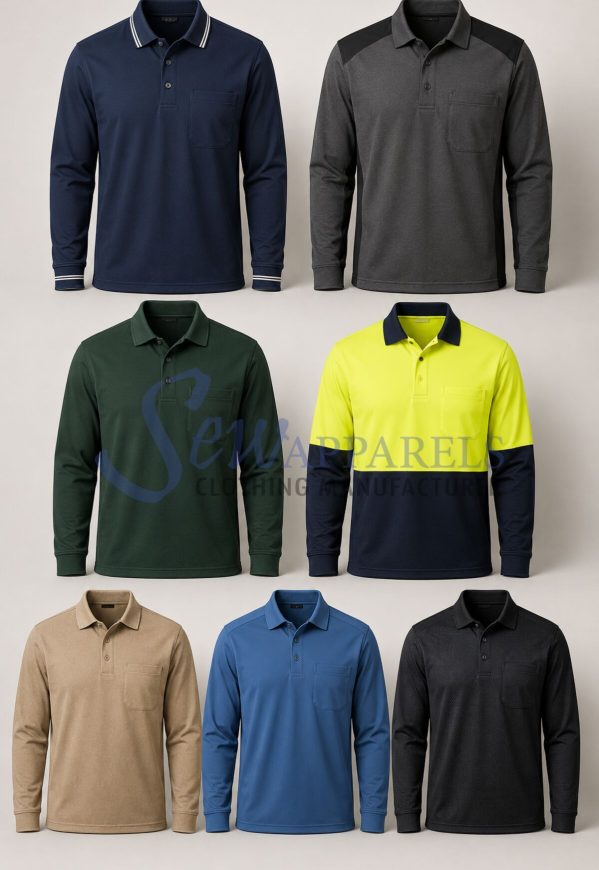
This guide to work polo drying claim comparison helps sourcing teams frame a useful evidence request. It separates fabric measurements from complete garment observations and keeps proposed marketing wording connected to the actual report. It does not claim that a Sew Apparels polo has achieved a particular drying time or promise that every wearer can reuse a shirt between shifts.
1. Define work polo drying claim comparison scope
Begin with the intended statement. Is the buyer comparing two identified fabrics under a specified method, investigating a finished garment after care, or proposing a customer-facing quick dry description? Those questions require different evidence scope. Write the question clearly before commissioning work so a narrow laboratory result is not stretched into a broad consumer promise.
A work polo drying test brief should identify the proposed material, colour, finish, fabric construction and sample version. Specify whether evidence is needed before or after an agreed care sequence. A report for an earlier finish should stay attached to that finish until its relevance to the new proposal has been established by the technical team.
For work polo comparable drying samples, retain the specimen identities and report references together. Similar fibre percentages do not prove that fabric weight, structure or processing are identical. If the buyer intends a comparison of two finished shirts, record size and construction details as well. A comparison needs traceable objects, not only generic descriptions.
Clarify what the evidence will be used to decide. Material selection, care planning and claim approval can share information while remaining separate decisions. This prevents a satisfactory development observation from becoming an unsupported sales statement. Assign responsibility for technical interpretation and customer-facing wording rather than expecting a report number to resolve both automatically.
2. Identify the method and water exposure
Work polo drying claim comparison requires a named method and its reported conditions. Ask for the complete reference, edition and any recorded departures. A result labelled drying time may omit how moisture was applied or how the specimen was positioned. Request the relevant information from the testing provider before treating the figures as equivalent.
The public scope of AATCC TM200 describes an air flow method assessing textile drying rate at absorbent capacity. The published page is a summary, not a complete procedure. It supplies a method reference for discussions with a laboratory, rather than a universal passing time or evidence that any particular polo has been tested.
The public description of AATCC TM201 describes fabric drying rate with a prescribed water volume and contact with a heated plate. These are distinct arrangements. A buyer should not rank reports from the two methods as though their measurements came from identical exposure and testing conditions.
For work polo quick dry evidence, ask the testing provider to confirm which method fits the question and specimen. Preserve the reported preparation and measurement scope. Do not select whichever test produces the most attractive-looking number and leave the basis unstated. A useful result needs a defensible relationship to the purchasing or claim decision.
3. Match the endpoint before comparing times
Work polo drying claim comparison depends on what counts as the end of drying. A uniform polo drying endpoint should be defined through the chosen method or an explicitly described development procedure. A subjective touch observation and a measured endpoint are not interchangeable. Record the basis rather than converting a casual observation into an exact laboratory time.
A work polo measured drying result should retain units, endpoint definition, specimen information and the relevant report notes. Ask the laboratory to explain unfamiliar terms. Do not round away important differences or add precision that the measurement does not support. If one report omits the endpoint, the comparison remains incomplete until the missing information is resolved.
For work polo drying time comparison, keep the starting event equally clear. A timing record started after a handling delay cannot be treated as the same arrangement as one begun at a specified exposure step. Development teams should document their actual sequence. Historical reports with insufficient detail may require new matched evidence rather than reconstructed assumptions.
A work polo ready to wear criterion is a separate practical requirement. It may involve the complete garment and the buyer’s intended care routine. Define what is being judged and who will decide it. Do not infer a guaranteed ready-to-wear interval from a fabric drying measurement that did not examine the complete polo under that routine.
4. Keep the environment and care state visible
Work polo drying claim comparison should preserve the work polo drying environment record. Use the conditions documented by the laboratory or development team, including the relevant temperature, humidity and airflow information. Avoid inventing missing values to make reports look comparable. An unresolved environmental difference should be visible in the evidence worksheet.
For work polo moisture drying conditions, distinguish the test arrangement from an ordinary room or outdoor drying location. A controlled fabric result does not promise the same outcome in every environment. If the purchasing question concerns a specific care routine, define a suitable review with the technical team and record its scope separately from standardized evidence.
Care history also matters to sample identity. Record whether the proposed specimen was reviewed as supplied or after an agreed wash and dry sequence. Keep the relevant finish and processing information available. If one candidate was prepared differently, ask whether a matched assessment is needed before concluding that its material dries faster.
Work polo between shift care planning should consider the actual garment routine and available drying arrangement. This article does not set a guaranteed turnaround interval. A buyer can investigate a defined scenario using identified shirts and an agreed review. Any practical conclusion should remain attached to that scenario instead of becoming a promise about every workplace.
5. Separate fabric evidence from garment evidence
Work polo drying claim comparison needs an explicit work polo fabric garment drying scope. A fabric specimen and a complete polo have different evidence boundaries. The garment includes multiple components and construction areas. Keep material test findings described as material findings unless the complete garment and proposed claim have been examined through an appropriate agreed route.
When reviewing a finished polo, identify the areas relevant to the buyer’s decision, such as collar, placket, cuffs or decoration. Record the assembly actually reviewed without assuming that a shell fabric result covers every detail. If a development observation finds a local concern, describe its location and conditions rather than replacing the entire evidence record with a general adjective.
Maintain separate entries for formal reports and informal sample observations. A development photograph can help communicate the sample arrangement, but it does not establish the reported drying endpoint or recreate the laboratory procedure. Keep source reports accessible to the technical reviewer. Marketing summaries should not become the only surviving version of the evidence.
For illustration, candidate A might have a fabric report while candidate B has an informal observation of a complete shirt after care. These are hypothetical records, not Sew Apparels results. Even if both contain a time, the buyer should resolve the difference in scope before declaring one product the faster-drying choice.
6. Approve wording that matches the evidence
Work polo drying claim comparison should lead to precise work polo drying claim wording. State the tested object, comparison and relevant conditions where the evidence supports them. Avoid presenting an untested material as quick dry solely because of its fibre label. A laboratory method name does not itself establish a favourable result or authorize a product claim.
Set work polo quick dry claim limits alongside the proposed statement. Identify whether it concerns an unwashed fabric, a defined processed sample or a garment scenario. If a planned test is incomplete, label the claim as awaiting evidence. Do not describe anticipated performance as a measured finding merely to finish the product copy before development is complete.
A uniform polo drying evidence worksheet can bring together sample identity, report reference, method, preparation, environment, endpoint and proposed wording. Include unresolved questions and the person responsible for each. This gives purchasing and content teams one traceable basis for approval while retaining the original report rather than compressing everything into an unsupported score.
For custom work polo shirt manufacturing, provide the evidence brief with the wider garment specification. For private label work polo shirt production, keep approved claim wording connected to the material and care version being ordered. Ask the supplier to flag substitutions or processing changes that could alter the evidence basis before production or marketing release.
Buyer questions before approving the claim
Can wicking evidence establish drying time?
Do not substitute a differently scoped moisture result for the drying question without technical justification. Ask what the report actually measures and whether it supports the proposed statement. A broad moisture management description can cover different properties. Keep the buyer’s claim aligned with the evidence examined rather than combining unrelated results into one promise.
Does a shorter number always mean a better polo?
No. Work polo drying claim comparison first needs a shared method, endpoint, preparation and specimen basis. The broader garment brief also includes fit, care and construction requirements. A matched drying result may inform material selection, but it does not replace those decisions or establish that one product is universally better for every wearer.
What should the final approval contain?
Record work polo drying approval with the accepted material version, report scope, comparison limits and permitted wording. Discuss the full product through the work polo shirts manufacturing page, and connect related development decisions through Work Polo Shirts Buying Guides. Keep work polo drying claim comparison and any conditional items documented before releasing the garment or its claims.
For the finished-garment care brief, connect the observations to the work polo shirts collar shape after laundering review. Identify the same garment and care state in both records. A drying result does not establish collar appearance, and a satisfactory collar observation does not prove a quick-dry claim.