
WOVEN JACKET DEVELOPMENT LIBRARY
Woven Jackets Buying Guides
A tailored woven jacket depends on the shell, structure and lining working together as the wearer reaches, bends and sits. A lining can make the jacket easier to put on and protect the inside, but if it is cut or attached too tightly it can pull the shell out of shape. These Woven Jackets Buying Guides help buyers convert broad construction requests into measurable sample decisions. Start with the intended silhouette, wearer, shell and lining fabrics, climate and care route. Review the finished jacket in motion, not only a neat garment on a hanger.
Start with the lining ease article to plan the back pleat, sleeve lining length and hem jump. Continue with the interlining placement article to map front-panel support, lapel roll and hem reinforcement. Each article uses a marked construction example and a buyer decision table so a sample review can become a repeatable production instruction. Read both before approving a woven jacket: a lining needs movement allowance, while the shell needs selective structure. Use the separate cards below to open each post. The original Woven Jackets product page remains the manufacturing and commercial route; this guide collects technical decisions without replacing existing product content.
These Woven Jackets Buying Guides also connect supplier capability evidence, sample approval sequences, sleeve-head support and zipper replacement planning. Use the six linked topics to keep each construction decision and its release conditions traceable.
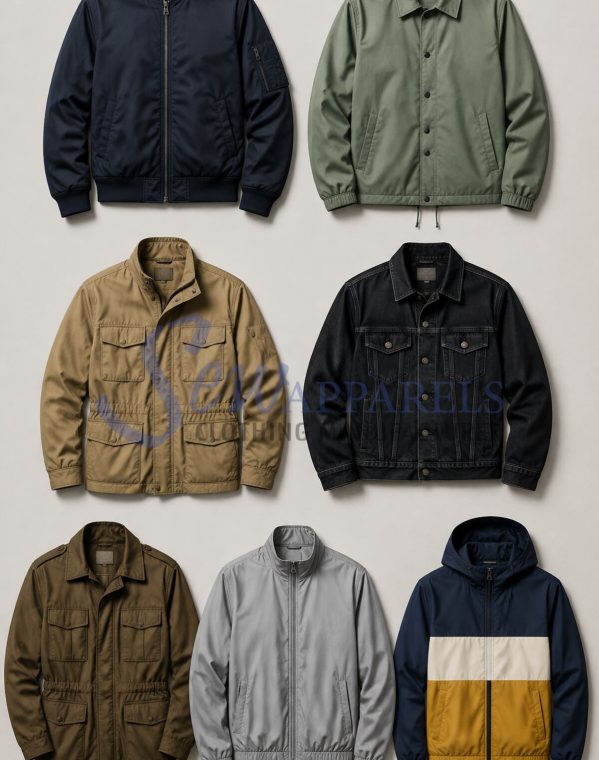
These Woven Jackets Buying Guides use existing woven jacket style references to support development discussions. The image does not demonstrate approved lining ease, sleeve-head support, interlining performance, supplier capability or a tested zipper replacement procedure.
Woven Jackets Lining Ease Planning
Balance a back pleat, sleeve lining length and hem jump so the jacket moves freely without a lining that hangs below the shell. Compare an annotated sample and buyer decision table.
Read the lining-ease guideWoven Jacket Supplier Capability Questionnaire: Evidence and Scope
Match critical jacket operations to relevant sample evidence. Clarify process owners, outsourced work and trial criteria, then record gaps and quotation conditions before approval.
Review supplier capability evidenceWoven Jacket Sample Approval Sequence: Fit, Materials and Release
Separate fit acceptance from material, trim and production decisions. Track sample revisions, close linked comments and document the evidence and conditions needed for a clear bulk-release scope.
Plan the sample approval sequenceWoven Jacket Sleeve Head Support: Shoulder and Crown Trials
Separate shoulder-pad and sleeve-crown roles. Compare identified support options in complete jacket trials, then assess symmetry, movement and relevant care evidence before approving the assembly.
Compare shoulder and sleeve supportWoven Jacket Zipper Replacement Planning: Parts and Access
Record original and spare zipper identities. Review access through the complete lined construction, trial replacement and define supply ownership and substitution approval before promising a repair service.
Plan zipper replacement accessWoven Jackets Interlining Placement: 7 Best Checks
Map front-panel reinforcement, test lapel roll and control hem support before approving a woven jacket sample.
Read the interlining placement guideWoven Jackets Buying Guides: Movement and Finish Targets
Before drafting lining, specify the jacket’s intended use and shell silhouette. A structured office jacket, an unstructured travel jacket and a protective outer layer ask for different degrees of reach and comfort. Note the expected underlayers and how the wearer will move. A fitting should include arms forward, arms raised within normal use, sitting and walking. Record whether tension appears at the upper back, elbow or hem. The lining should protect the shell and slide comfortably, while the exterior retains its intended shape.
New Mexico State University’s clothing project guide describes jacket linings that are caught to selected seams without pulling and includes examples of back pleats, sleeve and hem ease. Use those examples as construction references, not fixed dimensions for every commercial pattern. Record the actual shell and lining fabric codes and test them together. A light lining and a heavy lining can behave differently even when cut from the same pattern. The fit approval belongs to the complete jacket after the planned care route.
Build controlled room across the back
A center-back lining pleat can supply room when the wearer reaches forward while keeping the shell relatively controlled. Mark its position at neckline, upper back and waist or hem according to the style. Decide where the pleat is held and where it opens. If stitched closed for too much length, it cannot release at the point of movement. If left uncontrolled, it may fold awkwardly or show at the neck. Inspect the lining with the jacket both on and off the wearer.
Measure the lining across the back at agreed levels and compare with the shell and body movement test. A back pleat is not a remedy for a shell that is itself too tight. If the wearer feels resistance, identify whether the pull comes from shell fit, lining width or a restrictive anchor. Sign a sample showing pleat depth and retention stitches. Check boundary sizes in the grade so a base-size solution does not disappear at a larger shoulder or back. These Woven Jackets Buying Guides retain the reason for each accepted back-lining allowance.
Give sleeves enough lining length
Sleeve lining must follow elbow bend and arm lift without tugging the cuff or producing a loose bag that escapes from it. Mark lining length, crown relationship, underarm junction and cuff attachment on a cross-section. Fit the jacket over its intended underlayer, then bend the elbow and reach. If the cuff rises sharply or the lining becomes taut, investigate length and armhole attachments before simply widening the sleeve. A smooth standing sleeve alone is not a sufficient check.
Inspect the lining join and any ease fold near the sleeve hem. The lining should remain inside and move with the sleeve after care. New Mexico State University’s construction standards recommend that attached linings have ease and that free linings be controlled at seams. Apply the principle to the chosen jacket design and record the actual finished relationship rather than copying example values. When a lining fabric changes, retest because its drape and shrinkage may shift the approved cuff position.
Plan the hem jump and attachment
The hem jump is the controlled extra lining length or fold at a jacket hem that allows shell and lining to move without one pulling the other. It must be purposeful: too little ease can drag the shell upward, while too much can bunch or show below the hem. Draw the shell hem, lining turn and attachment point in one cross-section. Mark whether the hem is fully attached, partly tacked or free hanging. Check the jacket open and closed, standing and seated.
Do not assume that a lining which looks hidden on a hanger remains hidden after movement or washing. Measure finished shell and lining lengths at front, side and back. Inspect whether the front facing and closure influence the hem jump. If a long jacket uses separate attachment points, specify their location and movement allowance. Compare the approved sample after the intended care cycle and preserve photographs of the inside fold. Bulk production should repeat the signed relationship, not a guess at the fold. Use these Woven Jackets Buying Guides to keep the cared shell and lining relationship identifiable.
Support startup brands with a practical first specification
For a low MOQ woven jacket program, a startup brand can choose one shell, one compatible lining and a clear base fit before multiplying colours or trims. Giving facility to startup brands means helping them set realistic material minimums and a sensible sample sequence. Ask which stock fabrics and lining colours can meet the intended look and care needs at the proposed quantity. A small order still requires a back-pleat note, sleeve lining cross-section, hem jump and graded measurements. Those records support a consistent repeat order.
Use a buyer decision table for approval
Record the target wearer, shell and lining codes, back pleat depth and retention, sleeve lining length, cuff join, hem jump, care route and signed fit photographs. A decision table should compare a proposed option with the worn-sample result, the action owner and the final approval. Test the base size and boundary sizes with arms forward and elbows bent. If a lining pulls, identify the restrictive point instead of adding ease everywhere. The supplier should be able to reproduce the comfort and exterior silhouette from the record. Keep the resulting evidence beside the relevant Woven Jackets Buying Guides.
Turn lining and interlining decisions into one product brief
Share the intended silhouette, shell and lining swatches, back-pleat drawing, sleeve and hem-jump details, front-support map, lapel-roll reference and hem reinforcement plan. Attach fit comments, care-test results, graded measurements and a signed sample. These details help the supplier keep the outer shape controlled while preserving comfortable movement. Use the original Woven Jackets product page for the manufacturing enquiry. For custom woven jacket manufacturing and private label woven jacket production, also include the supplier review, approval sequence, shoulder-support trial and repair-access conditions. These Woven Jackets Buying Guides help keep those decisions tied to the agreed sample.
Explore Woven Jackets manufacturing