
A woven jacket sample approval sequence defines what each development sample proves, who can accept it and which decisions remain open. For a structured jacket, a good-looking prototype is only one piece of evidence. Fit, shell fabric, internal support, lining, closures and production instructions must agree before the buyer authorizes the next stage.
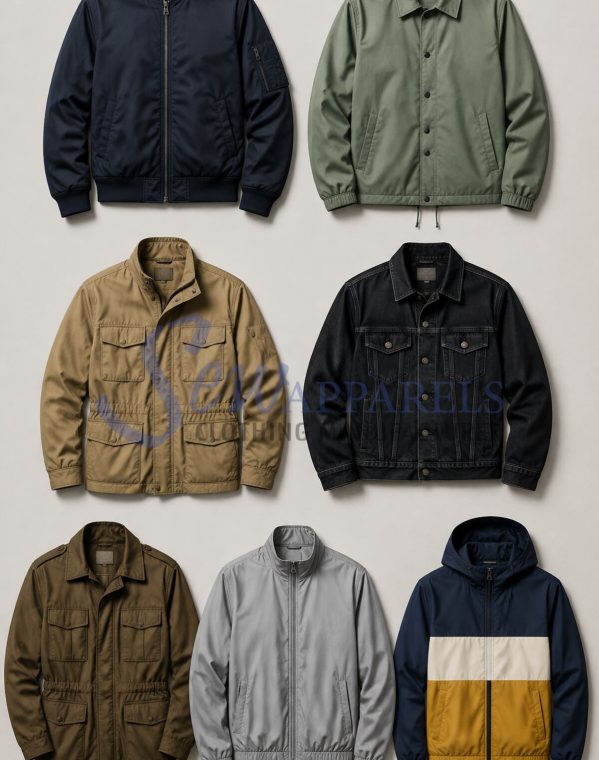
The practical aim of a woven jacket sample approval sequence is to prevent an early approval from being mistaken for permission to manufacture the whole order. A buyer may accept the silhouette while rejecting the sleeve balance, or approve a closure appearance while its attachment remains untested. Those decisions should stay separate in the record. This guide explains five checks for creating an approval route that remains understandable when samples, materials and comments change.
For product discussions, use our custom woven jacket manufacturing page. Confirm the actual development stages, available materials and responsibilities for your project rather than assuming every factory uses the same sample terminology or timetable.
1. Define the woven jacket sample approval sequence before sending comments
Start by listing the questions that must be answered. A first prototype can establish construction direction; a fit sample can support a measurement and movement review; a later representative sample can demonstrate the intended combination of components. These are example purposes, not a promise that every supplier offers three identical stages. Agree the purpose of each submission with the factory and name the person authorized to accept its evidence.
Keep design acceptance, fit acceptance, material acceptance and production release separate in your woven jacket prototype approval stages. A single “approved” status does not show which decisions are complete. Identify every submitted jacket with:
- A sample reference.
- The technical pack revision.
- The submission date.
- Any differences from the intended production configuration.
A photograph without these details cannot reliably identify the approved version, even if the jacket looks correct.
The woven jacket sample approval owner should be recorded by decision area. A designer may approve visual proportions, a technical reviewer may accept measurements and a sourcing contact may agree an amended component cost. If one person owns all three decisions, state that explicitly. The supplier also needs a named contact who consolidates comments and confirms which instructions will be used for the next sample.
A useful woven jacket sample approval sequence records evidence and dependencies rather than merely numbering garments. Ask whether a decision can be made now, what is blocking it and what would reopen it later. A stage marked “reviewed” is not necessarily accepted. Likewise, a conditional acceptance should identify the condition, its owner and the evidence needed to remove it.
2. Separate fit acceptance from production readiness
When discussing jacket fit sample vs pre production sample, define the difference in the project documents. A fit submission may use an agreed substitute fabric to assess initial dimensions. A production-representative submission should identify whether the actual shell, lining, support and trims are present. The names alone do not establish suitability: a garment called “preproduction” can still have substitutions that prevent an important decision.
Review the jacket closed and open, on the agreed fit reference, with the intended wearing layer where relevant. Record the measurement method and assess shoulder position, sleeve movement, front balance and lining restriction. Avoid translating a photograph into an arbitrary pattern correction. Describe the observed problem, compare it with the specification and ask the supplier to explain the proposed correction before accepting the next version.
Woven jacket fit comment closure means checking that the requested change has actually been demonstrated. If a sleeve correction affects the armhole, assess both areas together. If a front balance change moves the closure position, reopen that linked decision. Closing a comment only because it was copied into an email leaves the physical outcome unverified.
In the woven jacket sample approval sequence, fit acceptance should identify exactly which sample and revision it covers. A later change to fabric stiffness, support or lining can alter the wearing result. Define when those changes require another fit review. This keeps an early prototype useful without treating it as evidence for every subsequent configuration.
3. Review material and trim dependencies together
List woven jacket material release dependencies before approving the final assembly. Include the shell identity, lining identity, support material and any relevant finishing route. State which materials are actual and which are substitutes. Where a substitute is accepted for an early review, record the limited purpose of that acceptance and the later evidence required from the intended material.
For woven jacket trim approval dependencies, connect each closure or decorative component to the area it affects. Button size and attachment can influence the front opening; zipper stiffness can affect edge shape; decoration can interact with support and lining. A loose trim card can confirm appearance but may not demonstrate attachment or garment behaviour. Request an appropriate assembly sample when the unresolved question concerns interaction between components.
A woven jacket final trim sample should carry the supplier reference or other agreed identity needed to distinguish it from earlier options. Record finish, appearance, intended location and any remaining substitution. Confirm that the technical pack describes the selected version. A buyer cannot meaningfully release a component whose physical sample and written description disagree.
CottonWorks quality testing guidance discusses construction, dimensional stability and care-related appearance as distinct considerations. Use that distinction to select relevant evidence for your jacket; it does not provide a universal acceptance limit or replace a project-specific agreement with the supplier or testing provider.
The woven jacket sample approval sequence should therefore connect material decisions to garment evidence. If a lining or support is changed after appearance approval, identify the affected observations and repeat the necessary checks. Specific interlining placement decisions belong in the relevant construction guidance; this approval record manages when those decisions must be settled.
4. Reconcile sample comments with the current technical pack
Use jacket sample revision tracking to prevent different teams from working from different instructions. Maintain one current revision and a short change history. Each comment should include a reference number, sample identity, observed issue, requested action, responsible party and closure evidence. Distinguish an agreed correction from a suggestion still awaiting a decision.
A woven jacket prototype revision log should explain the effect of a change rather than only stating “updated.” For example, identify that a sleeve adjustment also changes a lining pattern review or that a new closure requires another front assembly check. Keep superseded instructions available for traceability while making their obsolete status clear. Do not send a bundle of conflicting files and assume the factory will infer the latest choice.
Woven jacket technical pack reconciliation is the comparison between the accepted physical sample, final comments and production documents. Check measurements, construction notes, component identities, placement information and any agreed exceptions. The goal is not to rewrite the whole pack at every stage; it is to remove contradictions before they become production instructions.
A woven jacket sample evidence checklist can cover sample identity, material declaration, relevant photographs, measured results, component references and closed comment records. Decide which items matter to the actual design. Evidence requirements should be proportionate to the decision, and any test method or acceptance criterion should be agreed specifically rather than invented from a general checklist.
Within the woven jacket sample approval sequence, a verbal agreement should be captured in the consolidated record before the next release. If commercial implications remain open, separate them from technical acceptance. Accepting the fit does not automatically accept a revised price, and accepting a quotation does not demonstrate that the physical jacket meets the agreed brief.
5. Document the bulk-release decision and its limits
Give woven jacket preproduction approval status a precise meaning. Identify the representative sample, technical pack revision and component set covered by the decision. Record open conditions and whether they block production, limit the scope of release or require another submission. Unresolved fit or material decisions should not be presented as complete bulk approval.
A woven jacket bulk release checklist should include the accepted configuration, closed critical comments, documented component identities, agreed responsibilities and the relevant production instructions. Confirm that the supplier has acknowledged the same version. Where the project requires additional evidence, list it explicitly. A checklist is a control record, not proof that every manufacturing risk has disappeared.
- Development direction: design owner reviews the identified prototype; construction questions stay open until resolved.
- Fit: technical reviewer assesses the agreed reference and records linked corrections.
- Material combination: responsible reviewer confirms intended shell, support and lining evidence.
- Components: assigned owner approves the relevant trim and its assembly where required.
- Release: authorized buyer records the final scope, conditions and current production revision.
For woven jacket unresolved sample issues, use a short decision list with an owner and required evidence for each item. Avoid hiding unresolved matters in a long comment thread. When a condition is satisfied, record the evidence and the person who accepted it. If it changes another accepted feature, reopen the affected decision rather than silently treating the whole garment as approved.
The woven jacket bulk release decision is a documented authorization for a defined configuration and scope. CottonWorks sourcing and manufacturing resources separate topics such as garment manufacturing, finishing and quality assurance. That broad structure is useful background for assigning development responsibilities; it is not a prescribed jacket approval workflow or a certification of any supplier.
Example: manage a closure change without losing earlier decisions
Suppose an illustrative jacket prototype has acceptable shoulder proportions, but the buyer later selects a different front closure. Retain the recorded shoulder decision while asking which front construction, support and lining details are affected. Request the evidence needed for those areas, update the component identity and record any revised comments. This example demonstrates dependency control; it does not prescribe a fixed number of samples or guarantee a development calendar.
The woven jacket sample approval sequence then shows what remains valid, what needs review and who must decide. That is more practical than either restarting every unrelated decision or approving the changed garment solely because the earlier prototype looked acceptable.
Before assigning a production release, connect the agreed route to the woven jacket supplier capability questionnaire. Confirm the operation owners and evidence gaps for the same construction revision, especially where a specialist process or a different production route is involved.
Prepare a clear approval brief for your project
For private label woven jacket production, send your current technical pack, identified samples, consolidated comments and intended material information. Ask which actual stages and responsibilities can be supported, and agree the evidence needed for each decision. Startup brands can use the same clear record without assuming a particular minimum quantity, timeline or service is available before confirmation.
Use the woven jackets buying guides to organize related development questions. A complete woven jacket sample approval sequence helps the buyer distinguish accepted decisions from open issues and gives the supplier a usable current brief. Publish the release record only when its scope, evidence and remaining conditions are clear to everyone responsible.