
SEW APPARELS · DEVELOPMENT RESOURCES
Kids Dress Buying Guides
These kids dress buying guides help childrenswear brands prepare a clear development brief before sampling or ordering. Start with the intended silhouette, outer fabric and lining purpose, then coordinate fit, openings, decoration and the finished appearance. Each technical article addresses one decision in detail. This page brings those decisions into a practical buying sequence so the current specification remains easy to follow as the collection develops.
Choose the relevant completed article below, then review the six planning sections for the wider dress program. Record the actual material and sample references rather than relying only on an inspiration image. Keep open questions separate from accepted details, and use the current brief when requesting revisions or quotations. Further relevant articles can be linked here as they are completed.
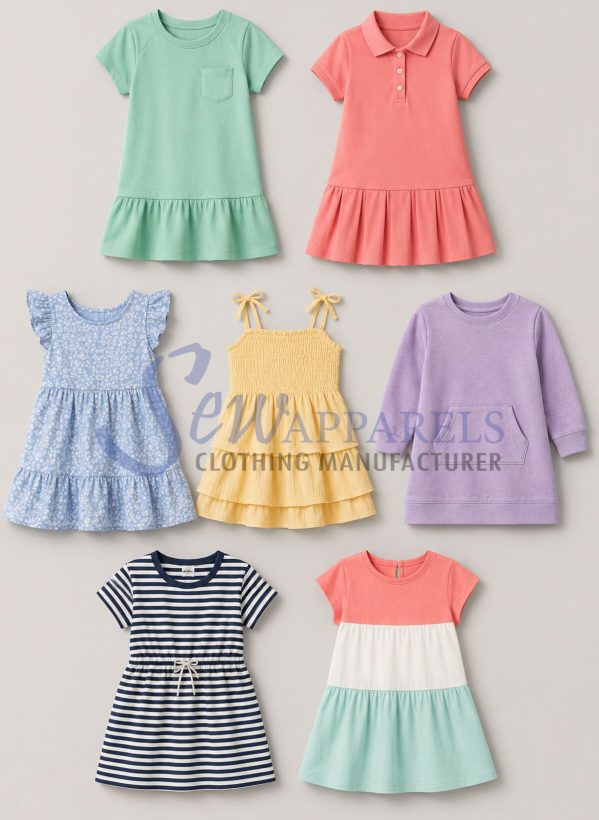
Childrenswear silhouette references reused from the kids dress product page. Confirm the selected fabric, lining, closure and size specification on the actual sample; these photographs do not establish care performance, component safety or product compliance.
Dress lining choices: seven buyer checks
Compare lining weight, internal seam coverage and skirt transparency. Use a construction annotation and a buyer decision table to record why a fabric pairing was selected.
Read the dress lining checklistBorder print placement costing: five buyer checks
Define approved border positions, matching requirements, usable fabric width and size-specific layouts before requesting supplier-calculated consumption for the quotation.
Read the border print costing checklistDetachable sash specification: five review checks
Document intended use, attachment configurations, material identity, care information and qualified review responses before approving the exact sash and dress combination.
Read the detachable sash checklistEmbellishment sourcing brief: six component checks
Build a traceable trim register covering component identity, supplier records, intended function, attachment evidence, care compatibility and approved version control.
Read the embellishment sourcing checklistZipper seam rippling: five sample review checks
Compare open and closed appearance, identify zipper-area materials, document care history and review the technical correction before approving the complete resample.
Read the zipper seam review checklist1. Define the dress silhouette and intended use
Use these kids dress buying guides to name the style before discussing materials or prices. An everyday jersey dress, a woven A-line design and a gathered occasionwear dress can require different development decisions. Identify the intended size range, sleeve arrangement, skirt volume and opening method. Add front and back drawings with the key construction details labelled. Keep decorative preferences separate from the measurements needed to assess fit so the sample team can work from a brief that is clear on both appearance and function.
Confirm whether the proposed A-line, fit-and-flare, tiered, smocked, jersey or woven dress configuration fits Sew Apparels' development scope for the specific program. Choose the configuration relevant to the proposed collection and mark which details still need review. A reference dress may help explain the desired result, but its measurements and construction should not be assumed to match the new style. Keep a revision identifier on the brief and consolidate comments before sending the next sample request. For waist placement, gathered fullness and finished hem planning, use our kids dress bodice-to-skirt proportion checklist.
2. Compare outer fabrics and lining requirements together
These kids dress buying guides connect fabric selection with the complete layer arrangement. For candidates such as cotton jersey, cotton poplin, organic cotton, cotton voile, viscose blends or lightweight twill, confirm composition, availability and suitability with Sew Apparels for the specific dress program. Select candidates for the intended silhouette and review the actual outer-and-inner pairing. A material name alone does not describe drape, opacity or bulk at a gathered waist. Record the fabric references and colours together so any later substitution remains visible in the development record.
Decide what the inner layer is meant to achieve before specifying its extent. NMSU's guidance on linings and underlinings distinguishes a separately assembled lining from a backing handled with the outer fabric. Use clear terminology in the brief and mark the attachment points. These kids dress buying guides support that discussion, while the detailed lining article provides the comparison checklist. Review the inside finish and outside appearance on the same sample before accepting the pairing.
3. Review child-specific fit and finished proportions
Use kids dress buying guides with the approved body and garment references for the intended size range. Define the bodice length, waist position, neckline, armhole and finished skirt length using named measurement points. Record whether the silhouette is deliberately loose, fitted or gathered. Keep the sample's fabric and closure configuration visible in the comment sheet. If a reviewer flags pulling or displaced layers, locate the concern before changing several dimensions at once, and compare the revised sample with the last accepted reference.
Review representative sizes where the development plan calls for them, especially when the design or construction changes across the range. An accepted base sample provides a useful reference but does not automatically settle every size-specific question. Note the opening access, inner-layer relationship and finished hem arrangement during the agreed fit review. Retain the accepted measurements and sample comments together so the pattern team can distinguish a new preference from a correction to the existing specification.
4. Coordinate decoration, samples and the approval record
These kids dress buying guides help buyers bring artwork and construction into the same approval process. Define print placement, embroidery position, label location and any decorative trim before the final sample review. Show how these details relate to seams, gathers and openings. Where a design uses lining, review the inside after decoration and assembly rather than assuming the extra layer resolves every finishing concern. Keep the chosen material, colour and artwork revision on one record so the approved sample can be identified accurately.
A published design can provide useful context without becoming a production specification. Oliver + S's School Photo Dress shows a lined A-line design with an invisible back zipper and lightweight lining suggestions. Your own collection still needs its own pattern, material and sample decisions. These kids dress buying guides encourage an explicit approval record: identify what was reviewed, what changed and what remains pending. Include the agreed care review and any separate product or market requirements in the development plan.
5. Low MOQ kids dress manufacturer planning
Brands searching for a low MOQ kids dress manufacturer should align the proposed first order with the actual style requirements. Sew Apparels lists 500 pieces per design and colour for kids dresses. These kids dress buying guides help buyers prepare the size split, fabric pairing, lining extent and decoration brief before requesting a quotation. Published timing is 10–15 days for sampling and 15–30 days for production at MOQ after pre-production approval; confirm the current schedule for the specific order. Special fabrics, colours and trims need confirmation rather than an assumption that every option is available at the same quantity.
6. Development support for startup childrenswear brands
These kids dress buying guides give startup childrenswear brands a structured starting point for supplier discussions. Begin with a manageable style plan, a clear size reference and the proposed outer fabric and lining configuration. Sew Apparels' custom kids dress manufacturing service describes sampling, private-label and production support. Request confirmation of quotation assumptions, sample scope and approval steps before committing to the order. Consolidate feedback into one current brief and keep evidence for each accepted decision so a first collection can progress with fewer unresolved details.
Turn your dress decisions into a development brief
Bring the selected silhouette, fabric pairing, fit references and branding requirements together. These kids dress buying guides support a clearer discussion with the manufacturing team. Review the proposed style, sample scope and order assumptions before confirming the next development stage.
Explore kids dress manufacturing