
A kids dress embellishment sourcing brief turns a decorative concept into a component list that buyers, suppliers and reviewers can identify. Each trim needs a reference, intended position, material description and current source. The brief should also show which evidence has been requested and which version is approved, so a quotation does not become an order for an unspecified substitute.
This guide covers six sourcing questions for decorative components across a dress. It focuses on the component register and supplier handoff, rather than selecting a lining or developing one detachable accessory. The proposed decorations remain subject to actual supplier feasibility and product-specific review. No universal attachment test or child-safety conclusion is supplied here.
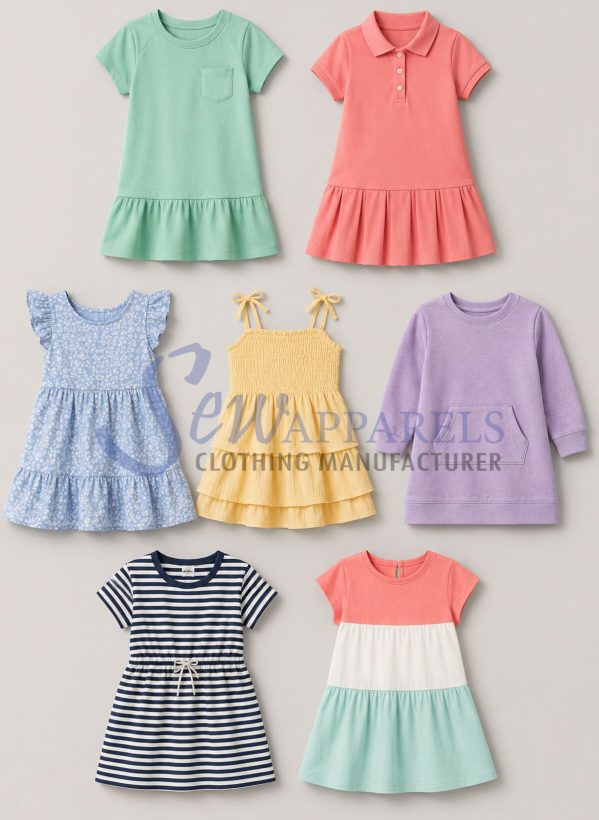
1. Define the kids dress embellishment sourcing brief
Begin the kids dress embellishment sourcing brief with an inventory of the decoration shown on the current design. Give each item its own component reference. Identify the garment style, drawing revision and intended position. A supplier should be able to tell whether two similar-looking decorations are the same item or different components with separate specifications.
A children dress embellishment component register can link a component name to a drawing location and sample reference. Include a field for an internal photo reference where that helps identification; public garment-context imagery does not establish a component’s identity. The register should not depend on appearance alone. Retain the supplier’s confirmed description and identify any detail still awaiting clarification.
For kids dress decorative trim specification, describe the requested appearance and the information needed to source it. Separate a proposed design feature from a confirmed component. If the supplier needs a dimensional drawing, finish reference or other detail, give that request a clear owner. This article does not invent standard decoration dimensions or presume that every proposed trim is available.
When a dress has several embellishment types, record them individually before creating a combined quotation request. A general instruction such as use matching decorations can conceal differences in materials, attachment or source. The inventory should show which items belong to the approved design and which remain alternatives for review.
Give alternatives distinct references
If a buyer considers two finishes or decoration routes, name each option and connect it to the relevant design version. Keep the selected item separate from the rejected alternative. A later order should not require the supplier to guess which reference was chosen from a discussion containing several attractive examples.
2. Record Material and Supplier Identity
The kids dress embellishment sourcing brief needs a traceable description of what the supplier proposes to provide. Record the source and component designation alongside the material information supplied. Ask for clarification where a description is incomplete. Do not infer a component’s material from a photograph, colour or sales name.
A kids dresses decorative component supplier code should connect the quote, sample and supply record. If the supplier uses different codes for a sample and a production component, explain that relationship. The buyer needs to know whether the later item is the reviewed version or a replacement requiring further assessment.
For kids dresses dress embellishment material identity, retain the relevant specification and available supporting records. Include any stated finish or coating where it forms part of the component description. Identify information still missing instead of treating an incomplete record as final. The responsible reviewer can then determine what evidence is required for the actual product and market.
Kids dress trim supplier traceability should connect the selected component with the supplied source information. Record proposed source changes even when the item has the same visible appearance. A matching finish does not prove that a replacement has the same composition or supporting evidence. Keep the old and new references distinguishable until the change has been reviewed.
Maintain a sourcing dossier
A kids dresses dress decoration sourcing dossier can contain the register, current quotations, sample identities and evidence correspondence. Give each document a version reference rather than retaining a loose folder of unrelated files. When a quotation changes, note whether the component, quantity assumption, source or scope changed with it.
3. Separate Decoration from Functional Fastening
A kids dress embellishment sourcing brief should explain what each component is intended to do. A visual detail may also serve a fastening or another specified function. State that role clearly so the supplier and reviewer assess the actual design request. Do not classify an item as purely decorative simply because it is prominent in the artwork.
A kids dresses functional versus decorative trim record should list the intended role and relevant garment configuration for each item. If an item has more than one proposed role, identify those roles separately. Ask the technical team to clarify any ambiguity before ordering a component selected only for its appearance.
Keep the sourcing decision connected to the garment drawing. For example, a component shown near an opening needs a clear description of whether it participates in the closure or only in the design treatment. The brief should identify the intended arrangement without prescribing an unreviewed installation method. Submit the proposed combination for the appropriate assessment.
For detachable accessories, use the kids dress detachable sash specification alongside this register. Treat a changed function as a design change. Record the requested configuration and ask what additional review is needed. A lower price should not silently change how the dress is intended to operate or how its components are installed.
4. Define the Attachment Evidence Request
The kids dress embellishment sourcing brief should connect each attachment question to the exact component and dress version. Ask a qualified reviewer what evidence is needed for the actual target range, market and installation. Do not import a numerical test limit from an unrelated item or present a development observation as a universal safety assessment.
A kids dresses trim attachment evidence request can identify the component reference, intended position, proposed installation and unresolved question. Include the current sample or drawing used for the request. The reviewer can then explain the appropriate scope and any additional information needed. Keep that response with the component record.
For kids dresses target age component review, provide the proposed range and the buyer’s actual product description. Mark any provisional information so it is not mistaken for a reviewed claim. The responsible expert should determine the relevant attachment, chemical and other requirements. This article does not supply an automatic small-parts rule for every children’s dress decoration.
Kids dresses finished dress component evidence should show what was assessed and in which installed configuration. A record for a loose component may answer one question while leaving the garment interaction unresolved. Ask the reviewer to identify that boundary. Retain requested follow-up items instead of treating the existence of a report as proof that the complete design has been approved.
Keep the response actionable
The register can have separate columns for requested evidence, received evidence and review status. This prevents a submitted document from being counted as an accepted result before someone has checked its scope. Where a response calls for a revised installation or sample, record the revision and the next review action.
5. Assess Care Interaction on the Finished Dress
A kids dress embellishment sourcing brief should include the care information relevant to the proposed decoration and garment combination. Confirm the procedure to be assessed with the responsible technical party. Record the current component references and sample condition. This article does not prescribe temperatures, cleaning methods or universal care-trial limits for unknown materials.
For kids dresses decoration care compatibility, record observations against the actual care procedure used. Identify visible changes at a named component or garment location rather than using a vague comment such as decoration changed. Keep the before-and-after sample references connected, so a reviewer can understand which combination produced the observation.
If a supplier proposes a replacement following a care observation, give the replacement a distinct component reference. State which input changed and which evidence will be reviewed again. Do not assume that matching the original colour or shape resolves the cause. Request a documented assessment of the revised combination.
Care observations belong in the sourcing register because they can affect which version the buyer accepts. Keep that decision separate from a general material description. The final component list should identify the version actually reviewed, with any remaining care-information gap visible before the program proceeds.
6. Control Approved Components and Later Changes
Complete the kids dress embellishment sourcing brief by connecting the approved register to the order reference. A kids dresses approved trim version record should identify the selected source, sample and supporting review. Keep alternatives and superseded references out of the current selection list while retaining their history for the development team.
For kids dresses children dress trim change control, describe a proposed change before it replaces the current component. The CPSC’s material-change testing guidance explains that design, manufacturing-process or component-source changes can affect compliance and describes retesting and a new certificate when required after a material change. The responsible party should determine the implications for the actual dress and component combination.
A kids dress decoration change review should retain the original item, proposed replacement and technical response. Record whether the design, material, source or installation changed. Ask which earlier evidence remains relevant and which needs updating. A replacement should not be accepted simply because it appears indistinguishable on the sourcing sheet.
The kids dresses embellishment traceability register should also connect the component records with the production-source information used by the responsible business. The CPSC’s tracking-label guidance describes permanent identifying marks on children’s products and packaging to the extent practicable, including business, production and source information. Confirm the applicable arrangement for the product; the register alone does not establish compliance.
Kids Dress Embellishment Sourcing Brief Register
On small screens, each register field appears as a labelled record.
| Field | Information to retain |
|---|---|
| Component identity | Buyer reference, drawing position and supplier designation |
| Material and source | Confirmed description and current source records |
| Intended role | Decorative or functional purpose in the garment |
| Attachment review | Evidence request, response scope and unresolved items |
| Care observation | Procedure, sample version and relevant findings |
| Approval | Selected version, reviewer and order reference |
| Change history | Replacement proposal and evidence update decision |
Prepare the Product-Specific Sourcing Discussion
For custom kids dress manufacturing, send the trim register, proposed target range and current design through Sew Apparels’ kids dress manufacturing page. Confirm the actual sourcing scope and evidence plan. No minimum order, price, timeline or availability is assumed for an unconfirmed decoration.
For private label kids dress production, use the kids dress buying guides to connect the component list with the wider product brief. A kids dress embellishment sourcing brief is ready for its stated handoff when the selected items, supplied records and review decisions identify the same current dress version.