
SEW APPARELS · DEVELOPMENT RESOURCES
Kids Jogger Buying Guides
Kids jogger buying guides help clothing brands connect fit, fabric and construction decisions before a sample is approved. Start with the intended child, the wearing occasion and the shape you want to develop. A tapered fleece jogger and a relaxed everyday style can need different decisions about the rise, knee, cuff and waistband. Use this collection to organize those questions into a clear development brief, then follow the detailed technical articles for the subject you need to resolve.
These kids jogger buying guides bring the supporting articles together without crowding the main product page with individual post links. For current manufacturing scope and a production discussion, visit our custom kids joggers manufacturing page. The guidance here supports preparation and sample review; fabric performance, dimensions and order terms still need confirmation for your actual project. Keep an approved version of the brief so that later changes to materials or construction can be evaluated consistently.
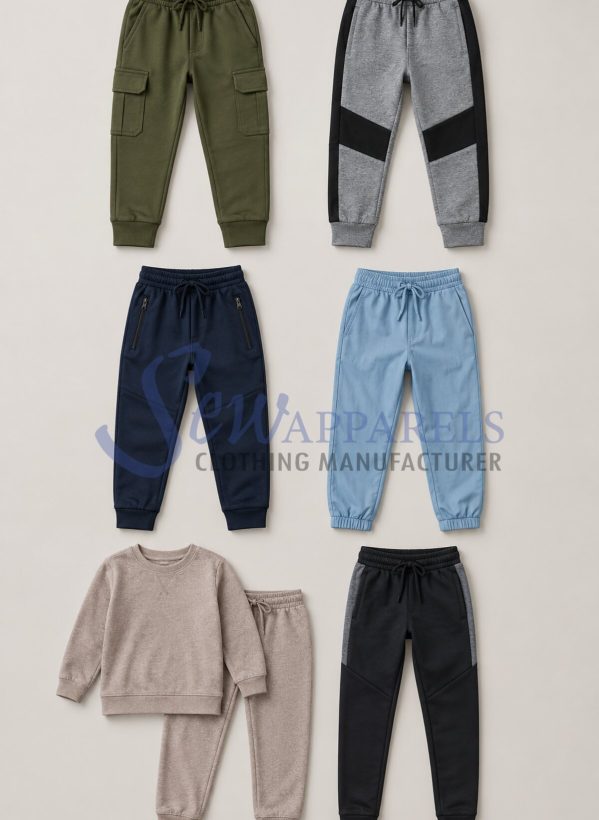
Existing Sew Apparels product-page illustration reused for kids jogger buying guides. It supplies style context rather than evidence of approved fit, fabric performance, child-safety compliance or current material availability; confirm the actual sample and order specification separately.
Growth allowance without losing current fit
Coordinate waist adjustment, leg length and knee ease through seven sample checks, an annotated construction example and a buyer decision table.
Read the growth allowance guideDecorative tie review: five design checks
Clarify decorative versus adjustment function, document attachment and end configurations, and connect the intended wearer and destination with qualified review evidence.
Read the decorative tie review checklistElastic supplier change: five approval checks
Trace original and replacement elastic identities, compare the actual waistband, review care and evidence implications, and record the approved component version.
Read the elastic supplier change checklistRetail display: five distortion checks
Document hanger and clip placement, retain a comparison garment, distinguish existing fold marks from display observations, and approve the reviewed handling method.
Read the retail display distortion checklistLeg twisting after washing: five evidence checks
Record original left and right seam alignment, agree reference points and care conditions, separate rotation from length change, and trace the technical follow-up.
Read the leg twisting review checklist1. Define the jogger shape and target child
Use kids jogger buying guides to establish a specific starting point: the height or age range, the base size, the intended activity and the preferred silhouette. Describe whether the garment should feel close, tapered or relaxed around the seat and leg. Record the expected waistband position and ankle finish rather than relying on a reference photograph alone. A clear brief helps the pattern technician distinguish deliberate design volume from an unintended fit problem. It also gives the buyer a consistent basis for comparing the first sample with later revisions.
Body dimensions and finished garment dimensions serve different purposes. OTTOBRE’s preschool size guidance explains its height-based pattern selection and the distinction between body measurements and the ease included in a pattern. Treat that as useful context, not a ready-made production chart for another brand. These kids jogger buying guides recommend documenting your own approved size references, measurement positions and fitting observations. Keep the current fit review separate from any proposal to extend wear through extra length or an adjustable waist.
2. Match fleece or terry to the finished fit
Fabric selection changes how a jogger hangs, stretches and feels around the knee and waistband. Kids jogger buying guides should therefore connect the fabric reference to the approved pattern instead of treating material and fit as separate purchases. Specify the proposed composition, weight, surface and finishing route, and ask for the actual development fabric to be identified on the sample. A soft handle does not on its own confirm recovery, dimensional stability or durability. Keep alternatives labelled clearly so that a favourable result from one fabric is not accidentally assigned to another.
The CottonWorks resource on shrinkage and skewing describes how knit construction, processing, finishing and care can affect dimensional stability. In these kids jogger buying guides, that evidence supports checking the selected material under an agreed care procedure. Compare relevant dimensions before and after care and record visible twisting or cuff distortion. Do not add an assumed shrinkage percentage to every measurement without material evidence. If the fabric changes after fitting, confirm which measurements and observations must be reviewed again before approval.
3. Coordinate waist, knee and ankle construction
Kids jogger buying guides are most useful when the waistband, leg and cuff are assessed as one garment. An elastic waist may hold comfortably while an overly narrow knee restricts bending; extra leg length may gather awkwardly above a tight rib cuff. Document the relaxed waist, the agreed extended measurement, the knee position and the finished cuff depth. Ask how each dimension is taken so that buyer and supplier readings can be compared. Include practical pockets and any trim positions in the same review, particularly where seams or pocket bags overlap a movement area.
A development sample should show the actual adjustment method and the intended inside finish. Avoid using a decorative detail as a substitute for a working fit feature. Review the garment while standing, sitting and bending, then connect each observation to the relevant pattern or component question. Our kids jogger buying guides encourage concise revision notes: identify the symptom, the proposed change and the sample version that demonstrates the result. Do not promise a fixed extension of wear merely because the waistband stretches or the leg includes additional fabric. For additional layers around the knee, compare kids joggers knee reinforcement options for panel coverage, material compatibility and seam bulk before approving the construction.
4. Build a repeatable sample approval record
Bring the size chart, fabric identification, construction notes and care observations into one approval record. Kids jogger buying guides can help structure the discussion, but the decision belongs to the actual sample and agreed specifications. Review representative sizes across the intended range, including any transition between age or height bands. Check that grading preserves the relationship between rise, knee placement and cuff position. If a reinforcement panel, graphic or private label is added later, identify whether its placement or stiffness changes a previously accepted fit or comfort observation.
Separate confirmed points from open questions in the sample comments. Name the approved pattern revision and list any component substitution that still needs review. A production brief should also identify packaging, size labelling and the order breakdown so that a correct fit sample is not confused with approval of every commercial detail. Keep the final sample accessible for comparison during production. When a new technical article is added to this collection, use it to refine the relevant decision without silently replacing measurements or construction details that your team has already approved.
5. Low MOQ kids jogger manufacturer planning
If you are comparing a low MOQ kids jogger manufacturer, define the quantity per design and colour before calculating the total collection. Sew Apparels currently lists 500 pieces per design and colour for custom kids joggers, with sampling shown as 10–15 days and production as 15–30 days at MOQ after pre-production approval. Confirm the scope and timing in your quotation, including fabric, trim and size allocation. These kids jogger buying guides support focused planning; they do not imply that splitting a total across many colours preserves the same minimum or cost.
6. Practical support for startup brands
Startup brands can use these kids jogger buying guides to arrive with a focused first style instead of an unresolved collection. Prepare the intended customer, target sizes, reference fit, material preference, branding requirements and quantity by colour. A small team can simplify review by keeping one clear sample log and naming the person responsible for approval. Discuss feasible options and commercial terms with Sew Apparels before promising a launch date. Starting with an agreed jogger construction makes later colourways or related styles easier to evaluate while preserving the decisions that define your brand’s fit.
Turn your jogger decisions into a product brief
Bring your target sizes, fabric reference and sample questions together. Share the intended fit, quantity by colour and branding requirements so the production discussion starts from a clear, reviewable brief.
Discuss kids jogger production