
A kids jogger decorative tie review starts by identifying what the waist detail actually does. A bow or cord can be described as decorative in a design conversation while the submitted construction allows adjustment or movement. Buyers need a clear purpose, attachment description and current sample reference before choosing wording or approving the specification.
This guide covers five questions for a jogger-specific decision sheet. It addresses decorative versus functional ties rather than growth allowance. Proposed constructions remain subject to supplier feasibility and qualified review for the intended wearer and destination. No tie configuration is declared safe, compliant or automatically exempt from requirements in this article.
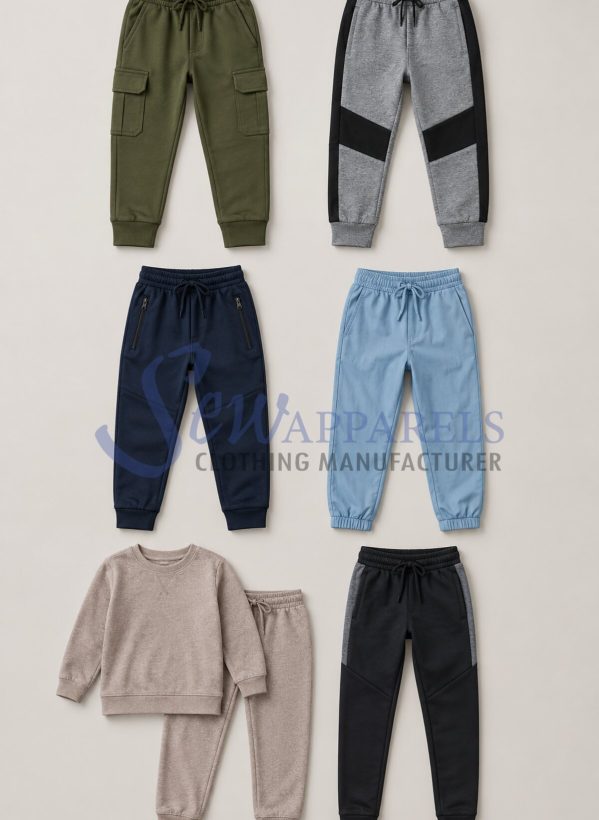
1. Kids Jogger Decorative Tie Review: Define the Function
Begin the kids jogger decorative tie review with the proposed purpose in the garment brief. Ask the technical team whether the waist detail is intended to change the opening or only provide an appearance feature. Identify the actual sample and drawing used for that answer. A sales description alone does not establish how the construction operates.
The kids jogger functional drawcord distinction should connect the intended role to the submitted assembly. Record which action the wearer is expected to perform, if any. If the team proposes that a component has no adjustment function, ask it to describe the construction that supports that statement. Do not infer function solely from the visible shape of a tied bow.
A kids jogger mock tie specification can state the proposed appearance and the technical description supplied. Keep alternatives separate where they have different attachment or movement characteristics. The term mock tie is a design label, not a product assessment. The qualified reviewer needs the actual construction rather than a reassuring name.
For kids jogger cord terminology, use consistent words across the drawing, material list and enquiry brief. Explain whether the current request concerns a cord, tie, bow or another defined component. If the team’s terms differ, reconcile them before asking for review. An ambiguous name can hide a construction change between the proposed design and the sample.
Record uncertainty explicitly. Where the submitted sample does not yet represent the intended configuration, identify it as provisional. The decision sheet can still frame the question, but it should not claim that the proposed function has been demonstrated. A buyer should be able to distinguish design intent from the technical response to an actual sample.
2. Record Attachment and Loose-End Configurations
The kids jogger decorative tie review should describe how the proposed component is attached and which parts remain exposed or movable. Ask the responsible technical party to supply the relevant drawing and component details. Keep the reference connected to the current garment version. Do not treat a photograph as a complete attachment specification.
A kids jogger tie attachment review can identify the positions and configurations that need qualified assessment. Record the supplier’s description rather than inventing a stitch or strength requirement. If the reviewer requests additional evidence, assign an owner and keep the request with the sample record. The article supplies no universal attachment test or pass limit.
For a kids jogger loose end configuration, state what the proposed drawing and sample show. Ask the technical team to clarify any difference between them. Do not apply an upper-outerwear numerical drawstring limit to pants merely because both garments use a waist detail. The relevant requirements must be assessed for the actual product and destination.
A kids jogger fixed bow design should have its own reference and stated purpose where it is proposed as an alternative. Fixed is a construction description that needs supporting details; it is not an assurance that every review question has been resolved. Any optional configuration here is a development scenario, not a claim that a supplier currently offers it.
The children jogger waistband tie brief can retain the material designation and source alongside the attachment information. If a component is substituted, identify the replacement separately. Similar appearance does not establish identical construction or evidence. Keep the actual selected item distinguishable from an earlier candidate in the development conversation.
3. Identify the Wearer Range and Destination
A kids jogger decorative tie review needs the intended wearer range and selling destination before the team requests requirements advice. Record the actual proposed range rather than assuming that the word kids provides enough detail. The qualified reviewer needs the product configuration and market context to assess which questions apply.
The kids jogger waist tie target age entry should identify the buyer’s intended range and the corresponding product specification. Do not substitute a sample size label for a complete intended-user description. If the range changes later, revisit the review scope and ask whether the earlier response remains applicable.
For a children jogger decorative waist cord, keep the destination and garment type explicit. The CPSC upper-outerwear drawstring guidance concerns that defined product scope. Its linked FAQ excludes pants, shorts and skirts from the upper-outerwear standard. That scope boundary is not an exemption from all requirements applicable to children’s products.
A children trouser waist tie evidence request should therefore ask a qualified reviewer to identify the requirements relevant to the actual trousers, wearer range and destination. Do not convert the upper-outerwear scope distinction into a claim that a waist tie needs no review. The buyer’s record should show which questions were considered and what evidence was requested.
Keep separate market versions identifiable if the product is intended for more than one destination. A response for one defined configuration should not be silently reused for another. Ask the responsible party to explain whether the earlier review applies and retain that answer. The article does not provide a universal legal classification for every proposed jogger.
4. Request a Qualified Review of Applicable Requirements
The kids jogger decorative tie review should move from a design description to a documented response from the appropriate technical or compliance reviewer. Supply the purpose, wearer range, destination, attachment details and current sample references. Ask the reviewer to name the evidence it needs and the scope of the conclusion it can provide.
A kids jogger decorative cord risk review belongs with that qualified process. Do not claim a risk conclusion from visual appearance or a component name. The buyer can make the construction question clear and supply the requested references. The responsible reviewer should assess the actual configuration using applicable requirements and appropriate evidence.
For kids jogger tie supplier evidence, distinguish the supplier’s component information from the reviewer’s assessment. A source designation or material description can help identify the item, but it is not automatically a complete product approval. Keep evidence associated with the component and garment version to which it applies.
The kids jogger cord design review should record any proposed revision and its stated reason. If the design, process or source changes, ask whether the previous evidence remains applicable. CPSC material-change testing guidance addresses changes to U.S. children’s products that may affect compliance. The actual change and its testing or certification implications require an appropriate assessment.
Do not describe a revised construction as compliant merely because it differs from the original proposal. Retain the reviewer response, sample identity and any conditions attached to the assessment. If information is missing, identify the next action. A qualified conclusion should not be broadened beyond the product and evidence it covers.
5. Approve Wording and the Exact Construction
Complete the kids jogger decorative tie review by reconciling the selected construction with its description. Ask whether the approved drawing, current sample and product wording describe the same item and intended role. If wording implies adjustment while the selected detail is decorative, resolve the discrepancy before the handoff.
A kids jogger tie labeling description should reflect the actual product information and the responsible team’s guidance. Do not use wording such as safe or compliant as a substitute for evidence. Keep a decorative description connected to the selected construction, and ask the reviewer about any information requirements relevant to the intended destination.
The kids jogger tie construction approval should identify the selected version and the response supporting the decision. Retain alternatives as development history while naming the current configuration clearly. If the supplier quotation uses an earlier component designation, reconcile it with the selected specification before an order is placed.
Assign an owner to every unanswered question. The decision sheet can be ready to send for review while final evidence is outstanding, but that status must remain visible. Do not convert an enquiry into an approval simply because the information has been collected in one document. The stated handoff should explain what has been decided and what needs a response.
Kids Jogger Decorative Tie Review Decision Sheet
The following structure organises a product-specific review. It is not a laboratory procedure, acceptance threshold or blanket construction recommendation. Populate it with actual references and qualified responses rather than assumed dimensions, test limits or certification statements.
| Review field | Information to retain | Decision question |
|---|---|---|
| Intended role | Decorative or adjustment purpose | Does the submitted construction support the description? |
| Attachment | Drawing and sample references | Which assembly details need clarification? |
| Exposed configuration | Current component and end descriptions | What exact design is being reviewed? |
| Wearer and destination | Buyer-defined range and markets | Is the qualified review scoped correctly? |
| Evidence | Supplier information and reviewer response | Which conclusions are supported? |
| Selected version | Construction, wording and remaining actions | Does the handoff use the current decision? |
Use the sheet to keep design intent separate from assessment. A component can be proposed for appearance without its evidence questions being resolved. Clear identity, current drawings and a named response owner provide a useful next step. An unsupported claim that a tie is harmless adds no reliable basis to the buying decision.
Kids Jogger Decorative Tie Review: Prepare the Brief
For custom kids jogger manufacturing, send the intended role and construction references to the kids jogger manufacturing page as part of the enquiry. The supplier needs the actual configuration before reviewing feasibility. This article supplies no price, minimum order, turnaround or automatic approval of an optional design.
For private label kids jogger production, use the kids jogger buying guides to connect the tie decision with the wider product specification. A kids jogger decorative tie review is ready for its stated handoff when purpose, attachment, wearer range, qualified responses and selected wording refer to the same current version. Keep unresolved questions visible as actions rather than treating them as conclusions.
For custom kids jogger manufacturing, include the selected tie drawing, intended age range, destination, colour-size quantities and open review questions in one quotation brief. Ask the supplier to identify any feasibility assumptions before comparing versions.
For private label kids jogger production, connect the selected component to the current garment specification and sample approval record. Confirm order terms against that specific brief rather than treating a design reference as a confirmed offer.
Review the kids joggers growth allowance planning guide separately when developing the size specification. Growth allowance and a decorative tie description answer different construction questions; keep both references identifiable in the buyer brief.